
Vandaag of morgen in huis

Kwaliteit gegarandeerd

Welkomstaanbiedingen ontgrendelen: GRATIS bezorging | Tot 80% korting | Gratis 30 dagen JoyPlus-proefperiode
Download de app
An aloe vera drink might seem easy to choose at first: pick a flavour, choose a bottle and place your order. But there are clear differences in sugar content, aloe vera content, size and packaging. If you only look at the front of the label, you could end up with a drink that doesn’t suit your preferences as well as you’d hoped.
Here are some common pitfalls to look out for:
Always compare the nutritional information per 100 ml. A 500 ml bottle of aloe vera drink can contain considerably more sugar per bottle than another, even if the drinks have a similar flavour.
The product information available shows, for example, that some varieties contain around 8 to 9 grams of sugar per 100 ml. Other products are marketed as low-sugar or sugar-free. The product description for OKF Aloe Vera Drink Strawberry Sugar-Free, for example, lists 0 grams of sugar and an energy value of around 5–10 kcal. When your order arrives, always check the physical label, as recipes and packaging information can change.
“Sugar-free” doesn’t automatically mean the flavour is neutral, either. For example, the product description for this variety mentions a sweetener such as sucralose or stevia. If you prefer to avoid sweeteners, don’t just look at the front of the pack: check the ingredients list too.
An aloe vera drink can contain aloe vera gel, pulp, juice or a combination of these. These terms tell you something about the ingredients and texture, but they aren’t a medical claim. According to the product information for various OKF varieties, the stated aloe vera content is around 16 to 30 per cent, depending on the product.
Check the other ingredients too:
Aloe vera juice with pulp may have a more noticeable texture than a smooth drink. This is particularly worth considering if you plan to drink it chilled or serve it with a meal.
A 500 ml bottle is easy to take to work, school or when you’re out and about. If you drink it regularly, an aloe vera drink multipack can be more affordable and practical. Varieties are available in packs of 6, 12 or 20 bottles, as well as larger sizes such as 1.5 litres.
Before you buy, check:
Once opened, the bottle should be kept chilled and used within the stated period, according to the product information. Products with a short shelf life after opening are less suitable if you only drink a bottle occasionally.
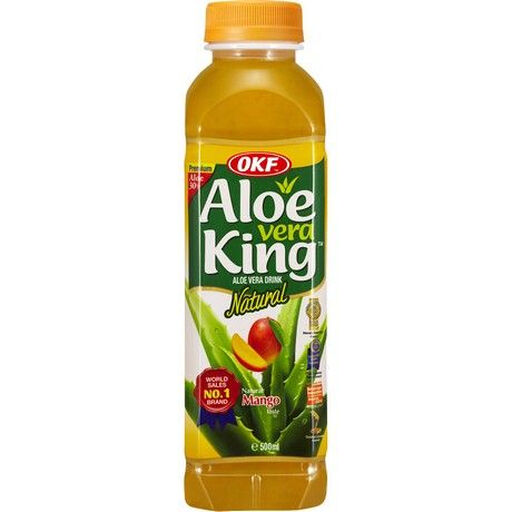
Why it suits this shopper: A single 500 ml bottle is an easy way to try a Korean mango-flavoured aloe vera drink without buying a large supply straight away.
You can try the flavour and size before ordering a multipack. Before buying, check the current ingredients list and nutritional information on the label.
500 ml per bottle; mango flavour; ideal for enjoying chilled at home or on the go.
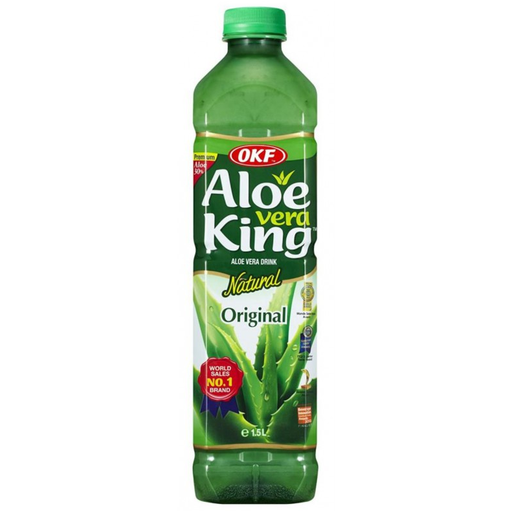
Why it suits this shopper: This larger bottle is designed for shoppers looking for aloe vera juice with visible pulp and a generous volume to enjoy on several occasions.
The product information lists the aloe vera gel content and nutritional values. This makes it easier to compare texture and sugar content than relying on the product name alone.
1.5 litres; stated aloe vera gel content of 30%; around 6 grams of sugar per 100 ml according to the product information.
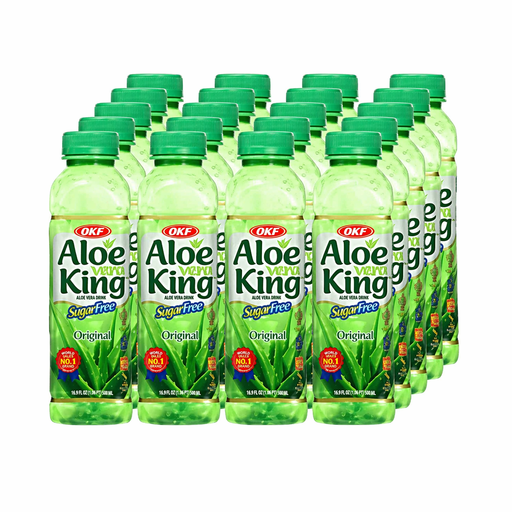
Why it suits this shopper: A box of 20 bottles is suitable for households, offices or business stock where several 500 ml drinks are used regularly.
The multipack means fewer individual orders, but check first that you have enough cool, dry storage space and that the best-before date suits how quickly you’ll use it.
20 bottles of 500 ml; sugar-free positioning; natural grape flavour according to the product description.
Start by thinking about when and how you’ll use it, then choose a flavour. For your first purchase, a single bottle or a pack of 6 is often easier to compare. If you already know you like a particular variety, compare the price per litre of a multipack.
If you’re limiting your sugar intake, check the full nutritional table and ingredients list. A fruit-flavoured aloe vera drink can be pleasantly sweet, but varieties with strawberry, mango, peach, lychee, kiwi or pineapple don’t automatically have the same ingredients. Also check whether “zero” or “sugar-free” refers to added sugar or the total sugars listed on the label.
We’ve put together a complete, up-to-date list of products that meet these strict selection criteria and the applicable European safety regulations.
Not always. The name varies from product to product. A drink may contain aloe vera gel, pulp or juice, combined with water, flavourings, sugar or sweeteners. So check the ingredients list and the stated aloe vera percentage.
Follow the instructions on the packaging. The products mentioned state that the bottle should be kept chilled after opening and consumed within the specified period. Close the cap securely, and don’t use a bottle if the seal was already damaged when you opened it.
Not necessarily, although the available product information for sugar-free varieties lists low energy values. Sweeteners and other ingredients can vary between recipes. So compare the energy and carbohydrate values per 100 ml on the current label.
