
Vandaag of morgen in huis

Kwaliteit gegarandeerd

Welkomstaanbiedingen ontgrendelen: GRATIS bezorging | Tot 80% korting | Gratis 30 dagen JoyPlus-proefperiode
Download de app
An aloe vera drink might seem straightforward at first glance: pick a flavour, pop a bottle in your basket and you’re done. However, these drinks vary significantly in the amount of aloe vera, sugar, sweeteners, pulp and packaging. As a result, a bottle that sounds appealing might not be the best fit for your needs.
When shopping online, there are three key pitfalls to watch out for:
If you’re looking for aloe vera juice with pulp, pay close attention to the exact ingredients list. Manufacturers use different terms, such as aloe vera juice, aloe vera gel or aloe vera juice and pulp. The percentages vary across the range.
For example, OKF Strawberry contains 22% aloe vera juice and 8% aloe vera gel according to the product information. The T’best Mango 500 ml bottle states 30% aloe vera juice and pulp. Tropical Aloe Vera Watermelon lists 16% aloe vera juice and pulp. These are verifiable differences that can affect the texture and type of drink.
Pulp can sometimes settle at the bottom. Shake the bottle according to the product instructions before drinking, especially with varieties containing gel or pulp.
A standard fruit variety often contains sugar or fructose. The available nutritional information shows, for example, that OKF Lychee has approximately 39 kcal and 9 grams of sugar per 100 ml. In a 500 ml bottle, if you drink the whole thing, that adds up to around 45 grams of sugar according to the stated values.
A sugar-free aloe vera drink can be an alternative, but “sugar-free” doesn’t always mean the same as “without sweeteners”. Products may contain sucralose or acesulfame-K, for instance. So be sure to check:
Tropical Aloe Vera Zero, for example, states 0 grams of sugar in its nutritional table and uses sucralose. The OKF Sugar-Free 20 x 500 ml also states 0 grams of sugar, but has a different flavour base that includes natural grape flavouring. So don’t just compare the front of the bottle.
A 500 ml aloe vera drink is handy for on the go, at the office or with a meal. For occasional use, a single bottle usually makes more sense. If you drink several bottles a day, you might want to consider an aloe vera drink multipack.
When looking at cases, consider:
Most products in this overview should be stored unopened in a cool place away from direct sunlight. Once opened, they should be kept in the fridge according to the product information and consumed within the stated period. Always check the physical label, as the composition and instructions can vary by batch or market.
The flavour you choose often determines whether a multipack works well for you. A mango aloe vera drink typically has a sweet, tropical profile. Kiwi and strawberry are fruitier and more recognisable for anyone trying aloe vera for the first time. Lychee has a floral, sweet aroma that’s popular with fans of Asian drinks.
The range includes:
Bear in mind that a flavour name doesn’t always mean a high content of real fruit juice. Several product information sheets list flavouring alongside juice concentrate. If that matters to you, compare the ingredients list with the product name before you order.
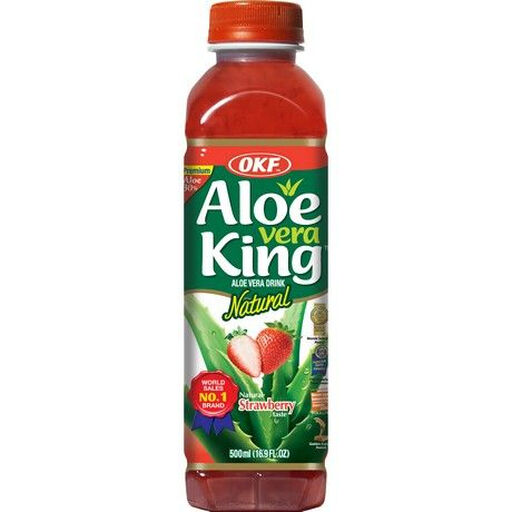
Why this fits the profile: A single 500 ml bottle lets you try the strawberry flavour and pulp texture without committing to a whole case.
You’re not locked into a multipack straight away. The ingredients list states 22% aloe vera juice and 8% aloe vera gel.
500 ml per bottle, strawberry flavour and, according to the product information, none of the 14 major EU allergens.
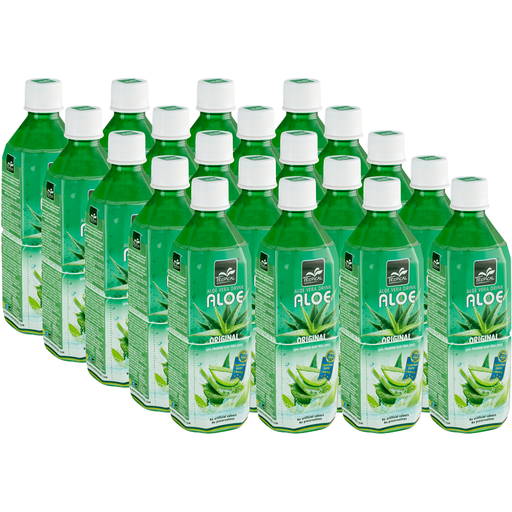
Why this fits the profile: This case is ideal for households or small catering businesses looking to stock up on a neutral variety with a clearly stated aloe content.
The stated percentage is concrete: 30% aloe vera juice and pulp. This makes it easier to compare the composition with other cases.
20 bottles of 500 ml, 28 kcal per 100 ml according to the product information and no added colourings as per the description.
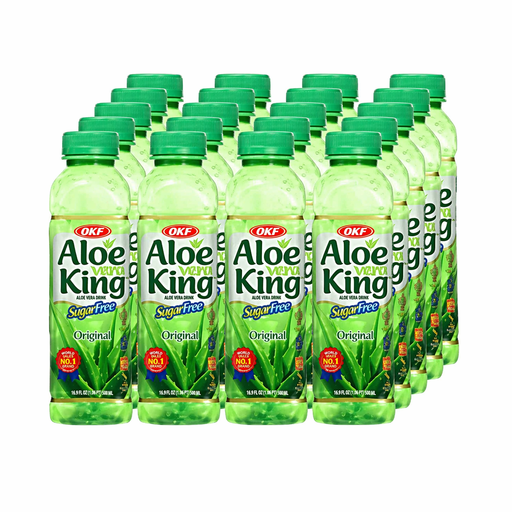
Why this fits the profile: A larger pack is practical when you regularly serve a sugar-free option at work, at home or in a catering setting.
The nutritional information states 0 grams of sugar per 100 ml. Do check the label when you receive a new delivery.
20 bottles of 500 ml, 21% organic aloe vera juice and 9% aloe vera gel according to the product information.
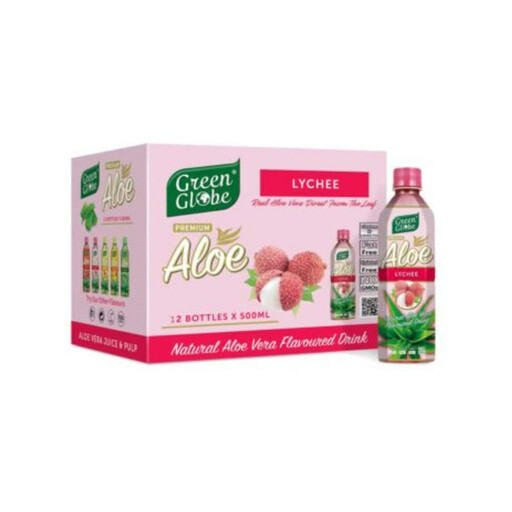
Why this fits the profile: This case is ideal for fans of a sweet, tropical lychee flavour and for occasions when several people want to enjoy the same drink.
The packaging clearly states 20 bottles of 500 ml. The portion size and total stock are therefore visible upfront.
500 ml per bottle, aloe vera gel in the ingredients list and 39 kcal per 100 ml according to the stated nutritional information.
We’ve put together a full, up-to-date list of products that fully meet these strict selection criteria and comply with current European safety regulations.
No. An aloe vera drink is usually a blended beverage containing water, aloe vera juice or gel, fruit flavouring, acidity regulators and sometimes sugar or sweeteners. Look at the percentage of aloe vera on the label if you want to compare the composition.
Keep an opened bottle in the fridge and close the lid tightly. The recommended period after opening varies by product, so follow the instructions on the packaging. Do not drink a bottle if the seal is damaged before first use.
Not necessarily, but many sugar-free varieties in this range state a low energy value. Check the nutritional information table per 100 ml and look out for sweeteners such as sucralose or acesulfame-K. That gives a more reliable picture than just the term “sugar-free” on the front.
