
Vandaag of morgen in huis

Kwaliteit gegarandeerd

Welkomstaanbiedingen ontgrendelen: GRATIS bezorging | Tot 80% korting | Gratis 30 dagen JoyPlus-proefperiode
Download de app
An aloe vera drink might seem straightforward to choose at first glance. Yet bottles vary widely in flavour, sugar content, amount of aloe vera gel and pack size. If you only look at a flashy label or an attractive offer, you could end up buying a drink that’s too sweet, has an unpleasant texture, or doesn’t suit how you plan to use it.
These three pitfalls are common:
If you’re looking for a sugar-free aloe vera drink, you need to look beyond the front of the bottle. Search the nutrition table for the amount of “of which sugars” per 100 ml and check the ingredients.
The OKF Aloe Vera Drink Strawberry Sugar-Free is described as sugar-free according to the product information. The stated nutritional values show 0 grams of sugar and list a sweetener as a possible ingredient. The exact composition can vary by pack; always check the current label.
With regular varieties, the sugar content is usually higher. The OKF Aloe Vera Drink Kiwi Flavor, for example, contains 4.8 grams of sugar per 100 ml according to the product information. In a 500 ml bottle, that adds up to around 24 grams of sugar. That makes a big difference if you drink several bottles a day.
The phrase “with aloe vera” doesn’t automatically tell you how much aloe vera is in it. Check whether the packaging states a percentage of aloe vera juice, gel or pulp.
An aloe vera drink with pulp usually has a visible texture. The Tropical Aloe Vera Zero 0% Natural 500ml is made with real aloe vera pulp according to the product description. The listed ingredients include water, aloe vera pulp, citric acid, flavouring and acesulfame-K.
Also note the difference between gel, juice and pulp. Gel pieces can change the drinking experience, while juice often feels smoother. Only shake the bottle if the label recommends it, and follow the storage instructions.
A 500 ml aloe vera drink fits easily into a bag, fridge door or desk drawer. This size is practical for on the go, at work, or for trying a new flavour.
For regular use, a bulk pack can be more economical and logistically simpler. Consider:
Always check the total volume, best-before date and available storage space when buying cases. Once opened, the products should be kept refrigerated according to the product information and consumed within the stated period.
The flavour largely determines whether you’ll reach for a bottle again. A strawberry aloe vera drink is often accessible if you’re after a sweeter fruit taste. Kiwi has a fresher, slightly tangy impression. Lychee and mango are more tropical and pronounced. The Original variety is better if you want the fruit flavour to be less dominant.
With flavoured varieties, check the ingredients list. The OKF Aloe Vera Drink Strawberry 500 ML lists aloe vera juice, aloe vera gel, fructose, sugar and flavourings according to the product information. The OKF Aloe Vera Drink Lychee 500ml lists water, aloe vera gel, sugar, citric acid and lychee flavour.
A product description may use terms like “refreshing”, “natural” or “hydrating”. Treat these as a description of the drinking experience or product presentation, not as a medical claim. According to a brand’s own research, a certain effect may be mentioned, but such claims are not automatically independently verified.
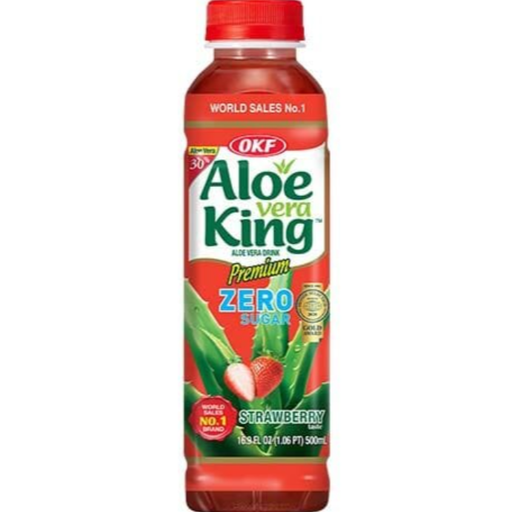
Why this fits the profile: The 500 ml bottle is manageable for anyone buying an aloe vera drink for the first time and wanting to try a fruity strawberry flavour.
The product information states 0 grams of sugar. Do check the current label, especially if you want to avoid sweeteners.
500 ml per bottle; strawberry flavour; according to the product information, sugar-free.
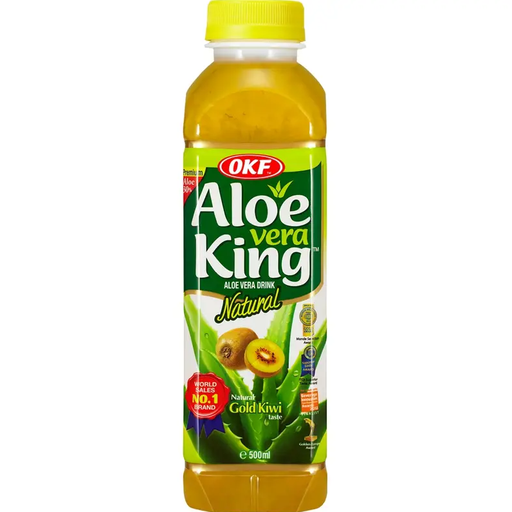
Why this fits the profile: Ideal for anyone after a distinctive kiwi flavour and a product with aloe vera pulp, in a handy size.
The product information explicitly mentions aloe vera pulp and provides nutritional values per 100 ml, making it easier to assess flavour, texture and sugar content.
500 ml; aloe vera pulp; according to the product information, 4.8 grams of sugar per 100 ml.
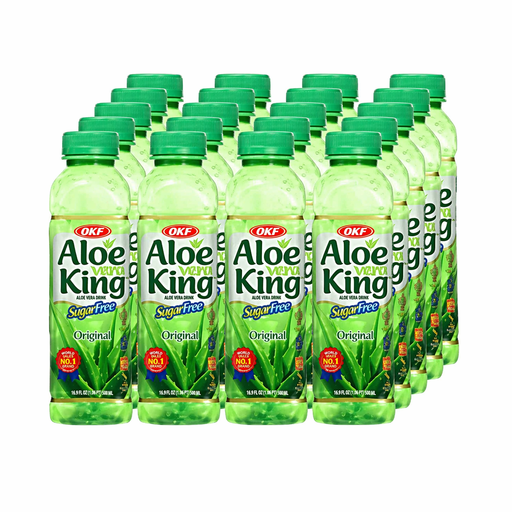
Why this fits the profile: A case of 20 bottles of 500 ml is ideal for offices, catering, events or households with a regular consumption pattern.
The fixed number of bottles makes the total volume clear upfront. Check the best-before date and storage space before buying.
20 bottles of 500 ml; according to the product information, 0 grams of sugar and 0 grams of carbohydrates per 100 ml.
We’ve put together a full, up-to-date list of products that fully meet these strict selection criteria and comply with current European safety regulations.
No. Some varieties contain sugar, fructose or fruit juice. Check the nutrition table and ingredients list. “Zero” or “sugar-free” refers to the product description, but always check the actual packaging.
Store an opened bottle according to the instructions on the label. The product information for the drinks mentioned generally advises refrigeration after opening and consumption within the stated period. Seal the bottle tightly and do not use the product if the seal was damaged before opening.
That depends on your overall drinking habits, sugar intake and personal preference. A 500 ml bottle is practical for on the go or at work. If you drink it regularly, choose a variety whose nutritional values and ingredients fit with your daily choices. The term “aloe vera” doesn’t automatically make a sweetened drink a healthy substitute for water.
