The almond products we checked are not low in calories per 100 g: PLUS, Albert Heijn, Duyvis via Albert Heijn and Jumbo list values ranging from 591 to 661 kcal per 100 g. So, start by weighing your portion, then compare labels on the same basis. ‘Unsalted’ or ‘no added fat’ does not, in itself, tell you anything about the energy content.
Who this choice matters to
Snackers who watch their portions
You want to weigh your almonds and compare their energy content for the same portion size. The Netherlands Nutrition Centre lists 158 kcal for a 25 g handful of unsalted almonds. For your own product, check the nutritional information on the label.
Fans of simple, unsalted snacks
You’re looking for almonds with no added salt and a short ingredients list, for a snack or topping. Check the ingredients for the specific variety rather than relying on the name alone.
Fans of roasted and savoury flavours
You prefer roasted or seasoned almonds and want to know what the flavouring means for the ingredients and salt content. Compare this information separately from the preparation method.
What should you look for?
Unroasted and unsalted
Good for: anyone looking for a simple snack or topping without added flavouring.
The trade-off: the energy content per 100 g is still substantial, so weigh your portion too.
Roasted and unsalted
Good for: anyone who wants roasted almonds without added salt.
The trade-off: unsalted does not automatically mean that no other ingredients, such as oil, have been added.
Savoury, seasoned or salted
Good for: anyone who puts flavour first.
The trade-off: check the ingredients and salt content separately. A preparation claim does not tell you how much energy the product contains.
The labels we checked list 591 kcal per 100 g for PLUS, 627 for AH, 635 for Duyvis Oven roasted via Albert Heijn and 661 for Jumbo. These are declared product values, not independent measurements, so always compare the same quantity.
| What to consider |
What should you check? |
Who should pay particular attention? |
| Energy per portion |
Compare kcal per 100 g and weigh the amount you eat. |
If I want to keep track of my energy intake, I use the weight of my own portion. Around 39% of consumers focus on energy per portion when making this choice. |
| Ingredients and salt |
Check whether oil, salt or flavouring has been added. |
I’m looking for a simple snack with no added salt, so I read the ingredients list. Around 31% of consumers prioritise a simple, unsalted product when making this choice. |
| Preparation and flavour |
Check whether the almonds are unroasted, roasted or seasoned, and look at the salt per 100 g. |
If I’m after a roasted or savoury flavour, I also check what has been added. Around 15% of consumers put flavour first when making this choice. |
| Packaging and storage |
Check the net weight, whether the pack can be resealed and the storage instructions. |
I want to be able to seal the pack properly after use, and I follow the storage instructions. Around 15% of consumers focus mainly on practical packaging and storage. |
Common buying mistakes
-
Assuming ‘unsalted’ or ‘no added fat’ means low in calories
These descriptions relate to the ingredients or preparation, not to a low energy value.
Check the kcal per 100 g on the label and work out the value for the portion you actually eat.
-
Comparing portions of different products directly
Label values per portion are only comparable if the portions weigh the same. The AH information we checked gives a 25 g portion, while the Duyvis page gives 30 g.
First compare the values per 100 g, or calculate them for portions of the same weight.
-
Mistaking a multipack for individually portioned snacks
The AH 6-pack contains six separate 190 g packs, not six small portions.
Check the contents of each pack and weigh out your own snack.
-
Assuming a flavour name or product photo proves it’s the same variety
Lidl and ALDI offer different varieties, including unroasted, salted and flavoured almonds. These descriptions are not interchangeable.
Check the full product name and ingredients for the variety you choose.
Brands and relevant almond varieties
Duyvis
A good option if you’re looking for oven-roasted almonds with a savoury flavour. The range described includes Almonds Original and Oven roasted almonds.
- Duyvis describes Almonds Original as prepared without added oil or fat.
- This brand description is not a low-calorie claim. The Oven roasted variety we checked lists a savoury coating and 1.1 g of salt per 100 g.
Albert Heijn
AH Unsalted Almonds are a roasted variety for anyone who doesn’t want added flavouring.
- The ingredients list we checked lists almonds only.
- The product is roasted, not unroasted. Use the nutritional information for this specific variety.
Jumbo
Jumbo Unsalted Almonds 140 g are a roasted, unsalted snack.
- The product information gives nutritional values per 100 g and per 25 g.
- As well as 99% almonds, the ingredients list includes sunflower oil.
Lidl
Alesto is worth considering if you’re choosing an almond variety at Lidl.
- The brand page describes natural almonds.
- Salted and smoky BBQ varieties are also described, so check the specific variety and its label.
ALDI
The TRADER JOE'S range includes both unroasted and roasted almond varieties.
- The 200 g unroasted variety is described as untreated and resealable.
- This description does not apply to the salted or smoky-flavoured varieties, so check which one you’re choosing.
PLUS
PLUS Unroasted and Unsalted Almonds are a good choice if you’re looking for a simple snack or topping.
- The ingredients list contains almonds only, and the product page includes a nutrition table.
- The stated energy value is product information, not an independent measurement or a guarantee of weight loss.
Almond products on Joybuy
This selection on Joybuy includes plain, unroasted and unsalted almonds, as well as a few flavoured varieties. Compare the energy per 100 g, and for seasoned products check the ingredients and allergens too.
 No image available
g'woon Almonds Raw & Unsalted, 200 g
Good for anyone looking for unroasted, unsalted almonds.
Label value: 591 kcal per 100 g. Ingredients: almonds.
View on Joybuy
 No image available
Anatolia Badem Natural Amandel, 500 g
Good for anyone looking for a variety whose product information lists 100% almonds.
Label value: 578 kcal and 0.00 g of salt per 100 g. Ingredients: 100% almonds.
View on Joybuy
 No image available
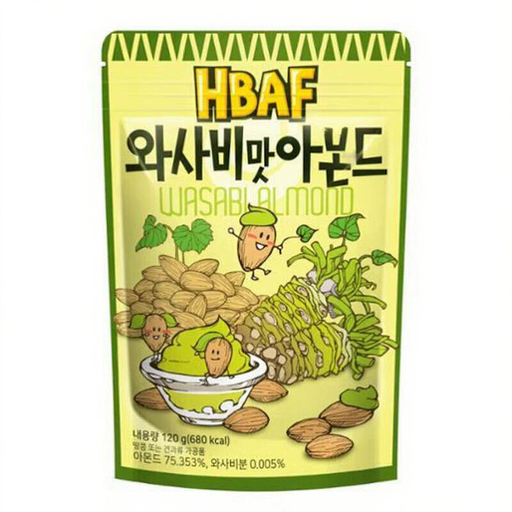
HBAF Almond Wasabi Flavor, 120 g
Good for anyone looking for a strongly seasoned snack who checks the ingredients and allergens first.
Label value: 270 kcal per 100 g; the product information lists 75% almonds. The ingredients list includes sugar and syrup, among other things. As well as almonds, the product contains milk, soya and mustard.
View on Joybuy
 No image available
Jia Zhou Yuan Ye Original Almond Kernels, 160 g
Good for anyone looking for almond kernels with almonds as the only ingredient.
Label value: 622 kcal per 100 g. Ingredients: 100% almond kernels.
View on Joybuy
 No image available
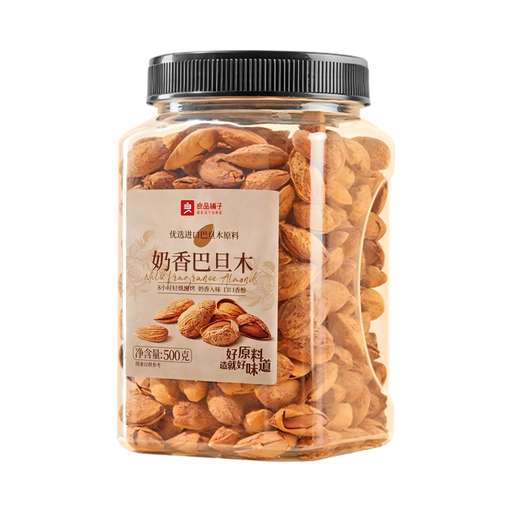
Bestore Milk-Flavored Almonds with Sweetener, 500 g
Good for anyone looking for flavoured almonds who wants to check the ingredients list.
Label value: 612 kcal per 100 g. The ingredients list includes sugar, salt and sweeteners. The product information warns of possible cross-contact with peanuts, soya, milk, sesame and gluten-containing wheat.
View on Joybuy
Frequently asked questions
Are almonds low in calories?
Not per 100 g, according to the products we checked: the labels list 591 to 661 kcal per 100 g. For solid foods, the European Commission defines a ‘low energy’ claim as no more than 40 kcal (170 kJ) per 100 g; having a small portion does not change that per-100 g limit.
How do I calculate the energy content of my portion?
Multiply the kcal per 100 g on the label by the weight of your portion, then divide by 100. Weigh the amount you eat; 25 g is a portion for comparison, not a personal recommendation.
Do ‘unsalted’ or ‘no added fat’ mean almonds contain less energy?
No. These descriptions do not, in themselves, tell you anything about the energy per 100 g. Compare the value on the label and check the ingredients for the specific variety. For example, Jumbo lists sunflower oil in its unsalted almonds.
How should I store almonds once they’re open?
Store nuts in a dry place in a tightly sealed container, and follow the instructions on the pack you’ve chosen. For the AH variety we checked, Albert Heijn recommends storing it in a cool, dark place and sealing the pack properly after use.
What should I look out for if I have an almond allergy?
Almonds are an allergen. Check the ingredients list and any warnings about cross-contact with other allergens. The Netherlands Food and Consumer Product Safety Authority explains the requirements for allergen information on labels.


