What to look for when buying
For a packed uni lunch, it helps to first work out how much you want to have in stock and when you’ll use it. Then compare the packaging, preparation method and ingredients.
| What to consider |
What to look for |
Who this matters most to |
| Quantity and price |
Compare the price per kilo, the total spend and the amount you expect to use. |
If I want to stock up, I look beyond the multipack claim and check the unit price too; around 33% of consumers prioritise value when buying in bulk. |
| Packaging and how much you use |
Check how many individual packs there are, whether the bag is resealable and what the storage instructions say. |
When my lunch days vary, I want to portion out what I need and store the rest properly; around 25% of consumers prioritise suitable packaging and portioning. |
| Preparation and ingredients |
Check whether the almonds are unroasted, roasted, unsalted or seasoned, and read the ingredients list. |
If I’m looking for a particular preparation method or composition, I check the label rather than relying on a single product term; around 25% of consumers prioritise this. |
| Allergens and sharing |
Check the allergens and warnings on the packaging; if serving almonds in a canteen, name the specific type of nut. |
When I take almonds to share, I want to be able to check and pass on allergen information; around 17% of consumers prioritise this. |
The Netherlands Nutrition Centre (Voedingscentrum) recommends unsalted nuts and varying the types of nuts you eat. That doesn’t automatically make a seasoned variety unsuitable for everyone’s lunch; the key is to check whether the preparation suits your preferences.
Almonds at Joybuy
These Joybuy products include almonds in smaller packs and larger bags, with both unsalted and roasted varieties. Compare the quantity and ingredients with how you use almonds for lunch.
 Image unavailable
Jia Zhou Yuan Ye Original Almond Kernels 160 g
The 160 g pack could be a good fit if you want to take a small amount of almond kernels with you and portion them yourself.
The description states that it contains 100% almond kernels, is ready to eat and comes in resealable packaging.
View at Joybuy
 Image unavailable
g'woon Almonds Raw & Unsalted 200 g
This 200 g pack is a good fit if you’re looking for raw, unsalted almonds and want to portion them out yourself.
The ingredients list names almonds; the description recommends sealing the pack carefully after opening.
View at Joybuy
 Image unavailable
Anatolia Roasted Salted Almonds 500 g
The 500 g bag could be a good fit if you want a larger supply of roasted, salted almonds to portion out.
The description lists almonds and salt as ingredients; this isn’t an unsalted variety.
View at Joybuy
 Image unavailable
Anatolia Badem Natural (Almond) 500 gr
The 500 g pack could be a good fit if you want to stock up on almonds and portion them out yourself.
The product description states that it contains 100% almonds, is ready to eat and should be stored with the pack closed after opening.
View at Joybuy
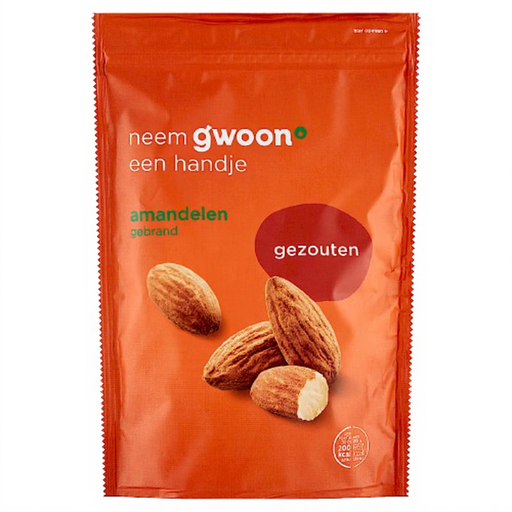 Image unavailable
g'woon Roasted & Salted Almonds 150 g
This 150 g pack is a good fit if you’re looking for a smaller amount of roasted, salted almonds.
The description states that it contains 97% almonds, sunflower oil and salt. The bag is resealable.
View at Joybuy
Frequently asked questions
Are the four packs in a 4-pack also four lunch portions?
No. The AH 4-pack we looked at contains four 190 g items, not four set lunch portions. Decide how much to take for each lunch and how to store an opened pack.
How should I store opened unsalted almonds?
Store them in a tightly sealed container in a cool, dark and dry place, as recommended by the Netherlands Nutrition Centre. The Storage Guide (Bewaarwijzer) recommends keeping opened unsalted almonds in a kitchen cupboard for six months or in the freezer for one year; follow the label instructions for an unopened pack.
What should I compare besides the price of the bag?
Compare the price per kilo as well as the total cost of the pack. This shows you how the quantity compares and how much you’ll spend in one go. If you’re ordering online, you can also check the final order total before paying.
What should a university canteen do if it serves almonds from a large pack?
The canteen must tell consumers about any allergens present and name the specific type of nut. The Netherlands Food and Consumer Product Safety Authority (NVWA) describes how this information can be provided in writing or verbally. If it’s provided verbally, visitors must be told that they can ask for it.
What can I do if the almonds I bought are faulty?
Contact the seller if the product doesn’t meet your reasonable expectations and it isn’t your fault. ACM ConsuWijzer explains that in this situation the seller must offer a free solution under the legal guarantee. As a consumer, you can also report a potentially unsafe food product to the Netherlands Food and Consumer Product Safety Authority.


