What should you look for when choosing?
Start by checking the energy per 100 g, then decide how many grams you’ll actually put in your bowl. Next, choose based on salt, flavour and the packaging that suits how you’ll use it.
| What to consider |
What to look for |
Who it’s for |
| Energy per portion |
Compare kcal per 100 g, then calculate the energy for the weight you’ve measured out. |
If you want to limit your portion while watching TV, weighing it out can help. Around 42% of consumers prioritise the energy in their portion. |
| Salt |
Check the ingredients and salt content per 100 g; unsalted doesn’t automatically mean lower in energy. |
If you want to avoid added salt, check both the product description and the label. Around 25% of consumers prioritise this. |
| Preparation and flavour |
Check the exact variety and consider the preparation method, flavourings and nutritional information separately. |
If you’re mainly looking for a savoury snack, flavour may matter more to you than salt or energy. Around 17% of consumers choose flavour first. |
| Packaging and storage |
Check the pack weight in grams and the storage instructions; a resealable bag isn’t a measured portion. |
If you want to store leftovers and split the amount over several evenings, choose packaging that suits how you plan to use it. Around 16% of consumers prioritise packaging and practicality. |
Brands to consider
The nutritional information listed applies to specific varieties and pack sizes, not to entire brands. Always compare the label for the exact variety.
Duyvis
There are varieties with unsalted or savoury flavours, prepared in different ways.
- Albert Heijn lists 635 kcal and 1.1 g salt per 100 g for Duyvis Oven roasted.
- Duyvis describes Almonds Original as oven-roasted without added oil or fat. This description of how it’s prepared isn’t a claim about calories or salt.
Albert Heijn
The own-brand varieties reviewed include unroasted and roasted unsalted almonds.
- Albert Heijn lists 613 kcal per 100 g for its 450 g pack of unroasted almonds and 627 kcal per 100 g for its 190 g pack of roasted almonds.
- These label values apply to those varieties and don’t show that unroasted almonds generally contain less energy.
Jumbo
The own-brand variety reviewed is roasted and unsalted, in a 140 g pack.
- Jumbo lists 661 kcal per 100 g and 165 kcal per 25 g for this variety.
- The ingredients list includes almonds and sunflower oil, so unsalted doesn’t mean oil-free here.
PLUS
The unsalted variety reviewed is a roasted almond snack in a 150 g stand-up pouch.
- PLUS lists 98% almonds and sunflower oil in the ingredients.
- The product page shows 628 in the calories column per 100 g; check the other information on the pack label too.
Lidl
The Dutch product listings include unsalted almonds and Alesto Spanish almonds in different varieties.
- The product listings offer different types of almonds to compare by variety.
- Don’t assume a product has a calorie advantage based on its name alone; check the nutritional information on the exact pack.
ALDI
The Dutch listings include, among other products, Trader Joe’s roasted unsalted almonds in a 200 g pack.
- ALDI describes the unsalted pack as resealable.
- The separate salted or smoky-flavoured variety is a different product; check the flavour and variety when choosing.
Almonds at Joybuy
Joybuy picks for weighing out almond portions and comparing plain, unsalted and seasoned varieties.
 No image available
Jia Zhou Yuan Ye Original Almond Kernels 160 g
Almond kernels in a 160 g pack; weigh out the amount you want for an evening in front of the TV.
View at Joybuy
 No image available
g’woon Almonds Raw & Unsalted 200 g
An unroasted, unsalted variety in a 200 g pack; weigh out your portion and compare the nutritional information per 100 g.
View at Joybuy
 No image available
Anatolia Roasted Salted Almonds 500 g
Roasted, salted almonds in a 500 g pack; if you’re comparing this savoury variety, check the salt and energy per 100 g.
View at Joybuy
 No image available
Anatolia Badem Natural Almonds 500 g
A plain variety in a 500 g pack; weigh out your own portion and check the nutritional information on the exact pack.
View at Joybuy
 No image available
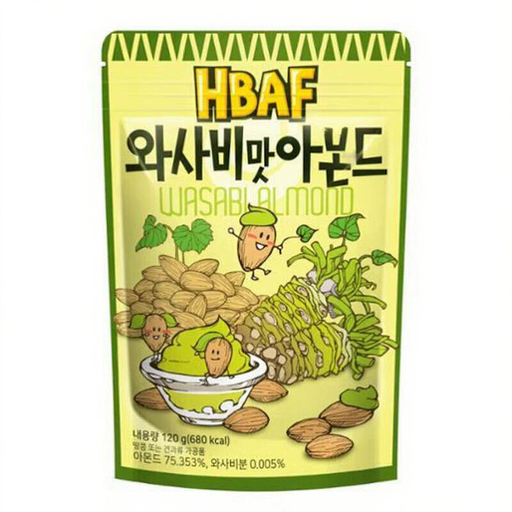
HBAF Wasabi-flavoured Almonds 120 g
A seasoned variety with wasabi flavour in a 120 g pack; check the ingredients and nutritional information per 100 g on the pack.
View at Joybuy
Frequently asked questions
How do you calculate the energy in your bowl of almonds?
Multiply the kcal per 100 g on the label by the number of grams you’ve weighed out, then divide by 100. For example, 15 g of AH Unroasted Almonds contains 91.95 kcal, based on the 613 kcal per 100 g listed by Albert Heijn. This is a calculation example, not personal nutritional advice.
Can a small portion of almonds be sold as ‘low calorie’?
Not just because the portion is small. For a low energy claim, solid foods must contain no more than 40 kcal (170 kJ) per 100 g, according to the European Commission. Separate conditions apply to a reduced energy claim, including at least 30% less energy and a statement of the factor that brings about the reduction.
How should you store an opened pack of almonds?
Store nuts in a tightly sealed container in a dry place, and follow the instructions on the pack. The Netherlands Nutrition Centre recommends storing nuts in a tightly sealed container in a dry place; for the Duyvis variety, Albert Heijn recommends keeping an opened bag in a light- and airtight container.
What should you check if you have allergies or children are eating almonds?
Check the ingredients and warnings on the label for the exact variety. The NVWA says allergens must be clearly listed in the ingredients. Product information from Albert Heijn and Jumbo also warns that young children can choke on nuts, so don’t automatically give whole almonds to children as a snack.


