What should you look for when choosing?
Start with the energy per 100 g, work out the amount for the portion you’re taking with you, then check the preparation method, ingredients and packaging.
| What to consider |
What to look for |
Who is this important to? |
| Energy in your portion |
Compare kcal per 100 g, then weigh your own portion. Use: kcal per 100 g × portion weight in grams ÷ 100. |
If I want to manage my calorie intake, I need to be able to calculate the energy in my weighed snack. Around 42% of consumers prioritise energy per portion when buying. |
| Preparing and taking it with you |
Check that you can reseal the pack after weighing out a portion, and follow the storage instructions on the label. |
I want to prepare a portion at home before my shift and store the rest. Around 25% of consumers prioritise convenience when taking snacks with them. |
| Ingredients and salt |
Read the ingredients list and check separately whether salt or oil has been added; ‘unsalted’ doesn’t automatically mean ‘oil-free’. |
I want an unsalted snack and check whether it contains anything besides almonds. Around 25% of consumers prioritise ingredients and composition. |
| Savoury flavour |
Check the ingredients and nutrition table for the exact variety; a description of how it’s prepared doesn’t indicate that it’s low in energy. |
If I want a savoury flavour, I want to consider that separately from the calories and salt content. Around 8% of consumers prioritise savoury flavour when buying. |
Almond products on Joybuy
These product picks are suited to taking almonds as a snack during a night shift. Compare the stated energy per 100 g and weigh out the amount you want to take with you.
 Image unavailable
Jia Zhou Yuan Ye Original Almond Kernels 160 g
The ingredients list states 100% almonds; the nutritional information provided lets you calculate the energy in a weighed portion.
The product information states 622 kcal per 100 g. Contains almonds.
View on Joybuy
 Image unavailable
g’woon Almonds Raw & Unsalted 200 g
This raw, unsalted variety is intended as a snack; you can use the stated energy per 100 g to work out the value for a weighed portion.
The product information states 591 kcal per 100 g and lists almonds as an ingredient. Contains almonds.
View on Joybuy
 Image unavailable
Anatolia Badem Natural (Almond) 500 g
The product information states 100% almonds, so you can calculate the energy in a portion without accounting for other ingredients in the stated composition.
The stated nutritional value is 578 kcal per 100 g. Contains almonds.
View on Joybuy
 Image unavailable
Anatolia Roasted Salted Almonds 500 g
This roasted variety has added salt; check the ingredients if you’re specifically looking for an unsalted snack.
The product information states 620 kcal and 1,0 g salt per 100 g. Contains almonds.
View on Joybuy
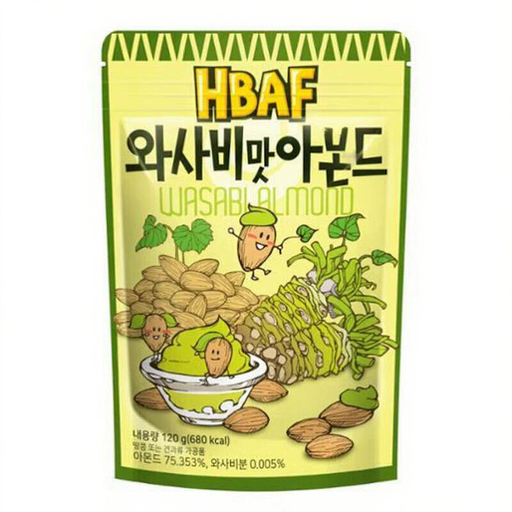 Image unavailable
HBAF Almond Wasabi Flavor 120 g
This seasoned almond snack is an option if you’re after a wasabi and mustard flavour; it isn’t a natural variety.
The product information states 75% almonds and 270 kcal per 100 g. The ingredients also include sugar, syrup, flavourings and vegetable oils. The listed allergens include almonds, milk, soya and mustard.
View on Joybuy
Frequently asked questions
Can almonds be advertised as low in calories in the Netherlands?
For solid foods, the European Commission sets a maximum of 40 kcal (170 kJ) per 100 g for a low-energy claim. The almond varieties reviewed with available nutritional values are above this limit. A smaller portion contains less energy than a larger one, but that doesn’t change the product claim.
How do I calculate the energy in my portion?
Weigh the amount you want to take with you, then multiply the kcal per 100 g on your label by the weight in grams; divide the result by 100. For AH Unsalted Almonds, which contain 627 kcal per 100 g, a 15 g example portion provides 94,05 kcal. This is a calculation based on the declared value, not personal nutritional advice.
Do I need to eat almonds on every night shift?
No. VGZ lists unsalted nuts as one option, alongside foods such as yoghurt, quark and raw vegetables. This is practical nutritional information, not a prescribed routine or evidence that almonds improve your alertness.
How should I store the rest of the pack?
Store nuts in a dry place in a tightly sealed container and follow the instructions on the packaging. The Voedingscentrum gives cool storage, for example at 10–15 °C, as a general preference.
Are unsalted almonds suitable if I have an almond allergy?
No. Being unsalted doesn’t remove the almond allergen. The NVWA says allergens must be clearly identified; also check product-specific warnings about other nuts, peanuts or wheat.


