What should you look for when choosing?
First decide whether you can portion the almonds yourself or would rather take a larger pack with you. Then check the ingredients and flavour, and consider how you’ll store the rest.
| What to consider |
What should you look for? |
Who is this important for? |
| Taking one portion |
Check the serving size and number of servings; the total pack weight isn’t the same as one portion. |
If you want to take one measured snack with you without portioning it on the go, convenience is your main consideration. Around 33% of consumers put this need first. |
| Ingredients and salt |
Read the ingredients list and compare the salt per 100 grams in the exact variety. |
Would you like unsalted almonds and want to know whether they also contain oil? Around 27% of consumers give the ingredients and choosing unsalted the highest priority. |
| Storing the rest |
Check whether the pack is resealable and follow the storage advice. |
If you use the pack more than once, you’ll want to seal it properly after weighing out a portion. Around 20% of consumers look at this first. |
| Pack size |
Choose a pack size that suits how often you take almonds with you and how much you want to weigh out yourself. |
Do you take almonds with you regularly and want to choose a pack size to match? Around 13% of consumers start by looking for a suitable pack size. |
| Flavour and preparation |
Check whether the almonds are unroasted, roasted or seasoned, and look at the ingredients for that variety. |
If savoury flavour is the deciding factor for you, check the specific seasoning and salt content. Around 7% of consumers make flavour their top priority. |
Almonds at Joybuy
These product choices focus on almonds you can weigh out yourself for lunch on the go. The seasoned variety is a separate option for anyone looking for a savoury flavour.
 Image unavailable
Jia Zhou Yuan Ye Original Almond Kernels 160 g
The product description lists 160 grams and 100% almond kernels, making these suitable for portioning yourself.
According to the description, the almonds are ready to eat. Once opened, store them in a cool, dry place and seal the pack.
Joybuy
 Image unavailable
g'woon Almonds Raw & Unsalted 200 g
The title describes raw, unsalted almonds; the 200 gram pack gives you plenty to portion yourself.
The product description lists almonds as the ingredient and advises keeping the pack sealed after opening.
Joybuy
 Image unavailable
Anatolia Badem Natural (Amandel) 500 gr
The product description lists 500 grams and 100% almonds, a larger pack to weigh out yourself.
According to the description, the almonds are ready to eat; keep the pack tightly sealed after opening.
Joybuy
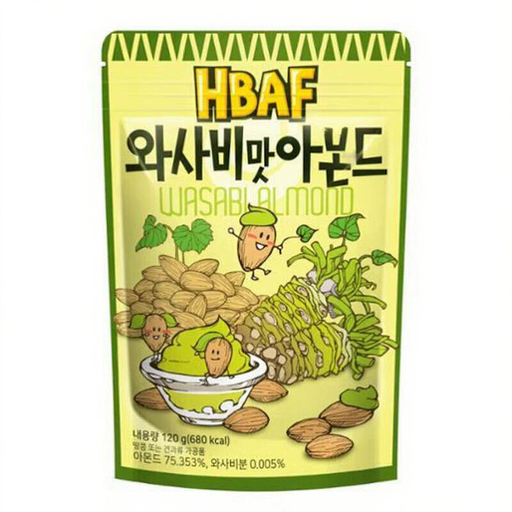 Image unavailable
HBAF Almond Wasabi Flavor 120 g
The product description lists a 120 gram bag with wasabi and mustard seasoning, an option for anyone who likes a savoury, spicy flavour.
According to the description, the product is 75% almonds. The ingredients list includes milk, soya, mustard and sugar, among other ingredients.
Joybuy
Frequently asked questions
Does unsalted mean no oil has been added?
No, it depends on the product. Jumbo lists sunflower oil in its unsalted almonds, while Albert Heijn lists almond as the only ingredient in its unsalted variety. Check the ingredients on the exact pack.
How should you store a portion you’ve weighed out to take with you?
Put the portion in a well-sealed container and keep the almonds dry. Also follow the instructions on the pack: for its unsalted almonds, Albert Heijn recommends storing them in a cool, dark, dry place and sealing the pack tightly after use.
Can you give whole almonds to young children?
Not without considering the risk of choking. Albert Heijn’s product pages warn that young children can choke on nuts, so don’t assume whole almonds are a suitable snack for children.
What allergen information is shown on prepacked food in the Netherlands?
According to the Netherlands Food and Consumer Product Safety Authority, allergen information must appear on the label of prepacked products. Nuts are among the 14 allergens that must be declared; EU guidance says allergens present must be emphasised in the ingredients list.
What rules apply to warnings about possible cross-contamination?
Since 1 January 2026, new precautionary allergen labelling rules have applied in the Netherlands. The Netherlands Food and Consumer Product Safety Authority gives examples of wording such as ‘May contain X’ and ‘Not suitable for people with an X allergy’; any such warning must be based on a risk assessment. It refers to possible cross-contamination, not almonds used as an ingredient.


