
Snackers who watch their portions
You want to decide for yourself how many almonds you eat on King’s Day. The energy in a weighed portion matters more to you than the packaging.


Plain almonds are not a low-calorie food: according to the European Commission, a solid food may only be described as low-calorie if it contains no more than 40 kcal (170 kJ) per 100 g. If you want fewer calories per snack, first decide how many grams you’ll eat, then compare the energy, ingredients and salt content of the exact variety.
You want to decide for yourself how many almonds you eat on King’s Day. The energy in a weighed portion matters more to you than the packaging.
You look for a short ingredients list and want to avoid added salt. Then you can decide whether you prefer unroasted, roasted or oil-roasted almonds.
You’re looking for an amount that’s practical to take with you or serve at the table. You’ll need to decide whether to weigh out portions in advance, take a larger pack or choose a savoury flavour.
Choose this variety if: you’re looking for almonds with a simple ingredient list and no added salt. The PLUS product reviewed contains almonds only.
Bear in mind: PLUS lists 591 kcal per 100 g for this 200 g bag, so unroasted and unsalted does not mean low-calorie.
Choose this variety if: you want roasted almonds with no added salt. Almonds are the only ingredient in the 190 g AH pack reviewed.
Bear in mind: Albert Heijn lists 627 kcal per 100 g, so calculate the energy for the amount you weigh out.
Choose this variety if: you prefer roasted almonds and are happy for sunflower oil to be an ingredient. The Jumbo product reviewed is 99% almonds.
Bear in mind: Jumbo lists 661 kcal per 100 g. This is the value for this specific product, not an established effect of the preparation method.
Choose this variety if: a savoury flavour matters more to you than choosing a variety with no added salt. Duyvis describes Almonds Original as oven-roasted without added oil or fat.
Bear in mind: the Dutch Albert Heijn and PLUS product pages list 635 kcal and 1,1 g salt per 100 g for Duyvis Oven roasted almonds, 125 g.
| What to consider | What should you check? | Who is this important to? |
|---|---|---|
| Energy per portion | Compare the kcal per 100 g on the label and weigh your portion. Calculation: kcal per 100 g × portion weight in grams ÷ 100. | If you want to decide for yourself how much to eat during the celebrations, check the energy in the amount you’ve weighed out. Around 42% of consumers prioritise calories per snack. |
| Ingredients and salt | Check the ingredients and salt content separately; unsalted does not automatically mean oil-free. | If a simple ingredient list with no added salt is your priority, check the ingredients before choosing a variety. Around 25% of consumers put this need first. |
| Taking them out and sharing | Check the net weight and whether the pack is resealable. Portion out the contents in advance if you want to keep track of how much you eat. | It can be handy to prepare the amount in advance if you’re taking them out or sharing them. Around 17% of consumers prioritise convenience when taking and sharing snacks. |
| Savoury flavour | For seasoned almonds, check the ingredients, allergens and nutrition table; a description of how they’re prepared doesn’t, on its own, tell you their calorie content. | If you mainly choose almonds for their flavour to serve with drinks, you’ll want to know which ingredients they contain and how much salt they have. Around 16% of consumers prioritise a savoury flavour. |
A product with no added salt can still be high in energy per 100 g. The word ‘unsalted’ doesn’t tell you how many calories are in your portion.
Compare the kcal per 100 g for the exact variety and weigh the amount you want to eat.
Unsalted almonds may contain sunflower oil, while a variety with no added oil may contain salt or other ingredients.
Check the ingredients, salt content and energy separately. Duyvis describes roasting Almonds Original without added oil or fat as a product feature.
The net weight of a bag isn’t the same as the amount you’ll want to eat in one sitting. A larger bag doesn’t mean you can skip weighing out a portion.
Weigh out your portion before you leave or put the almonds on the table. Store any leftovers in a dry, sealed container, as advised by the Netherlands Nutrition Centre.
The AH varieties reviewed offer different points of comparison when choosing unsalted almonds.
For the PLUS products reviewed, the preparation method and exact pack make a difference to the ingredients and nutritional values on the label.
The 140 g unsalted variety reviewed is roasted in oil.
The Almonds Original and Oven roasted products reviewed may be worth considering if you’re looking for a savoury almond variety.
The Dutch Lidl page lists unsalted almonds and Alesto Spanish almonds in different varieties.
The Dutch Trader Joe’s listing reviewed is for 200 g of almonds in roasted, salted or smoky-flavour varieties.
This selection of Joybuy products includes plain, unsalted and seasoned almonds. Compare the label values for the specific variety and weigh the amount you want to eat.
 Image unavailable
An option for weighing out your own portion of plain almonds.
The product listing gives 578 kcal and 0,00 g salt per 100 g, with 100% almonds as the ingredient.
Contains almonds (nuts).
 Image unavailable
This variety is for anyone looking for raw, unsalted almonds and wanting to choose their own portion size.
The product listing gives 591 kcal per 100 g and a net weight of 200 g; almonds are listed as an ingredient.
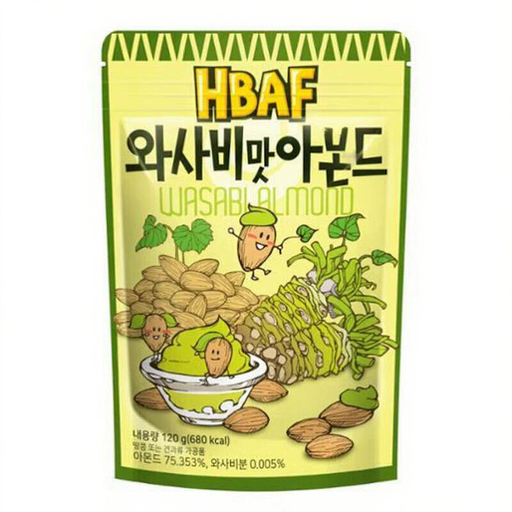 Image unavailable
A seasoned variety for anyone who wants to take wasabi-flavoured almonds out or share them.
The product listing gives a weight of 120 g and 270 kcal per 100 g; check the nutritional values on the pack for the exact variety.
The ingredients list states 75% almonds, as well as sugar, salt, oils and flavourings. Milk, soya and mustard are also listed.
 Image unavailable
A plain option if you want to weigh out almond kernels for a snack.
The product listing gives 622 kcal per 100 g, a net weight of 160 g and 100% almond kernels as the ingredient.
Contains almonds (nuts).
 Image unavailable
A roasted, salted variety for anyone who likes this flavour and is happy to have salt.
The product listing gives 620 kcal and 1,0 g salt per 100 g, with a net weight of 500 g.
Contains almonds (nuts). The product description warns that the product may pose a choking hazard to young children.
A small portion doesn’t make the product itself low-calorie. According to the European Commission, the low-calorie claim for solid foods has a limit of no more than 40 kcal (170 kJ) per 100 g; you can, however, calculate the energy in a weighed portion.
Multiply the kcal per 100 g on the label by the weight of your portion in grams, then divide by 100. Albert Heijn lists 627 kcal per 100 g for the AH Unsalted Almonds reviewed; a weighed 15 g portion therefore works out to 94,05 kcal.
No. Check the ingredients list for the exact variety. The 200 g PLUS product reviewed contains almonds only, while the 140 g unsalted Jumbo product also contains sunflower oil.
Store the nuts in a dry, sealed container, and also follow the use-by and storage information on the pack. The Netherlands Nutrition Centre advises storing nuts in a dry, well-sealed container.
Read the ingredients and allergen information on the pack for the exact variety. Almonds are themselves an allergen; other allergens present can vary by product. The Netherlands Food and Consumer Product Safety Authority states that allergens must be clearly identifiable in the ingredients list.