What should you look for when choosing?
Start by checking whether almonds are allowed for your child and under the school’s or childcare provider’s policy. Then look at the specific gluten or lactose information, the ingredients and the eating situation.
| What to consider |
What to check before buying |
Who should pay particular attention? |
| Allergies and school policy |
Check whether almonds need to be avoided and read the allergen information on the exact packaging. Stichting Voedselallergie classifies almonds as a tree nut allergen. |
If an allergy, medical advice or school policy might rule almonds out, I want to know before comparing flavour or ingredients. Around 36% of consumers make allergies and suitability their top priority. |
| Avoiding gluten or lactose |
Look for information on the exact variety and also check its ingredients and allergen information. A lactose-free claim on its own does not confirm that a product is suitable for someone with a milk allergy. |
If my child can eat almonds, I want a clear statement about the substance we need to avoid. Around 29% of consumers prioritise this specific dietary information. |
| Ingredients and preparation |
Compare the ingredients, added salt and oil separately; unsalted doesn’t necessarily mean oil-free. Jumbo lists sunflower oil in the ingredients of its unsalted almonds. |
If I’m mainly looking for a simple, unsalted snack to use regularly, I want to know what else it contains besides almonds. Around 21% of consumers put ingredients first. |
| Eating situation and storage |
Consider whether whole nuts are suitable for your child’s age and the time they’ll be eating them. Amsterdam UMC advises eating whole nuts calmly at the table and under supervision; also follow the storage instructions on the packaging. |
If the snack is going to school, I want it to suit the break and to know how to store the packet. Around 14% of consumers make the eating situation and packaging convenience their top priority. |
Almond products on Joybuy
This selection includes natural or unsalted almonds, as well as roasted, salted varieties. Check the allergen information on each pack and make sure the preparation suits your preferences.
 No image available
Jia Zhou Yuan Ye Original Almond Kernels 160 g
An option if you’re looking for ready-to-eat almond kernels; the product description lists 100% almond kernels.
Pack size: 160 g. Contains almonds; not suitable if almonds need to be avoided. The eating situation and supervision are important when serving whole nuts.
View on Joybuy
 No image available
g'woon Almonds Raw & Unsalted 200 g
Suitable if you’re looking for raw, unsalted almonds; the product information lists almonds as an ingredient.
Pack size: 200 g. The description advises storing in a tightly sealed pack. Contains almonds; check the packaging for allergen information.
View on Joybuy
 No image available
Anatolia Badem Natural Amandel 500 g
A natural almond variety for anyone looking for a snack that, according to the product description, is ready to eat.
The description lists 100% almonds and advises storing in a cool, dry place. Contains almonds; consider the eating situation when serving whole nuts.
View on Joybuy
 No image available
Anatolia Roasted Salted Almonds 500 g
A roasted, salted variety if that’s the preparation and flavour you’re looking for.
Pack size: 500 g. The product description mentions snacking and storing in a tightly sealed pack. Contains almonds and is salted; check the allergen information on the packaging.
View on Joybuy
 No image available
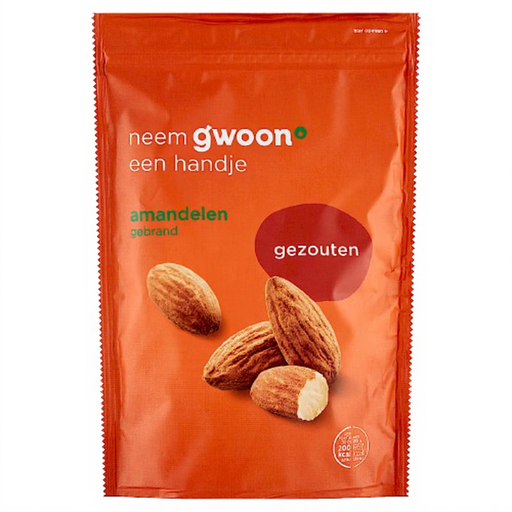
g'woon Roasted & Salted Almonds 150 g
A roasted, salted option if you fancy a savoury almond snack.
Pack size: 150 g. The product information lists 97% almonds, sunflower oil and salt, and warns that the product may contain peanuts and other nuts. Contains almonds and is salted.
View on Joybuy
Frequently asked questions
Does lactose-free mean a product is suitable for someone with a milk allergy?
No, not on the basis of that claim alone. Lactose is milk sugar; with a cow’s milk allergy, the immune system reacts to milk proteins. So check the allergen information relevant to your child, even if a product is described as lactose-free.
What do warnings about possible allergens on labels mean?
They warn that an allergen may be present unintentionally, but they don’t make a product containing almonds nut-free. The NVWA says that rules for these warnings apply from 1 January 2026, including a requirement for them to be based on a risk assessment. The specified wording is ‘May contain X’ and ‘Not suitable for people with an X allergy’.
Is “gluten-free” an optional product claim?
No. Regulation (EU) No 828/2014 sets requirements for the claims “gluten-free” and “very low gluten”. The European Commission says these rules have applied since 20 July 2016; Regulation (EC) No 41/2009 was repealed on that date.
Can school-age children always eat whole almonds?
No, the eating situation and supervision are still important. Amsterdam UMC advises giving children under 4 nut butter instead of whole nuts and warns that older children can choke too. For whole nuts, the hospital recommends eating calmly at the table and staying with the child.
What should I do if the online allergen information differs from the packaging?
If you have a dietary requirement, don’t simply rely on whichever of the two claims seems more favourable. Albert Heijn and PLUS advise checking the packaging before eating the product and contacting their customer service teams if you have any questions.


