
You need to avoid almonds
If you have a diagnosed allergy that means you must avoid almonds, you’ll need to choose a different snack category. The Food Allergy Foundation advises checking the full ingredients list on every pack.


If you need to avoid almonds, no type of almond is suitable, even if it is labelled gluten-free or lactose-free. If you can eat almonds, choose according to the specific allergen you avoid, and check both the ingredients list and any warning about possible cross-contamination. A short ingredients list makes it easier to see what a product contains, but it doesn’t prove that it is free from peanuts, other nuts or milk ingredients.
If you have a diagnosed allergy that means you must avoid almonds, you’ll need to choose a different snack category. The Food Allergy Foundation advises checking the full ingredients list on every pack.
If you can eat almonds but avoid peanuts or certain other nuts, it’s important to check the warning for the specific variant as well as the ingredients list.
A claim such as gluten-free only answers that specific dietary question. Lactose-free also doesn’t mean free from milk protein; the Netherlands Nutrition Centre distinguishes between lactose intolerance and cow’s milk allergy.
First check whether almonds themselves are suitable for your diet. Then check warnings for other allergens, followed by any specific dietary claims and how practical the product is to use.
| Concern | What should you check? | Who is this important to? |
|---|---|---|
| Almonds themselves | Check the full ingredients list and your own list of allergens to avoid. | If almonds aren’t safe for me, I rule out the whole category and look for a different type of snack. Around 36% of consumers prioritise avoiding almonds when making this choice. |
| Cross-contamination warning | Check which allergens are specifically listed after ‘may contain’. | I can eat almonds but need to avoid peanuts or certain other nuts, for example, so I check the warning for the specific variant. Possible cross-contamination is the deciding factor for around 29% of consumers. |
| Specific dietary claim | Check that the claim meets your needs and read the other ingredients too. | If I can eat almonds but need a different specific property, such as gluten-free, I want to know exactly what that claim covers. Around 21% of consumers consider a specific free-from requirement their main concern. |
| Checking again and storage | Read every pack again and follow the storage instructions. | Once I’ve checked that the product suits my diet, I also look for a suitable pack size and instructions for storing it after opening. Everyday use is the main concern for around 14% of consumers. |
Almonds are an allergen in their own right. A gluten-free or lactose-free claim doesn’t change the fact that the product contains almonds.
Start with your personal list of allergens to avoid. If almonds are on it, choose a different snack category.
Even a simple product made with almonds as its only ingredient may carry a warning about peanuts or other nuts.
As well as checking the ingredients, read the full cross-contamination warning and follow the advice you’ve been given about what to avoid.
These preparation details don’t, by themselves, tell you anything about other ingredients or possible cross-contamination. Flavoured varieties may also contain additional ingredients.
Assess preparation claims separately from the ingredients list and allergen warnings.
The recipe or product information may change, even if the brand or product name stays the same.
Check the ingredients list and warnings on every new pack before using the product.
The product range reviewed includes Duyvis Almonds Original and Oven roasted almonds.
AH Terra Unroasted Almonds is the plain variety reviewed, in a 500 g pack.
The own-brand variety reviewed is Unsalted Almonds in a 140 g pack.
Alesto is the relevant nut range. Lidl lists Spanish almonds in various varieties, including a 200 g pack.
ALDI Netherlands lists unroasted almonds in a 200 g pack.
The variety reviewed is Unroasted and Unsalted Almonds in a 200 g stand-up pouch.
These Joybuy products are only an option if you can eat almonds. Check the ingredients and allergen information for the exact variety, focusing on what’s relevant to your diet.
 No image available
The product description says these are 100% almond kernels and suggests enjoying them as a snack or adding them to baked goods, yoghurt, cereal and salad.
Contains almonds; not suitable if almonds are on your list of foods to avoid.
 No image available
The name describes raw, unsalted almonds. The description lists almonds as an ingredient and recommends resealing the pack securely after opening.
Contains almonds; not suitable if almonds are on your list of foods to avoid.
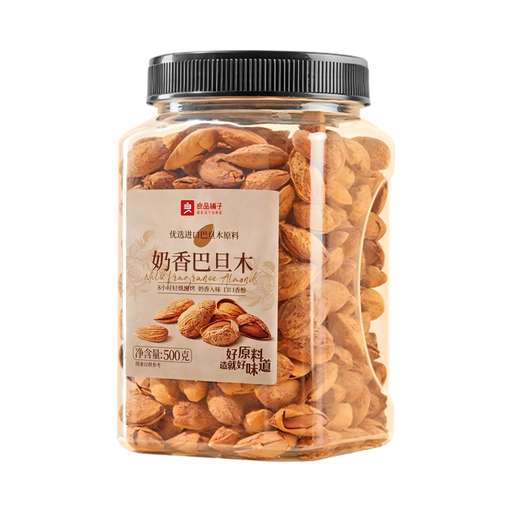 No image available
The description mentions almonds with a milky-flavoured seasoning and sweeteners; the product is intended as a snack.
Contains almonds and sweeteners. According to the product information, peanuts, soya, milk, sesame and gluten (wheat) are also handled at the same production site.
 No image available
The ingredients information lists 100% almonds. The description suggests enjoying them as a snack or adding them to baked goods, meals, salads, yoghurt and desserts.
Contains almonds; not suitable if almonds are on your list of foods to avoid.
 No image available
The product description lists 97% almonds, sunflower oil and salt; the pack is resealable.
Contains almonds and, according to the product information, may contain traces of peanuts and other nuts.
According to the Netherlands Food and Consumer Product Safety Authority (NVWA), the 14 legally designated allergens must be listed in the ingredients list for prepacked foods. Allergen information for non-prepacked foods must also be available before purchase.
‘May contain’ is a precautionary warning about possible cross-contamination, not a list of ingredients. Since 1 January 2026, the NVWA has been enforcing the new rules on allergen warnings; for standard prepacked products, such a warning must be based on a risk assessment. The absence of a warning isn’t a general claim that a product is allergen-free.
No. Lactose intolerance concerns milk sugar, while cow’s milk allergy concerns milk proteins. If you have a cow’s milk allergy, check for milk ingredients and relevant warnings rather than relying on a lactose-free claim.
Yes. Check the full ingredients list and allergen warnings on every pack. The Food Allergy Foundation advises taking extra care if the packaging or recipe has changed.
Don’t use the product as a suitable option while the discrepancy makes it difficult to check for allergens. Ask the retailer or manufacturer for clarification, and base your assessment on the information on the pack you actually have.