When comparing almonds for a festival snack, look at the protein per serving: a figure per 100 g doesn’t tell you how much you’ll actually eat. For post-exercise recovery, your overall diet and the effort you’ve put in also matter; the Netherlands Nutrition Centre says most people who do sport don’t need special protein products if they eat a varied diet. A protein figure alone doesn’t show that a product can be labelled ‘high in protein’: specific conditions apply under EU rules.
Who are these options for?
People who prioritise recovery after exercise
If you’re exercising around your festival weekend, check how much a serving of almonds contributes to your overall diet. The Netherlands Nutrition Centre and the Dutch Association of Sports Nutrition Experts consider food after exercise in the context of your other meals and your next bout of exercise.
Festival-goers who want to pack practically
If you want to spread your almonds across several snack breaks, check the pack size, whether the pack can be resealed and the storage instructions. ALDI describes the packaging for Trader Joe’s unroasted almonds as resealable.
Snackers weighing up flavour and salt
Compare plain, unsalted roasted and savoury roasted almonds by checking the ingredients and nutrition information. Product details from Jumbo and Duyvis show that ‘unsalted’ and ‘no added oil’ are different characteristics.
What should you look for when choosing?
First decide how much you want to eat at each snack break. Then compare the preparation method, salt content, packaging and allergen information for the exact product.
| What to consider |
What to look for |
Who should consider this? |
| Protein per serving |
Compare the nutrition information for the same serving size. The Netherlands Nutrition Centre gives 5.4 g of protein per 25 g handful as a general figure for unsalted almonds. |
Are you exercising around the festival and want to know how a snack contributes to your overall diet? Around 36% of consumers say protein content is their top priority. |
| Taking them with you and storage |
Check the pack size, whether the bag can be resealed and the storage instructions after opening. |
Do you want to spread the contents across several snack breaks and reseal the bag in between? Around 29% of consumers focus mainly on taking snacks with them and storing them. |
| Flavour and preparation |
Read the ingredients and salt content; check separately whether the almonds are roasted and whether oil has been added. |
Are you choosing mainly based on whether they’re plain, roasted or savoury, and how much salt you want? Around 21% of consumers start with flavour and salt. |
| Allergens |
Read the ingredients and any warnings about the possible presence of other allergens on the packaging of the exact product. |
Do you need to take account of an allergy to peanuts or other nuts? Around 14% of consumers put allergen information first. |
Common pitfalls
-
Thinking a handful of almonds is a complete recovery food
The contribution of a snack depends on your overall diet and the exercise you’ve done. The Netherlands Nutrition Centre says most people who do sport don’t need special protein shakes or bars if they eat a varied diet.
Check the protein content for the portion you actually eat and consider it alongside your other meals.
-
Confusing unsalted with unroasted or oil-free
The Jumbo almonds reviewed are unsalted but roasted, and contain sunflower oil. Duyvis describes its oven-roasted Almonds Original as made without added oil or fat, while its flavouring contains salt.
Check the preparation method, ingredients and salt content separately on the packaging.
-
Looking only at protein per 100 g
The amount per 100 g isn’t the same as the amount in a handful. Albert Heijn lists 26 g of protein per 100 g for AH Terra and gives a serving size of 25 g, which works out at 6.5 g of protein. The same product information lists 613 kcal per 100 g, which is about 153 kcal per 25 g serving.
Compare products using the same serving size and decide in advance how much you want to eat.
-
Assuming a plain product is automatically suitable if you have other nut or peanut allergies
A product with almonds as its only ingredient may still carry a warning about the possible presence of peanuts or other nuts. The Netherlands Food and Consumer Product Safety Authority says that allergen information must appear on the label of prepacked products.
Check the ingredients and warnings on the current packaging of the exact product you choose.
Brands to consider
Albert Heijn
AH Terra Unroasted Almonds are an unsalted, unroasted option with a stated serving size.
- Albert Heijn lists almonds as the only ingredient, with 26 g of protein per 100 g and a serving size of 25 g.
- The product information warns of the possible presence of peanuts and other nuts. These details apply to this product.
Jumbo
Jumbo Unsalted Almonds 140 g are a roasted, unsalted option.
- Jumbo lists 99% almonds, sunflower oil and 5.3 g of protein per 25 g serving.
- Here, unsalted doesn’t mean unroasted or made without added oil. The product information mentions the possible presence of peanuts.
PLUS
PLUS Unroasted and Unsalted Almonds are a plain option.
- PLUS lists almonds as the ingredient and 24 g of protein per 100 g.
- The product information warns of the possible presence of peanuts and other nuts.
Duyvis
According to the manufacturer, Duyvis® Almonds Original are a savoury roasted option in a 125 g pack.
- Duyvis describes its oven-roasting process as using no added oil or fat.
- The flavouring contains salt. The preparation method doesn’t prove that the product offers any benefit for sports recovery.
ALDI
The unroasted almonds described are sold under the product name Trader Joe’s.
- ALDI describes a resealable 200 g pack.
- A resealable pack doesn’t in itself tell you anything about the product’s protein content.
Lidl
Lidl confirms an almond option called ‘Unsalted Almonds’.
- The product name makes it easy to identify the unsalted option.
- The product name alone doesn’t tell you the protein content or indicate any benefit for sports recovery.
Almonds at Joybuy
This selection includes plain or unsalted almonds, as well as salted roasted options. Compare the product name and ingredients to find an option that suits your preferences.
 No image available
Jia Zhou Yuan Ye Original Almond Kernels 160 g
An option if you’re looking for almond kernels as a snack. The product name lists a 160 g pack.
Shop at Joybuy
 No image available
g'woon raw and unsalted almonds 200 g
A good fit if you’re looking for a raw, unsalted option. The product name lists a 200 g pack.
Shop at Joybuy
 No image available
Anatolia roasted salted almonds 500 g
An option if you’re looking for roasted, salted almonds. The product name lists a 500 g pack.
Shop at Joybuy
 No image available
Anatolia Badem Natural almonds 500 g
A good fit if you’re looking for a natural almond option. The product name lists a 500 g pack.
Shop at Joybuy
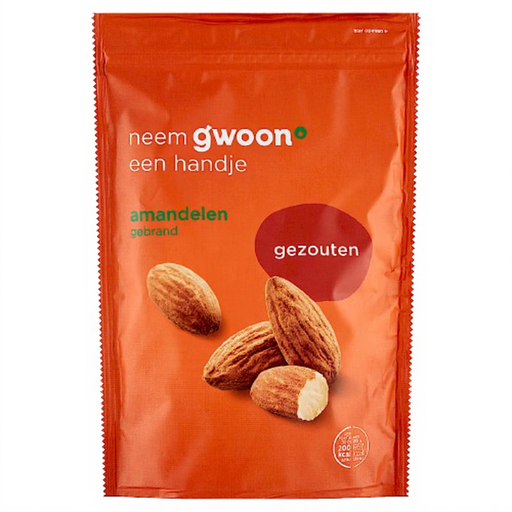 No image available
g'woon roasted salted almonds 150 g
An option if you’re looking for a roasted, salted snack. The product name lists a 150 g pack.
Shop at Joybuy
Frequently asked questions
How much protein is there in a handful of almonds?
The Netherlands Nutrition Centre gives 5.4 g of protein per 25 g handful of unsalted almonds as a general nutrition figure. Check the label for the specific product, as branded products may list a different amount.
Are almonds enough for recovery after exercise?
Almonds alone aren’t a complete recovery food, so consider your overall diet and the exercise you’ve done. The Netherlands Nutrition Centre says most people who do sport don’t need special protein shakes or bars if they eat a varied diet. The Dutch Association of Sports Nutrition Experts discusses protein after intense exercise mainly when another bout of exercise follows soon afterwards.
How should I store an opened bag of almonds during a festival weekend?
Follow the storage instructions on the packaging of the product you choose. Albert Heijn recommends storing AH Terra in a cool, dark and dry place and sealing it well after use; Jumbo says to store its product in a dry, dark place. A resealable bag doesn’t replace these instructions.
What should I check on the packaging if I have a food allergy?
Read both the ingredients and any warnings about the possible presence of other allergens on the exact packaging. The Netherlands Food and Consumer Product Safety Authority says that allergen information must appear on the label of prepacked products.


