
Gift buyers who check claims
You’re specifically looking for less fat and don’t want to confuse how a product is prepared, or a ‘unsalted’ label, with a substantiated nutrition claim.


For a lighter Father’s Day snack, first compare fat and energy per 100 g, then consider how much you’ll serve. The European Commission defines a product as low-fat if it contains no more than 3 g of fat per 100 g for solid foods; choosing a smaller portion or a product described as ‘made without added fat’ doesn’t make it low-fat. The standard varieties from Duyvis, Albert Heijn, Jumbo and PLUS included in this review list 50–60 g of fat per 100 g in their product information.
You’re specifically looking for less fat and don’t want to confuse how a product is prepared, or a ‘unsalted’ label, with a substantiated nutrition claim.
You want to serve almonds for Father’s Day and are mindful of the fat and energy in the amount that actually makes it to the table.
You’re choosing between plain and savoury almonds, while considering the ingredients, salt content and how to store an opened pack.
| What to consider | What to look for when buying | Who is this important to? |
|---|---|---|
| Is the lower-fat claim substantiated? | Check the nutrition information per 100 g and see exactly which variety the claim applies to. ‘Unsalted’ and ‘made without added fat’ are not synonyms for low-fat. | I want to choose a lower-fat option for Father’s Day, so I check the nutrition information and the exact claim. Around 42% of consumers make proven fat reduction their main priority. |
| Fat and energy per portion | Compare values per 100 g, then work them out for portions of the same weight. Weigh the amount you’ll actually serve. | If I’m serving standard almonds, I want to be able to measure the amount for each snack occasion. Around 33% of consumers focus mainly on portion control. |
| Taste and ingredients | Check whether the variety is plain or savoury, and read the ingredients list. Compare the salt content of the specific variety too. | For a get-together, I’d rather choose based on the taste and ingredients that suit the recipient. Around 17% of consumers prioritise taste and ingredients. |
| Quantity and storage | Choose a pack size that suits what you want to serve, and check the storage instructions for after opening. | I want to store any leftovers properly after Father’s Day, so I consider the packaging and quantity. Around 8% of consumers focus mainly on packaging convenience. |
According to Albert Heijn’s product information, the Duyvis Oven roasted variety included in this review is roasted without adding oil or fat, but it still lists 50 g of fat per 100 g.
Read the preparation method and nutrition information as separate details, and check the exact variety.
According to Jumbo, the Jumbo Unsalted Almonds variety included in this review contains 99% almonds and sunflower oil as an ingredient.
Check the ingredients list on the pack you’re buying; the variety name alone doesn’t tell you which ingredients have been added.
The AH variety included in this review lists a 25 g portion, while the Duyvis variety lists a 30 g portion. This means the values per portion aren’t directly comparable.
Compare values per 100 g first, then work them out for portions of the same weight.
The Oven roasted almonds are a savoury snack for sharing; Albert Heijn’s product information says they’re roasted without added oil or fat.
AH Unsalted Almonds is a roasted variety whose product information included in this review lists almonds as its only ingredient.
Jumbo Unsalted Almonds is a roasted snack variety. The Jumbo information included in this review lists 99% almonds and sunflower oil.
Lidl Netherlands identifies its own-brand variety as Unsalted Almonds.
ALDI Netherlands describes Trader Joe’s unroasted almonds in a resealable pack.
PLUS Unroasted and Unsalted Almonds is a plain variety; the product information included in this review lists almonds as its only ingredient.
This selection includes ready-to-eat almond snacks in a range of flavours and with different ingredients. Compare the nutrition information per 100 g, then choose a variety that suits the occasion.
 No image available
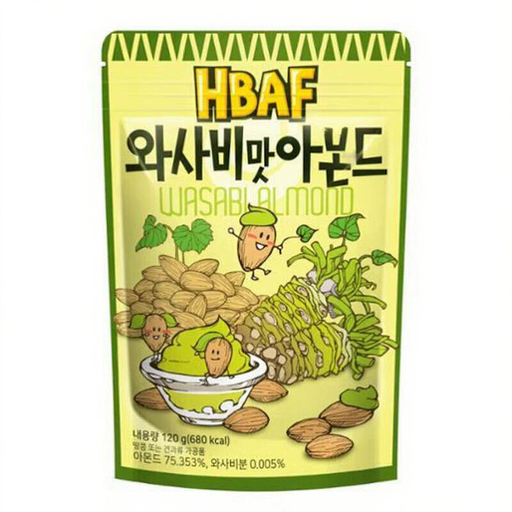
A seasoned, ready-to-eat almond snack to take with you or serve; the flavour is wasabi mustard.
The description lists 75% almonds and a pack size of 120 g. The nutrition table lists 19.0 g of fat and 270 kcal per 100 g.
Contains almonds, milk, soya and mustard. The description warns of possible cross-contamination with peanuts, sesame and gluten (wheat).
 No image available
These plain almond kernels are a good choice if you want to measure out your own portion and are looking for a variety made with almonds only.
The ingredients list says 100% almond kernels; the pack contains 160 g. The nutrition table lists 53.8 g of fat per 100 g.
Contains almonds.
 No image available
An unsalted variety for anyone who wants to serve plain almonds and choose the portion size themselves.
The product information lists almonds and a pack size of 200 g. The nutrition table lists 50 g of fat and 591 kcal per 100 g.
Contains almonds.
 No image available
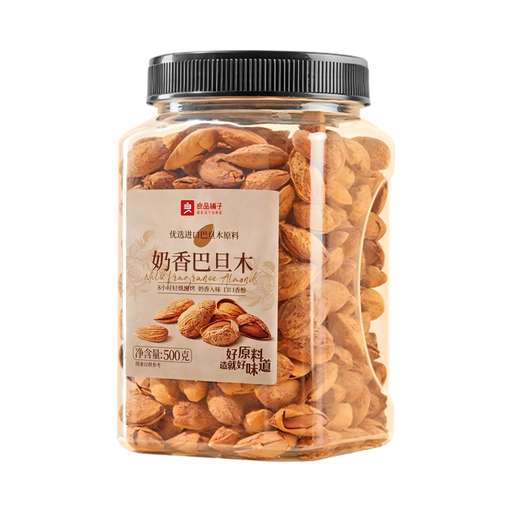
A ready-to-eat snack with a milk flavour, for anyone who wants to consider the other ingredients as well as the almonds when choosing.
The description lists milk flavouring, sugar and sweeteners. The pack contains 500 g; the nutrition table lists 53.4 g of fat and 612 kcal per 100 g.
Contains almonds; the ingredients list also includes milk and sweeteners.
 No image available
This roasted, salted variety is a good choice if you want to serve a savoury almond snack at a get-together.
The ingredients are almonds and salt; the pack contains 500 g. The nutrition table lists 54 g of fat and 1.0 g of salt per 100 g.
Contains almonds. The description warns that the product poses a choking hazard for young children and is not suitable for babies.
For solid foods, the limit is no more than 3 g of fat per 100 g, according to the European Commission. A smaller portion or the description ‘made without added fat’ doesn’t change that limit.
No, these descriptions don’t mean the same thing. ‘Made without added fat’ describes how the product is prepared. For the exact variety, check the nutrition information per 100 g and assess any claim about less fat against the relevant comparison.
Multiply the value per 100 g by the portion weight, then divide by 100. For example, 25 g of the AH variety included in this review contains 13.25 g of fat: 53 × 25 ÷ 100. This is a calculation based on label values, not a recommended daily amount.
Follow the storage instructions for the exact variety. For Duyvis Oven roasted almonds, the product information recommends storing them in a cool, dry place and putting an opened pack in a light-proof, airtight container.
Before serving, check the ingredients list and warnings on the pack for the exact variety. The NVWA explains that allergens must be listed on the label; a claim about fat tells you nothing about allergens.