What should you look for when buying?
Start with the portion you actually eat, then check the variety, label and packaging.
| What to consider |
What to look for |
Who does this matter most to? |
| Protein in your portion |
Compare protein and energy per 100 g, then calculate both for the same weighed portion. |
If I want to know what my TV snack contributes, I look at the portion rather than just the value per 100 g. Around 36% of consumers prioritise protein content. |
| Portion and salt |
Check the salt content, ingredients and the amount you set out. |
For regular snackers, the amount put on the table affects how much gets eaten. Around 29% of consumers give portion size and salt top priority. |
| Flavour and preparation |
Read the exact product name and check the ingredients and salt; flavour doesn’t tell you how much protein it contains. |
If I’m mainly after a savoury flavour, I want to know whether the almonds are roasted, salted or seasoned. Around 21% of consumers put flavour and preparation first. |
| Packaging and storage |
Check the pack weight, whether it has a resealable closure and the storage instructions. |
If you want to use a pack over several TV nights, it helps to choose a size and closure that suit the way you’ll use it. Around 14% of consumers prioritise packaging and storage. |
Almonds at Joybuy
This selection includes plain and unroasted almonds, roasted salted varieties and seasoned almond snacks. Compare the details for each product and variety; nutritional information doesn’t automatically apply to other packs.
 Image unavailable
Jia Zhou Yuan Ye Original Almond Kernels 160 g
A good choice if you’re looking for a ready-to-eat snack made entirely from almonds.
The product information lists 100% almond kernels, 21.5 g of protein and 622 kcal per 100 g. Contains almonds.
View product
 Image unavailable
g'woon Almonds Raw & Unsalted 200 g
A good choice if you’re specifically looking for an unroasted, unsalted almond snack.
The product information lists 24 g of protein and 591 kcal per 100 g. Follow the storage instructions on the pack. Contains almonds.
View product
 Image unavailable
Anatolia Roasted Salted Almonds 500 g
A good choice if you’re looking for roasted, salted almonds for a savoury snack.
The product information lists 21 g of protein, 620 kcal and 1.0 g of salt per 100 g. Contains almonds.
View product
 Image unavailable
Anatolia Badem Natural Amandel 500 gr
A good choice if you’re looking for plain almonds to eat straight from the pack.
The product information lists 100% almonds and, per 100 g, 21 g of protein, 578 kcal and 0.00 g of salt. Contains almonds.
View product
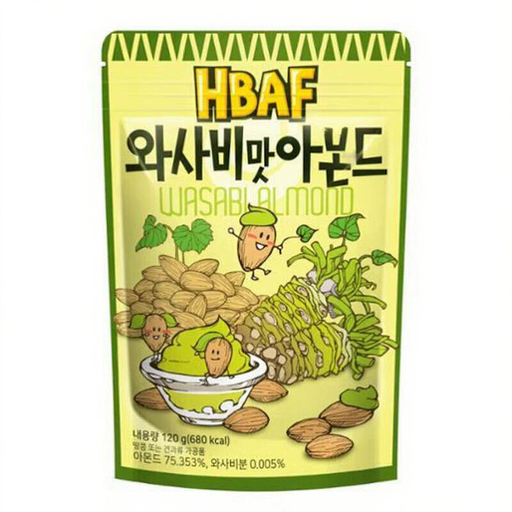 Image unavailable
HBAF Almond Wasabi Flavor 120 g
A good choice if you’re looking for a seasoned almond snack with a wasabi and mustard flavour.
The product information lists 75% almonds and 11 g of protein per 100 g. The flavour coating includes sugar syrup and mustard seasoning, among other ingredients. Contains almonds, milk, soya and mustard.
View product
Frequently asked questions
How do you calculate the nutritional values for your TV snack?
Multiply the value per 100 g by the weight of your portion in grams, then divide by 100. A 25 g portion of PLUS Roasted Almonds (unsalted), chosen for this calculation, provides 6.65 g of protein and 157.5 kcal based on the label. This 25 g amount is a calculation example, not a personal portion recommendation.
Are almonds on their own a recovery solution after exercise?
Consider almonds as part of your overall diet, not as a stand-alone recovery solution. The Netherlands Nutrition Centre says that strength and endurance exercise can increase your protein requirements, but most people who exercise don’t need special protein shakes or bars if they eat a healthy, varied diet. This is not a specific recovery claim for almonds.
What should you check if someone at your TV night has a food allergy?
Check the allergen information on the exact pack; the words unsalted or unroasted don’t tell you whether a product is suitable for someone with an allergy. The Netherlands Food and Consumer Product Safety Authority (NVWA) emphasises that sellers must inform customers about allergens present. For its Roasted Almonds (unsalted), PLUS lists almonds and possible traces of peanuts and other nuts.
How should you store an opened pack of almonds?
Keep almonds well sealed and dry, and follow the instructions on the pack. The Netherlands Nutrition Centre recommends storing them in a cool place; Jumbo advises storing its Unsalted Almonds in a dry, dark place.


