Only choose almonds for people who can eat them: gluten-free or lactose-free does not mean nut-free. Let the specific dietary requirement, ingredients and warnings on the exact packaging guide your choice; lactose intolerance and milk protein allergy are different considerations when buying food, as Voedingscentrum explains. Give children whole nuts during a calm mealtime and make sure they are sitting down; Voedingscentrum warns of the risk of choking.
Who is this choice relevant to?
Shopping for specific dietary needs
You’re looking for a snack for people with a specific allergy or intolerance and want to know exactly what a label means. Almonds are an allergen; lactose intolerance and milk protein allergy require different checks. Voedingscentrum explains the differences, while the NVWA describes the information shown on food labels.
Organising an event with children
You want to hand out snacks during an Easter egg hunt, while making sure children eat calmly and are supervised, and taking the choking risk of whole nuts into account. Voedingscentrum advises children to sit down and eat calmly.
Looking for a simple snack
You’re looking for an unsalted snack with a straightforward ingredient list and packaging that suits how you plan to use it. Product information from PLUS, Jumbo and ALDI shows how varieties differ in ingredients, preparation and packaging.
What should you look out for when choosing almonds for an Easter egg hunt?
First, check that the person can eat almonds. Then consider their specific dietary requirement and check the packaging. For children, plan a calm time to eat rather than letting them snack as they run around.
Almonds are among the allergens that must be clearly identifiable on food labels, according to Voedingscentrum and the Netherlands Food and Consumer Product Safety Authority (NVWA).
| What to consider |
What should you check? |
Who is this important for? |
| Avoiding the right allergen |
Check whether almonds themselves need to be avoided, and read the ingredients and relevant warnings. The NVWA explains how allergens must be clearly identifiable on labels. |
When choosing snacks for someone with an allergy, I first want to know whether they can eat almonds and what warnings are shown on the packaging. Around 36% of consumers give avoiding the relevant allergen their highest priority. |
| Choosing a relevant free-from claim |
Check the exact variety and distinguish between lactose intolerance and milk protein allergy; Voedingscentrum explains that these involve different considerations when buying food. |
I’m looking for a claim that matches the specific dietary requirement, not just a short ingredient list. For around 29% of consumers, a specific free-from claim comes first. |
| How the snack is eaten and handed out |
Plan a calm mealtime for children and supervise them. For coeliac disease, the Dutch Coeliac Society advises using clean hands and utensils, and keeping products packaged for as long as possible. |
At an Easter egg hunt with children, I want snack time to be calm and supervised, especially when serving whole nuts. Around 21% of consumers prioritise safe serving and how the food is eaten. |
| Packaging and storage |
Compare the weight with the amount you need, and follow the storage instructions on the packaging of the variety you choose. |
If the snack is only suitable for some of the group, I want to match the quantity to the people who can eat it and avoid leftovers. Around 14% of consumers prioritise quantity and storage. |
Common pitfalls when choosing almonds
-
Assuming free-from means free from all allergens
Almonds are an allergen in their own right. A claim about gluten or lactose does not mean that the product is almond-free.
Start by checking which substances the person needs to avoid, then check the ingredients and warnings on the exact packaging.
-
Assuming lactose-free means there is no milk protein
Lactose intolerance relates to milk sugar, while cow’s milk allergy relates to milk proteins. Voedingscentrum explains the difference.
If someone has a milk protein allergy, check the milk ingredients and relevant warnings, even if the product is labelled lactose-free.
-
Letting children eat whole nuts while running around
Whole nuts can pose a choking risk for children. Voedingscentrum advises children to sit calmly while eating.
Make snack time a separate, calm occasion and supervise children.
-
Assuming unsalted means simple or suitable ingredients
Unsalted describes the salt content, not the allergens. PLUS product information lists almonds as the only ingredient, while Jumbo also lists sunflower oil. Both products contain almonds and have their own warnings.
Compare the ingredients and allergens on the exact packaging, and use ‘unsalted’ only as a criterion for choosing the salt content.
Brands and varieties for reference
Albert Heijn
Albert Heijn product information describes AH Unsalted Almonds 190 g as a roasted variety with almonds as an ingredient.
- Albert Heijn labels this variety gluten-free and lactose-free; the ingredients list includes almonds.
- The variety contains almonds and may contain peanuts and other nuts. These claims do not make it suitable for everyone with dietary restrictions.
PLUS
According to PLUS product information, PLUS Unroasted and Unsalted Almonds 200 g is a natural variety with almonds as its only ingredient.
- The ingredients list consists of almonds.
- PLUS states that the product may contain peanuts and several other nuts. A short ingredients list does not prove that a product is suitable for every dietary requirement.
Jumbo
According to Jumbo, Jumbo Unsalted Almonds 140 g is a roasted variety containing 99% almonds and sunflower oil.
- The ingredients and pack weight are listed in Jumbo’s product information.
- Jumbo states that the product may contain peanuts. ‘Unsalted’ is not an allergen claim.
Duyvis
The Duyvis varieties reviewed have different ingredients: the manufacturer lists almonds and sunflower oil for Unsalted Almonds, while Albert Heijn product information describes Oven roasted almonds with a flavour coating.
- The product information highlights the differences between the varieties mentioned.
- For Oven roasted, possible traces of peanuts, cereals containing gluten and wheat are listed. Check the specific product you’re buying.
ALDI
ALDI describes its unroasted TRADER JOE'S almonds as a 200 g product in a resealable pack.
- The retailer identifies the unroasted variety and resealable packaging.
- These product and packaging details do not, in themselves, indicate whether the product is suitable for people with allergies; check the label on the exact packaging.
Lidl
Lidl describes Alesto Spanish almonds, 200 g, as available in different varieties.
- The product description makes it clear that there are several varieties.
- The general product name does not tell you which allergens a specific variety contains; check the variety and its label.
Almonds at Joybuy
These Joybuy products include plain almonds and roasted or flavoured varieties. The product information lists almonds as an ingredient, so always check whether almonds and any other ingredients are suitable for the participants’ dietary needs.
 Image unavailable
Jia Zhou Yuan Ye Original Almond Kernels 160 g
A good choice if you’re looking for a plain almond snack with simple ingredients; not suitable for anyone who needs to avoid almonds.
The product description lists 100% almond kernels as the ingredient. Pack weight: 160 g.
View at Joybuy
 Image unavailable
g'woon raw unsalted almonds 200 g
For anyone looking for raw, unsalted almonds; the product information lists almonds as an ingredient.
Pack weight: 200 g. Contains almonds and is not suitable for anyone who needs to avoid them.
View at Joybuy
 Image unavailable
Anatolia roasted salted almonds 500 g
For anyone looking for a roasted, salted almond snack; not suitable for anyone who needs to avoid almonds.
The product description lists almonds and salt as ingredients. It also warns that the product poses a choking risk for young children.
View at Joybuy
 Image unavailable
Anatolia Badem Natural (Almond) 500 g
A good choice if you’re looking for plain almonds; the product description lists almonds as the only ingredient.
The ingredients list states 100% almonds. Contains almonds and is not suitable for anyone who needs to avoid them.
View at Joybuy
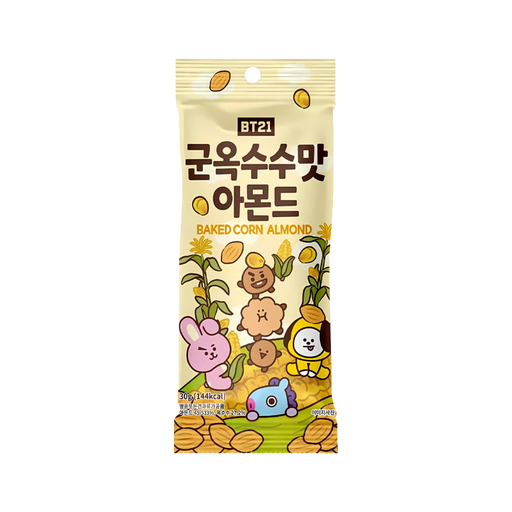 Image unavailable
BT21 almonds with baked corn flavour M 30 g
For anyone looking for a flavoured almond snack; this variety contains almonds.
The product description lists ingredients including corn, sugar, honey, condensed milk and soya. Check these ingredients if they need to be avoided.
View at Joybuy
Frequently asked questions
Do allergens always have to be printed in bold on a Dutch food label?
No. The NVWA requires allergens to be clearly distinguishable from the other ingredients; bold type is one way to do this. So don’t just look for bold words.
What do warnings such as ‘may contain’ mean?
A warning indicates a remaining risk of unintended presence. According to the NVWA, since 1 January 2026 the permitted wording has been ‘May contain X’ and ‘Not suitable for people with an X allergy’. The absence of such a warning does not mean a product is suitable for everyone with an allergy.
Is ‘gluten-free’ just a marketing term?
No. Implementing Regulation (EU) No 828/2014 sets harmonised requirements for information about the absence or reduced presence of gluten. The NVWA refers to this regulation when explaining the conditions for using the ‘gluten-free’ claim.
How can you stop a gluten-free snack coming into contact with gluten when handing it out?
Use clean hands, clean utensils and a clean work surface. The Dutch Coeliac Society advises keeping gluten-free products packaged for as long as possible and setting aside a separate area of the table. This advice concerns contact with gluten and does not prove that a product is suitable for people with other allergies.
What should you do if the product page and packaging differ?
Check the actual packaging before eating the product. Albert Heijn and PLUS state that product information can change and advise customers to contact their customer service teams with any questions. A variety that was previously suitable may no longer be suitable after a change.


