Choose almonds only for guests who can eat them; they are not an option for a nut-free snack selection. Check the ingredients and precautionary statements for the exact product variant, and keep the product information available where snacks are served. The Netherlands Food and Consumer Product Safety Authority (NVWA) states that, for unpackaged nuts, the specific type of nut must be identifiable.
Who this choice is relevant to
Conference buyers catering for dietary needs
You want to decide in advance which guests can eat almonds and which specific free-from claim is relevant. Distinguish between allergy, intolerance and dietary preference. Albert Heijn’s product-specific statements and the information from the Netherlands Nutrition Centre on lactose intolerance can help you separate these criteria.
Catering teams portioning snacks themselves
You buy consumer packs and divide their contents into portions for serving. Keep the product information with the stock after opening, and make sure guests can access allergen information where snacks are served. The NVWA explains the information requirements for unpackaged food.
Buyers looking to reduce waste
You match the quantity to the guests who can eat almonds and compare packs by net weight. The contents of a bag don’t tell you how much will be eaten at your conference.
Which purchasing factors matter?
First decide who can eat almonds, then check the specific dietary claim and how you’ll store and serve the snack.
| Consideration |
What should you check? |
Who does this matter most to? |
| Suitability for guests |
Check both the ingredients and precautionary statements; don’t include almonds in a nut-free snack selection. |
If I offer almonds only to guests who can eat them, I want to rule out potential allergens in advance. Around 36% of consumers put avoiding a relevant allergen first when making a purchase. |
| Specific dietary claim |
Decide on the exact requirement and check the claim for that specific product variant. |
For example, if I need a gluten-free or lactose-free product, I check that claim separately from nut warnings. Around 29% of consumers prioritise a specific dietary claim. |
| Portioning and serving |
Plan how you’ll store the stock and make allergen information available every time you serve it. |
If my team opens packs and divides them into portions, I want to keep the product information with the stock. Around 21% of consumers put practical portioning and sharing information first. |
| Quantity and leftover stock |
Match the number of packs to the guests who can eat the snack, your chosen portion size and the net weight. |
I want to match the quantity to the guests the snack is intended for, so that there’s not too much left over. Around 14% of consumers prioritise stock management. |
Common purchasing pitfalls
-
Assuming ‘free from’ means allergen-free for everyone
Almonds are a tree nut allergen. A gluten-free or lactose-free claim does not mean a product is nut-free.
Be clear about which ingredient guests need to avoid, and don’t include almonds in your nut-free snack selection.
-
Reading only the ingredients and overlooking warnings
An ingredients list and a precautionary statement provide different information. Even plain almonds may carry a warning about the possible presence of other nuts or peanuts.
Check both for the exact product variant, and don’t assume a short ingredients list guarantees that it’s free from other allergens.
-
Treating a consumer pack as an individual portion
The net weight tells you how much product is in the pack, not how you’ll serve it at a conference. Once you’ve repacked it, allergen information and measures to prevent cross-contamination still matter.
Plan how you’ll serve it in advance, and keep the product information with every batch of portioned stock.
Portioning snacks yourself also requires serving equipment, staff time and stock management.
Relevant brands and product variants
These variants provide a point of reference for comparing ingredients and dietary claims. Suitability should be assessed for each product and the guests it is intended for.
Albert Heijn
AH Unsalted Almonds 190 g is a roasted own-brand variant with product-specific dietary claims.
- The official product information lists almonds as an ingredient and describes the variant as vegan, gluten-free and lactose-free.
- The variant contains almonds; warnings about peanuts and other nuts are still relevant. These claims do not automatically apply to other products.
Jumbo
Jumbo Unsalted Almonds 140 g is a roasted, unsalted variant.
- The official product information lists 99% almonds and sunflower oil.
- The information mentions the possible presence of peanuts. ‘Unsalted’ does not mean a product contains only almonds or is allergen-free.
PLUS
PLUS Unroasted and Unsalted Almonds 200 g is a plain variant in a stand-up pouch.
- The official shop information lists almonds as the only ingredient and describes the variant as vegan.
- The product information warns of the possible presence of peanuts and other nuts; this is not a general free-from guarantee.
Duyvis
Duyvis Oven Roasted Almonds 125 g is a savoury, seasoned variant.
- The product information lists 97% almonds and a savoury seasoning mix. Duyvis says they are roasted without added oil or fat.
- The product information warns of the possible presence of wheat, cereals containing gluten and peanuts. The preparation description comes from the brand and is not an independent taste test.
Lidl
Alesto Spanish Almonds is a product range with several variants; the Dutch product page lists 200 g packs.
- The range offers several variants to compare pack by pack.
- The name ‘Spanish almonds’ is not, by itself, a dietary or allergen-free claim. Check the information for the variant you choose.
ALDI
The Dutch product page reviewed describes unroasted Trader Joe’s almonds in a 200 g pack.
- ALDI describes the pack as resealable, which may help with stock management.
- A resealable pack says nothing about whether allergens are present. Check the information for the exact variant and intended serving method.
Joybuy products for serving snacks
This selection includes almond products for serving to guests who can eat almonds. Check the information for the exact variant, and separately arrange access to allergen information and measures to prevent cross-contamination during portioning; the NVWA outlines these considerations for catering.
 Image unavailable
Jia Zhou Yuan Ye Original Almond Kernels 160 g
The product information says the kernels are ready to eat, making them suitable for serving as a snack to guests who can eat almonds.
The ingredients information lists 100% almonds and identifies almonds as an allergen. Store in a cool, dry place and seal the pack after opening.
View at Joybuy
 Image unavailable
Anatolia Roasted Salted Almonds 500 g
The product information describes these almonds as ready to eat, making them suitable for serving as a snack to guests who can eat almonds.
The ingredients information lists almonds and identifies nuts as an allergen. The product title describes this variant as roasted and salted.
View at Joybuy
 Image unavailable
Anatolia Badem Natural Almonds 500 g
The product information describes these natural almonds as ready to eat for guests who can eat almonds.
The description lists 100% natural almonds and includes almonds in the allergen information. The product information warns of a choking hazard for young children and says the product is not suitable for babies.
View at Joybuy
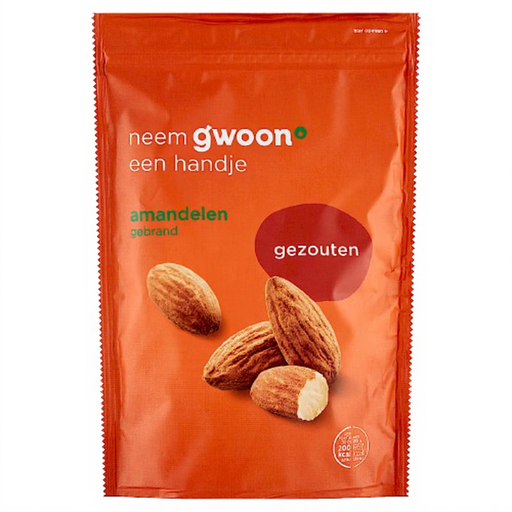 Image unavailable
g'woon Roasted and Salted Almonds 150 g
This roasted variant is described as a snack for guests who can eat almonds.
The product information lists 97% almonds, sunflower oil and 0.7% salt. The bag is resealable; the allergen information mentions the possible presence of peanuts and other nuts.
View at Joybuy
Frequently asked questions
Does lactose-free mean suitable for someone with a cow’s milk allergy?
No. Lactose intolerance affects the digestion of milk sugar, while a cow’s milk allergy is a reaction to milk proteins. So don’t treat a lactose-free claim as a substitute for checking whether milk is present as an allergen.
What allergen information is required for unpackaged almonds?
Make it clear where guests can find allergen information when snacks are served, and name the specific type of nut, such as almond. According to the NVWA, providing information verbally is allowed only under certain conditions: it must be readily available, staff and inspectors must be able to consult written or electronic information, and there must be a clear notice where the food is served.
Does a gluten-free claim still apply if I portion the almonds?
A claim applies only if the product being served continues to meet the relevant requirements. The European Commission confirms that Implementing Regulation (EU) 828/2014 also applies to non-prepacked food, such as food served in restaurants. Portioning the almonds does not replace the need to assess the product and how it is served.
How should I store opened almonds between conference breaks?
Follow the instructions for the exact variant and keep the relevant product information with the stock. For the variant reviewed, Albert Heijn recommends storing it in a cool, dark and dry place and sealing it well; Jumbo recommends storing it in a dry, dark place. Duyvis advises keeping an opened bag in a light- and airtight container.
How do I work out how many packs I need?
Count only the guests the almonds are intended for and suitable for. Multiply their number by the portion weight in grams you choose, divide by the net weight of the pack you’ve selected, then round up. A serving suggestion on a consumer pack won’t predict how much will be eaten at your conference.


