
Mindful snackers
You want almonds on the Christmas table, but would like to know how much energy your portion provides. Weighing them and comparing the same quantity tells you more than the packaging or preparation name.


Choose a measured portion and compare the energy content for the same quantity: the Voedingscentrum gives an average of 158 kcal per 25 g of unsalted almonds, so almonds are not low in calories. Under European Commission rules, solid foods can only be labelled ‘low calorie’ if they contain no more than 40 kcal per 100 g. Then choose according to preparation and ingredients, and check the allergen information before serving.
You want almonds on the Christmas table, but would like to know how much energy your portion provides. Weighing them and comparing the same quantity tells you more than the packaging or preparation name.
You’re looking for an unsalted snack and want to distinguish between plain almonds, almonds with oil and savoury-seasoned varieties. Assess the salt and energy content separately.
You’re buying for several guests and need to consider pack size, allergen information and how to store leftovers. Bear in mind guests with allergies and young children when serving whole nuts.
Compare the portion and ingredients first, then choose the preparation and flavour that suit your Christmas get-together.
| What to consider | What should you look for? | Who should consider this? |
|---|---|---|
| Energy per portion | Compare kcal per 100 g and weigh your portion. The Voedingscentrum gives an average of 158 kcal per 25 g of unsalted almonds. | If I want to know how much energy my snack portion provides, I compare the same quantity and weigh it. Around 36% of consumers prioritise energy per portion. |
| Ingredients and salt | Check whether the ingredients list almonds only, or also oil or flavourings. AH lists 0 g of salt per 100 g; PLUS lists 0.025 g and Jumbo 0.03 g per 100 g. | If I’m looking for an unsalted snack or simple ingredients, I check both the ingredients list and the nutritional information. Around 22% of consumers prioritise ingredients. |
| Allergens and guests | Read the ingredients and warnings on the exact pack. Keep the packaging nearby when serving, and bear young children in mind when serving whole nuts. | If I’m serving almonds to guests, I want to be able to check allergens and take young children into account. Around 14% of consumers prioritise suitability for guests. |
| Packaging and leftovers | Compare the net weight with the amount you plan to serve. Store leftovers in a sealed container in a cool, dark, dry place, as recommended by the Voedingscentrum. | If I’m shopping for several guests, I want to buy an amount that matches what I’ll serve and store any leftovers properly. Around 14% of consumers prioritise planning their shopping. |
| Flavour and preparation | Choose between plain, roasted and savoury-seasoned. Read the ingredients: oven-roasting without added fat doesn’t mean the almonds are unsalted or low in calories. | If I’m choosing a flavour for the party table, I want to know whether the almonds are plain or savoury-seasoned. Around 14% of consumers prioritise party-friendly flavour. |
Unsalted almonds provide an average of 158 kcal per 25 g, according to the Voedingscentrum. Under European Commission rules, solid foods can only be labelled ‘low calorie’ if they contain no more than 40 kcal per 100 g.
Assess the energy content of a weighed portion separately from the salt content, and don’t describe ordinary almonds as low-calorie.
Duyvis describes its roasting process as using no added oil or fat, but almonds naturally contain fat, and the seasoned variety contains salt and flavourings.
As well as the preparation description, read the ingredients and nutritional information for the exact variety.
Almonds are a tree-nut allergen. Packaging may also carry warnings about other nuts, peanuts or wheat. Product information from AH and PLUS also warns of a choking risk for young children.
Check the packaging, keep it by the serving bowl and discuss any relevant allergies with your guests. If needed, choose a suitable alternative and keep it separate; don’t assume whole nuts are suitable for young children.
Guests with a relevant allergy may need a separate alternative.
Pack sizes vary. A larger bag could leave you with more leftovers if you don’t match the quantity to what you plan to serve.
Plan the amount according to your portions and seal any leftovers properly after use. The Voedingscentrum recommends storing almonds in a cool, dark, dry place.
AH Unsalted Almonds are a roasted variety made with almonds as the only ingredient.
PLUS Unsalted Almonds are a roasted variety in a 150 g stand-up pouch.
Jumbo Unsalted Almonds are a roasted variety made with 99% almonds and sunflower oil.
The Almonds Original and Oven roasted product range is an option if you’re looking for savoury-seasoned, oven-roasted almonds.
ALDI uses the name TRADER JOE’S for unroasted almonds and a roasted, unsalted variety, both listed as 200 g.
Lidl has a Dutch product listing for Unsalted Almonds, item number 172897.
This selection of products on Joybuy includes plain, unsalted, salted and seasoned almonds. Compare the nutritional information for the same quantity and check the ingredients and allergens on the packaging.
 Image unavailable
Suits anyone looking for plain almonds and wanting to weigh out their own portion.
Ingredients: 100% almond kernels. The product information lists 622 kcal per 100 g and a net weight of 160 g.
 Image unavailable
Suits anyone looking for raw, unsalted almonds.
The product information lists 591 kcal and 0.03 g of salt per 100 g. The ingredients list almonds.
The product information contains conflicting allergen statements: almonds are listed as an ingredient, while elsewhere it says the product does not contain any of the 14 major allergens. Don’t rely on this allergen claim when making a choice for someone with an allergy; check the packaging and ask for confirmation if in doubt.
 Image unavailable
Suits anyone looking for a savoury-seasoned, salted almond snack.
The product information lists 620 kcal and 1.0 g of salt per 100 g. The description warns of a choking risk for young children and says the product is not suitable for babies.
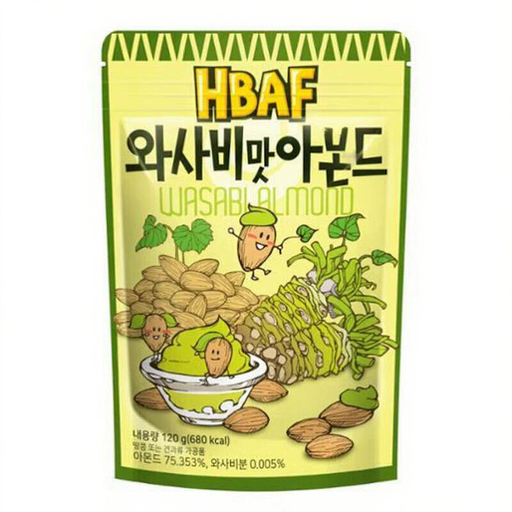 Image unavailable
Suits anyone looking for a bold, seasoned flavour for the festive table.
The product information lists 270 kcal per 100 g. The ingredients include sugar, syrup, oils and flavourings; milk, soya and mustard are listed as allergens.
 Image unavailable
Suits anyone looking for plain almonds with almonds as the only ingredient.
The ingredients list states 100% almonds. The nutritional information lists 578 kcal and 0.00 g of salt per 100 g.
No. The Voedingscentrum gives an average of 158 kcal per 25 g of unsalted almonds. Under European Commission rules, solid foods can only be labelled ‘low calorie’ if they contain no more than 40 kcal per 100 g; having a smaller portion doesn’t change this requirement.
Compare the energy content per 100 g, then weigh out the same portion. The Voedingscentrum gives 25 g as the amount in a handful of unsalted almonds; use this as a quantity for comparison, not as personal dietary advice.
Store them in a sealed container in a cool, dark, dry place, as recommended by the Voedingscentrum. For opened unsalted almonds, the Voedingscentrum’s general storage advice is six months in a kitchen cupboard and one year in the freezer. Also follow the packaging instructions, and don’t eat almonds that are rancid or mouldy.
No, they shouldn’t be treated as an obvious choice of snack. Product information from AH and PLUS warns that young children can choke on nuts. Take their age into account and choose an alternative if needed.
Check both the ingredients list and warnings such as ‘may contain’ on the exact packaging. Almonds themselves are a tree-nut allergen; a warning about the possible presence of other allergens doesn’t make the ingredients irrelevant. Discuss any relevant allergies with your guests and keep a suitable alternative separate.