What should you look for when buying?
First, compare protein and energy on the same basis, then work out the figures for your own portion. Next, check the ingredients, preparation method and quantity that suit your weekly shop.
| What to consider |
What should you look for? |
Who is this most important for? |
| Protein contribution |
Compare protein and energy per 100 g, then calculate the figures for your weighed portion. |
If you want to keep track of your protein after exercise, your portion’s contribution matters alongside the rest of your diet. Around 33% of consumers rank protein contribution as their top purchasing priority. |
| Ingredients and salt |
Check the ingredients list and salt content of the exact product; unsalted doesn’t automatically mean oil-free. |
If you’re looking for a simple ingredient list or want to avoid added salt, look beyond the product name. Around 27% of consumers put ingredients first. |
| Weekly supply and storage |
Match the net weight to your planned portions and follow the storage instructions after opening. |
If you do one shop for several days, you’ll want packaging that suits your planned use and storage needs. Around 27% of consumers put weekly planning first. |
| Flavour and preparation |
Choose between unroasted, roasted or seasoned, and check the ingredients in seasoned varieties. |
If flavour or preparation determines whether you use the almonds in snacks or dishes, it may matter more than other features. Around 13% of consumers choose flavour as their top priority. |
Almonds at Joybuy
This selection of Joybuy products includes almonds for tracking protein per portion, unroasted varieties and roasted, salted almonds. Check the ingredients and nutritional information on each product.
 No image available
Jia Zhou Yuan Ye Original almond kernels 160 g
An option if you’re looking for a simple ingredient list and want to track protein per portion.
The product information lists 21,5 g of protein per 100 g, with almond kernels as the only ingredient. The pack contains 160 g.
View at Joybuy
 No image available
g'woon unroasted and unsalted almonds 200 g
An unroasted variety for anyone looking for a simple ingredient list and no added salt.
The product information lists 21,0 g of protein and 0,00 g of salt per 100 g, with 100% almonds as the ingredient.
View at Joybuy
 No image available
Anatolia Badem Natural (Almond) 500 g
An unroasted, unsalted option if you want to count the protein almonds contribute.
The nutritional information lists 24 g of protein and 0,03 g of salt per 100 g.
View at Joybuy
 No image available
Anatolia roasted salted almonds 500 g
A roasted option if you’re looking for salted almonds; it’s not suitable if you’re avoiding added salt.
The product information lists 21 g of protein and 1,0 g of salt per 100 g.
View at Joybuy
 No image available
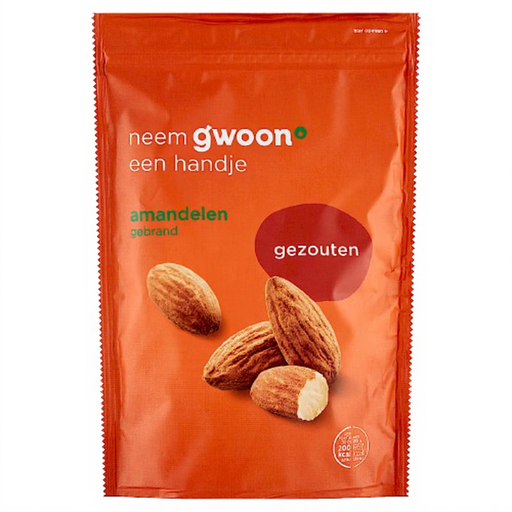
g'woon roasted salted almonds 150 g
A smaller roasted variety for snacking or adding to dishes, if salt in the ingredients suits your choice.
The product information lists 21 g of protein and 1 g of salt per 100 g, and says the pack is resealable. Possible traces of peanuts and other nuts are listed.
View at Joybuy
Frequently asked questions
Are almonds enough on their own after an intense workout?
Consider your overall diet; almonds aren’t automatically a complete recovery meal. Based on the Netherlands Nutrition Centre’s average nutritional values, a 25 g handful of unsalted almonds provides 5,4 g of protein. If you have specific sporting goals, advice from a sports dietitian may help.
How many almonds should I buy for a week?
Work it out based on the number of people, eating occasions and grams per portion you’ve planned. One person having seven 25 g portions will use 175 g; AH packs of 190 g and PLUS packs of 200 g cover this example. A 25 g portion is used here as a comparison, not as personal advice.
How should I store an opened pack?
Follow the instructions for the variety you buy. Albert Heijn advises storing AH Unsalted Almonds in a cool, dark, dry place and keeping the pack tightly closed. For Duyvis Oven Roasted, Albert Heijn advises transferring the almonds to a light- and airtight container after opening.
What information matters if I have an allergy?
Check the ingredients and any allergy warnings every time you buy. The Netherlands Food and Consumer Product Safety Authority explains the requirements for declaring relevant allergens; some of the product information discussed also mentions possible traces of other nuts or peanuts. If you have a food allergy, follow your personal medical advice.
Are whole almonds suitable for young children?
Take into account the warning on the AH product page that young children can choke on nuts. Don’t serve whole almonds without considering this product-specific warning.
Can an online shop claim that almonds treat a medical condition?
No. The Netherlands Food and Consumer Product Safety Authority states that medical claims are prohibited when selling and promoting food. General information about protein and sport doesn’t substantiate a medical effect for an almond product.


