Who is this guide for?

Recipe-led home bakers

Want to decide first whether their almond rolls will be made with shop-bought puff pastry or filo pastry, homemade dough or yeast dough. Recipes from Rutger Bakt show that shop-bought puff pastry or filo pastry is also an option.

Bakers catering for a group

Want to prepare enough for a coffee morning in manageable batches. Information from Kenwood and Bosch shows why the dough limit for each model and type of dough matters.

Versatile food preparers

Want to know whether chopping and slicing would be useful as well as preparing dough. Magimix, Philips and Kenwood, among others, describe models with different food preparation functions and attachments.

What should you look for when choosing?

No machine

Choose this when: you’re using shop-bought puff pastry or filo pastry and mixing the filling by hand.

Trade-off: you avoid the expense and extra washing-up, but rolling, filling and assembling are still done by hand.

Food processor

Choose this when: as well as preparing dough in a way that suits your recipe, you want to chop or slice ingredients.

Trade-off: bowl capacity is not the same as the maximum dough weight; check batch and cooling instructions too.

Stand mixer with dough hook

Choose this when: your recipe actually calls for you to knead dough yourself, such as yeast dough.

Trade-off: a large mixing bowl doesn’t guarantee a larger dough batch; compare the limit for the type of dough you’re making.

What to consider What should you check? Who is this important for?
Appliance and recipe Choose the recipe first and decide whether you’ll make the dough, almond filling or both yourself; check that the appliance can handle the task required. If I’m using shop-bought puff pastry or filo pastry, I don’t want to buy a machine for a dough-making step I don’t need to do. Consumers who focus mainly on whether an appliance suits their recipe account for around 36% of shoppers considering this purchase.
Dough per batch Weigh the total amount and compare it with the model instructions for the same type of dough; allow for any running and cooling breaks. If I’m baking for a group, I want to know how much dough I can process at a time and how many batches my recipe calls for. Consumers whose main concern is batch capacity account for around 29% of this group.
Other food preparation tasks Check which bowls, blades, discs and dough attachments are included with the exact version. If I also want to use the appliance for chopping or slicing, I look at the attachments included, not just the dough function. Around 21% of consumers give the ability to use the appliance for other food preparation tasks their highest priority.
Cleaning and allergens Follow the cleaning instructions for all parts used and keep a record of the ingredients. For unpackaged foods, NVWA guidance calls for specific information about any nuts present. If I’m preparing food for others, I want to be able to clean the parts according to the instructions and know which ingredients are in the rolls. Consumers who prioritise cleaning and organising food preparation for guests account for around 14% of this group.

Common buying mistakes

  • Buying a machine before choosing the dough

    Recipes from Rutger Bakt also use shop-bought puff pastry or filo pastry, so there’s no need to knead the dough for that step.

    First decide which recipe you’re making and which task you want to mechanise.

    Buying an appliance just for an unnecessary dough-making step also means more washing-up.

  • Assuming bowl capacity in litres means the same as maximum dough weight

    Manufacturers sometimes specify separate limits for bowl capacity and dough. For the Kenwood FDM72.990SS, Kenwood specifies a maximum of 1 kg of dough, a maximum running time of 60 seconds and a 15-minute cooling period between dough batches.

    Compare the permitted amount for your type of dough with the recipe weight, and follow the instructions for the exact model.

    Making several batches may take extra preparation time; according to Kenwood, the FDM72.990SS also requires cooling breaks.

  • Assuming similar model numbers mean the same version

    Model codes can refer to different versions, so don’t assume they have the same capacity or included attachments without checking.

    Check the full model code and the accessories included with the version you want to buy.

Brands to consider

Magimix

The CS 5200 XL is a food processor for anyone who wants to chop and slice as well as prepare dough. Magimix lists three bowls and a dough blade.

  • Magimix specifies a total capacity of 3.6 litres and a processing capacity of 1.8 litres.
  • These litre figures don’t indicate the maximum dough weight. Check the recipe and the CS 5200 XL instructions for that.

Kenwood

The MultiPro XL Weigh+ FDM72.990SS is a food processor with scales and a dough attachment. The kMix KMX750ABK is a separate stand mixer with a mixing bowl and dough hook.

  • For the FDM72.990SS, Kenwood specifies a maximum of 1 kg of dough, a maximum running time of 60 seconds and a 15-minute cooling period between dough batches.
  • For the kMix KMX750ABK, Kenwood specifies 1.35 kg of dough in its 5-litre bowl. This limit doesn’t automatically apply to other models.

Philips

According to Philips, the HR7778/00 combines chopping, slicing and mixing functions with a metal kneading hook.

  • For the HR7778/00, Philips specifies a 3.4-litre bowl, an effective liquid capacity of 2 litres and a maximum of 1.7 kg of dough.
  • These are manufacturer specifications for the HR7778/00, not the result of an independent kneading test or a capacity limit for other versions.

Bosch

The MUM5X720 is a stand mixer with a mixing bowl, metal dough hook and integrated scales.

  • For the MUM5X720, Bosch specifies a bowl capacity of 3.9 litres and a maximum of 1.9 kg of yeast dough.
  • The stated 2.7 kg limit is for cake batter, not yeast dough.

KitchenAid

The Artisan 5KSM175 is a stand mixer with a dough hook included.

  • For 4.8-litre Artisan models, including the 5KSM175PS, KitchenAid specifies a maximum of 1 kg of flour.
  • The flour limit isn’t the same as a maximum of 1 kg of total dough; check the instructions for the exact version.

Stand mixers at Joybuy

These product options are stand mixers with mixing bowls for baking tasks where you want to knead the dough yourself. Check that the attachments included with each version suit your recipe and the amount you want to make.

Stand mixer with stainless steel bowl, 4.5 litres, 1300 W, beige

Stand mixer with stainless steel bowl, 4.5 litres, 1300 W

An option if you’re looking for a mixer with dough hooks and several mixing attachments for baking; check that the version is suitable for your dough.

The product information lists a 4.5-litre bowl, 1300 W, six speeds plus a pulse setting, dough hooks, a whisk, a beater and a splash guard.

View at Joybuy
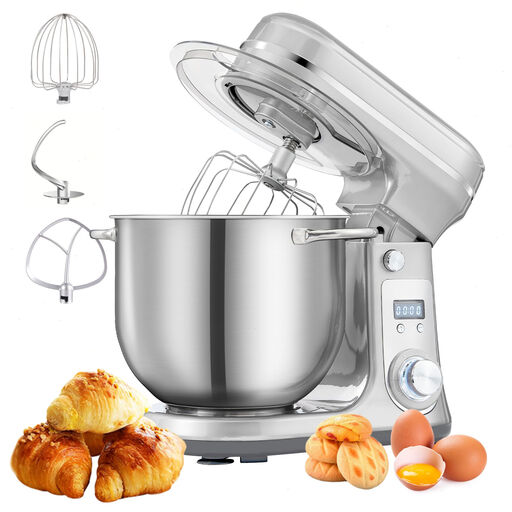
BioloMix BM601 stand mixer, silver

BioloMix BM601 stand mixer

Suitable if you’re looking for a stand mixer for dough and other mixing tasks; check the operating instructions for your recipe.

The product title lists a 6-litre bowl, 1200 W, six speeds and a pulse setting. The product information also mentions an LCD display and timer.

View at Joybuy
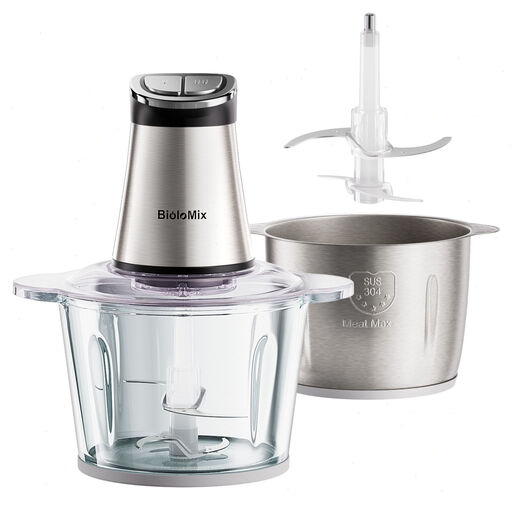
BioloMix AMJ501 stand mixer, 3 litres

BioloMix AMJ501 stand mixer

An option for smaller mixing tasks. If you want to knead dough, check which attachments are included with this version and whether they’re suitable for your recipe.

The product title lists a 3-litre capacity, 300 W and two speeds. The product information also mentions a timer and a stainless steel blade.

View at Joybuy

AUCMA stand mixer with dough hook, 5 litres, black

AUCMA stand mixer with dough hook, 5 litres

Suitable if you’re looking for a mixing bowl with a dough hook for baking; adjust the batch size to the instructions for the exact version.

The product title lists a 5-litre bowl, 400 W and ten speeds. The listed attachments are a dough hook, whisk and beater.

View at Joybuy
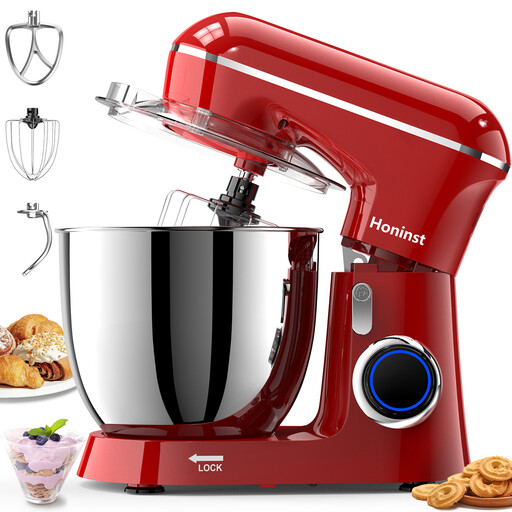
Honinst stand mixer with dough hook, 6.5 QT

Honinst stand mixer with dough hook, 6.5 QT

An option if you’re looking for a mixing bowl with a dough hook; when making heavy yeast dough, bear in mind the stated usage and cooling limits.

The product title lists ten speeds, a tilt head, a dough hook, a whisk and a beater. For heavy yeast dough, the usage information specifies a maximum of 10 minutes of continuous use, followed by at least 15 minutes of cooling.

View at Joybuy

Frequently asked questions

Do you need to knead the dough for almond rolls in a machine?

No, not if you’re following a recipe with shop-bought puff pastry and almond paste, or with filo pastry. If you’re making your own dough, check what the chosen recipe requires before choosing an appliance.

How should you plan several dough batches?

Compare the recipe weight with the limit for the exact machine and type of dough. For the Kenwood FDM72.990SS, Kenwood specifies a maximum of 1 kg of dough, a maximum running time of 60 seconds and a 15-minute cooling period between dough batches; don’t apply these figures to other models.

What allergen information is relevant if you’re serving the rolls?

For unpackaged foods, NVWA guidance calls for information about any allergens present; for nuts, you must specify the particular nut. Check the ingredients in the recipe, including almonds and any other allergens. The requirements that apply to this coffee morning may also depend on how it is organised and how the food is offered.

How can you avoid problems with cleaning and storage?

Clean the parts used according to the model instructions and avoid unintentionally transferring allergens. The NVWA provides guidance on clean spaces and suitable storage temperatures for food preparation in hospitality, craft businesses and retail; whether these rules apply to an occasional private or volunteer gathering depends on the circumstances.

Should you buy an extended warranty for the machine?

Not automatically. The Netherlands Government states that there is no fixed statutory warranty period in the Netherlands. Compare the manufacturer’s warranty with the terms of a paid warranty to see what additional cover it provides.
