
Regular almond users
You often use almonds for breakfast, in meals or as a snack. The pack size should suit how much you actually get through at home.


A larger pack is best if you use almonds regularly and can store them in a well-sealed container; if your usage varies, a smaller quantity is often more practical. Also check the ingredients and how they’re prepared: unsalted doesn’t always mean oil-free, and roasted doesn’t automatically mean unsalted.
You often use almonds for breakfast, in meals or as a snack. The pack size should suit how much you actually get through at home.
You don’t always get through almonds at the same rate, so you look for a quantity that’s easy to store. ALDI describes its 200 g unroasted pack as resealable; the Netherlands Nutrition Centre advises sealing opened almonds properly.
You want to use almonds in dishes or are looking for a ready-to-eat savoury snack. The ingredients, preparation method and salt content can help you tell the different options apart.
First decide how many almonds you use and can store; then check that the ingredients and flavour suit how you plan to use them.
| What to consider | What should you look for? | Who is this important to? |
|---|---|---|
| Pack size to suit your usage | Compare the net weight of each option and consider how much you use regularly. | If I eat almonds often or use them in dishes, I want a quantity I’ll actually get through. Around 36% of consumers focus mainly on choosing a pack that suits regular use. |
| Storing your supply | Check whether the pack is resealable; if not, use an airtight container. | If my usage varies, I want to be able to seal and store the opened pack properly. Around 29% of consumers prioritise having a suitable supply and convenient storage. |
| Ingredients and how you’ll use them | Read the ingredients list if you’re looking for almonds without added oil or flavourings. | For yoghurt, salads or other dishes, I want to know what else is in the pack besides almonds. Around 21% of consumers focus mainly on ingredients and versatility. |
| Savoury flavour | Check the flavour, preparation method and stated salt content. | If I mainly want to eat almonds as a savoury snack, I want to know in advance whether they’re roasted or salted. Around 14% of consumers prioritise a savoury snack option. |
A large supply is only practical if you can get through it as part of your usual routine and store it properly.
Choose based on how much you use, and check the storage advice on the pack once it’s open.
A larger supply needs enough storage space and a regular routine for sealing the pack properly.
The checked unsalted options from Jumbo and PLUS also contain sunflower oil.
Read the ingredients list for the exact product if you want almonds and nothing else.
According to the product information, Duyvis Oven roasted almonds are roasted without added oil or fat, but they contain flavourings and 1.1 g of salt per 100 g.
Check the ingredients and nutritional information separately from the preparation method.
According to the Netherlands Nutrition Centre, unsalted almonds can lose quality once opened; rancidity, toughness and mould are signs to look out for.
Store them in a well-sealed container and follow the storage advice on the pack.
AH Terra unroasted almonds are available in 200 g and 500 g packs.
The checked Jumbo Unsalted Almonds come in a smaller 140 g pack.
The checked options include 200 g of unroasted almonds and 150 g of unsalted almonds.
Under TRADER JOE'S, options include 200 g of unroasted almonds and flavoured roasted varieties.
Dutch product information lists 200 g of unroasted almonds and 200 g of Alesto Spanish almonds in different varieties.
Duyvis Oven roasted almonds in a 125 g pack are a savoury snack option, not a large pack for keeping in stock.
This selection of Joybuy products includes plain almonds in different pack sizes, as well as roasted, salted options for a snack.
 Image unavailable
A smaller quantity for snacking or adding to dishes.
The product information lists 160 g and 100% almond kernels.
The product description says the pack is resealable.
 Image unavailable
An unroasted option for anyone who wants to use almonds plain, as a snack or in dishes.
The pack contains 200 g; the ingredient information lists almonds only, with no added oil.
Keep the pack tightly sealed after opening.
 Image unavailable
A larger pack for anyone looking for roasted, salted almonds to snack on.
The product information lists 500 g and 1.0 g of salt per 100 g.
This is a salted option; keep the pack tightly sealed after opening.
 Image unavailable
A larger pack of plain almonds for regular use as a snack or in dishes.
The product information lists 500 g and almonds as the only ingredient.
Seal the pack tightly after opening.
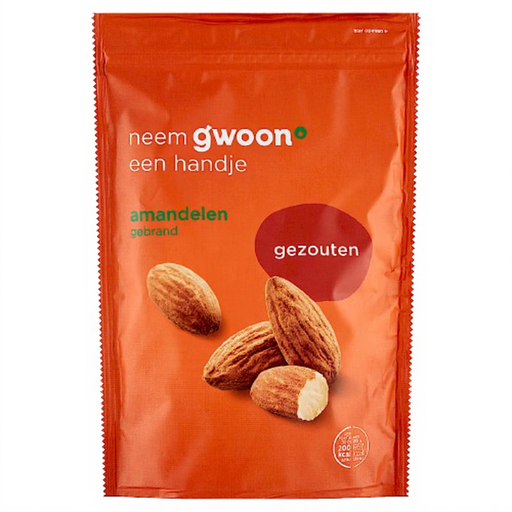 Image unavailable
A smaller pack for a savoury snack; the product information also suggests using them in salads and baking.
The pack contains 150 g. The ingredient information lists 97% almonds, sunflower oil and 0.7% salt.
This option is salted and contains sunflower oil.
Compare the net weight of the same type of almonds and consider how much you use. A larger bag is best if you can store the supply properly and get through it.
Store opened almonds in a cool, dark, dry place in an airtight container. For opened unsalted almonds, the Netherlands Nutrition Centre recommends six months in a kitchen cupboard or one year in the freezer; follow the label for an unopened pack. Rancidity, toughness and mould are signs of quality loss or spoilage.
According to the Netherlands Food and Consumer Product Safety Authority, allergen information for prepacked products must be shown on the label. Also check the product-specific warnings and ingredients list, as these can differ between varieties.
Dutch government guidance states that information about prepacked foods must appear on the label and also be available online. When choosing, check the net weight, ingredients, allergens and storage or usage instructions.
Be aware of the risk of choking: the Netherlands Nutrition Centre warns against giving whole nuts to children. Pack size has no bearing on whether a product is suitable for a child.