What should you look for?
Start with the condition and size of the letters. Then consider the space you have, how much you expect to print and how many everyday documents you want to handle.
| Point to consider |
What to check before buying |
Who this matters to |
| Careful, clear scanning |
Check that the flatbed is large enough for the letter, and place fragile items on it one at a time. Also check scans of the reverse and any envelope. |
If I want to digitise family letters carefully, I need to position them one at a time and check that each scan is complete. Around 42% of consumers put preservation and legibility first. |
| Fitting in and connecting |
Measure the space with the lid open and the paper feeder in use. Check whether USB or the supported Wi-Fi connection suits your setup. |
In a small student room, I want to print and scan without the device taking up too much of my available workspace. Around 25% of consumers prioritise space and occasional study use. |
| Costs after purchase |
Compare compatible cartridges, ink bottles or toner, and check whether the expected yield suits your printing habits. Remember to consider any subscription terms. |
If I’ll print regularly even after digitising my letters, I want to know in advance which consumables suit my needs. Around 17% of consumers put future printing costs first. |
| Speed when handling stacks of documents |
Check whether there is an automatic document feeder and whether it scans both sides. Automatic duplex printing doesn’t tell you anything about this. Assess fragile originals separately. |
When I also scan sturdy, everyday documents, I want to spend less time feeding them in one by one. Around 16% of consumers prioritise speed when handling stacks of documents. |
Joybuy products
This selection includes printers for everyday printing and multifunctional use when digitising letters. Check whether each version includes a scanner if you want one device to do both jobs.
 Image unavailable
Brother MFC-J6760DW A3 inkjet printer, 31 ppm
Worth considering if you want to combine printing, scanning and copying in one device.
The product name lists A3, Wi-Fi and 1200 × 4800 dpi. For everyday document stacks, the stated 50-sheet automatic feeder may be useful; assess fragile letters separately.
View at Joybuy
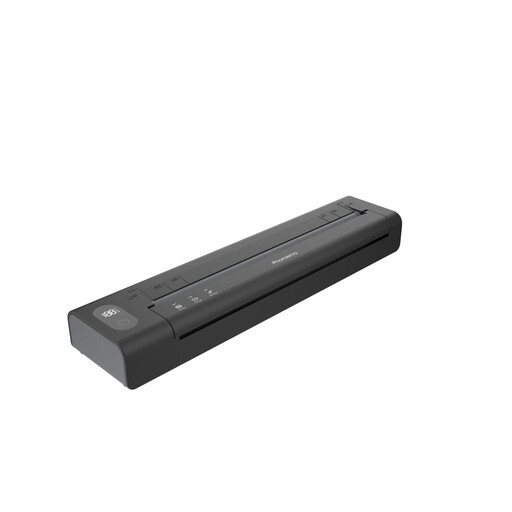 Image unavailable
Phomemo A282U portable wireless printer, black, 1 piece
May suit mobile document printing. Check whether this version can also scan if you want one device for printing and handling letters.
The product name describes a portable wireless printer for home and on the go.
View at Joybuy
 Image unavailable
HP Smart Tank 7305 wireless colour printer, scanner and copier
An option to consider if you want to combine colour printing, scanning and copying in one device.
The listed features include a flatbed scanner and automatic duplex printing. The latter doesn’t necessarily mean that both sides can be scanned automatically too.
View at Joybuy
 Image unavailable
Canon PIXMA MG2556S A4 inkjet printer, 4800 × 600 dpi
For occasional printing at home. Check that the scanning function is suitable for digitising family letters individually.
The product information lists A4, USB 2.0, and scanning and copying functions. Check that the connection is compatible with your devices.
View at Joybuy
 Image unavailable
Epson WorkForce Pro WF-C5390DW A4 colour inkjet printer
Worth considering for colour printing via Wi-Fi or Ethernet. Check whether this version also has a scanner if you want to digitise letters using the same device.
The product name lists A4 and Wi-Fi. The available information also mentions automatic duplex printing, which is not the same as double-sided scanning.
View at Joybuy
Frequently asked questions
Can I feed fragile family letters through an automatic document feeder?
Not without first assessing the condition of each letter. The National Archives of the Netherlands and the Library of Congress stress that originals must be handled safely; an ADF specification alone doesn’t tell you whether your letter is suitable for feeding through it.
How should I store scans once the letters have been digitised?
Check the files for legibility and missing pages, and keep copies on at least two different storage media in separate physical locations. This is preservation advice from the Library of Congress, not a printer specification or a legal requirement.
Does the printer need to work with the shared Wi-Fi in my home?
That depends on the connection and the devices you use. Check the connection requirements for the exact model and, if necessary, find out whether you can access the shared network. A Wi-Fi listing doesn’t guarantee that setup will work on every network.
What can I do if the printer develops a fault or I change my mind after buying it online?
If a product breaks sooner than you could reasonably expect during normal use, ACM ConsuWijzer outlines your legal options for having the seller put things right free of charge. For eligible online consumer purchases, you usually have a 14-day cooling-off period from delivery; exceptions may apply.
Can I share scanned family letters with other people?
Not necessarily: according to the Dutch government, a private copy of copyright-protected texts is intended for personal use and must not simply be distributed or made public. The rights to a particular letter vary, so scanning it privately doesn’t give you general permission to publish its contents.


