
Vandaag of morgen in huis

Kwaliteit gegarandeerd

Welkomstaanbiedingen ontgrendelen: GRATIS bezorging | Tot 80% korting | Gratis 30 dagen JoyPlus-proefperiode
Download de app
Holding a conversation in another language, following a meeting or asking for directions while out and about: AI translation earbuds can be useful. However, not every model works in the same way. Some products translate via a connected smartphone and app, while others are primarily standard Bluetooth earbuds that work with a translation app.
The product name alone therefore tells you very little. Pay particular attention to the following pitfalls before placing your order.
Several models claim to support translation in around 150 languages. According to the VoxorAI product information, the XH12, M76 and M113 models support around 150 languages. In practice, this may require a smartphone, a companion app and sometimes an internet connection.
Before buying, check:
Terms such as “noise cancelling”, “sound isolation” and “AI-call noise reduction” are often used interchangeably. Sound isolation usually means that the fit partially muffles surrounding noise. It does not guarantee flawless speech recognition in a busy station or restaurant.
For translation, a well-positioned microphone, clear speech and a stable Bluetooth connection are more important than a marketing term on the packaging.
Read the IP rating carefully. According to the product information, the MINISO MS106 is rated IPX5, providing protection against water jets and sweat. This does not mean you can submerge the earbuds. Other models specifically advise avoiding prolonged exposure to moisture.
For sport and cycling, fit, awareness of your surroundings and safe volume levels are also important. An open-ear model can allow surrounding sounds to remain more audible, but the manufacturer also warns that prolonged listening at high volume can pose risks with bone-conduction headphones.
Do not just look at the number of languages. Ask yourself how you intend to use the product:
A Bluetooth translation headset will generally work with a smartphone. Several VoxorAI products state that you need to scan a QR code in the manual to download the app and then pair through the app. Check these steps before setting off on your travels.
According to the stated specifications, the VoxorAI XH12 and M76 models have a battery capacity of 40 mAh per earbud and 300 mAh in the charging case. The stated playback time is approximately 5 to 7 hours. That is suitable for a working day with breaks, but may be less practical during a long journey without access to a power socket.
The HTC NE40 states approximately 3.5 hours of use per charge and up to around 24 hours with the charging case, according to the product specifications. The MINISO MS106 states a total battery life of up to 55 hours, including the charging case. With figures like these, always check whether they refer to music playback, talk time or a combination of both.
An in-ear model partially seals the ear and is compact. Open-ear headphones or bone-conduction headphones sit around or beside the ear, leaving your ears less enclosed. This can be comfortable when walking or cycling, but the listening experience varies depending on the user and surroundings.
Also pay attention to:
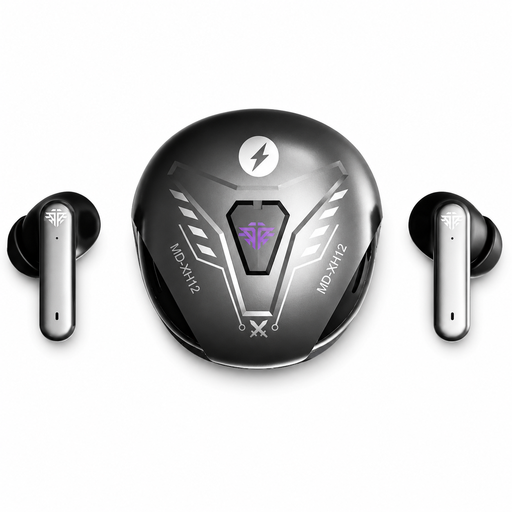
Why it suits this profile: A compact in-ear Bluetooth translation headset for anyone wanting to try translation while travelling, studying or having simple conversations.
The product information clearly states Bluetooth 5.4, app pairing and around 150 supported languages. Check the app and language requirements in advance.
Touch controls, a range of up to 15 metres and a stated playback time of approximately 5–7 hours.
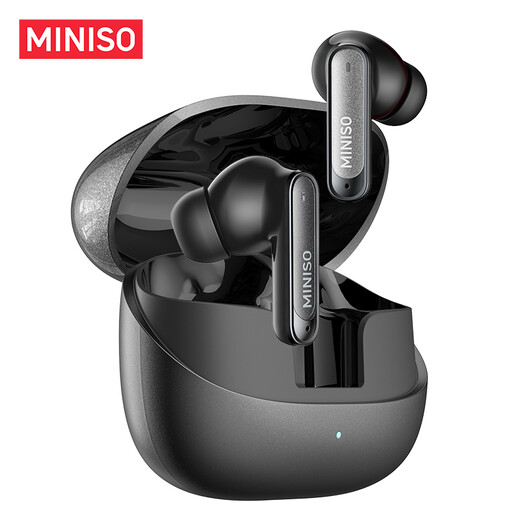
Why it suits this profile: For users who want to combine translation with music, calls, commuting and sport.
The IPX5 rating helps avoid confusion with fully waterproof models. According to the product information, translation uses a translation app.
Bluetooth 6.0, 10mm drivers, a built-in microphone and, according to the product information, up to 55 hours of total battery life.
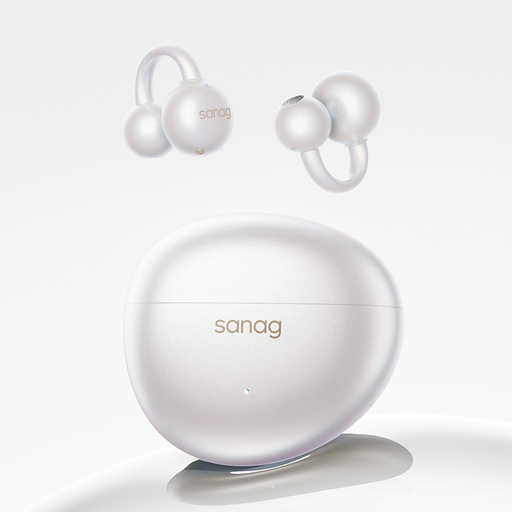
Why it suits this profile: Open-ear bone-conduction headphones for walking, sport and users who do not want their ears fully enclosed.
The open-ear design makes it clear that these are not enclosed in-ear translation earbuds. The manufacturer also warns against submerging the model.
Bone-conduction technology, an over-ear wearing style and open AI translation according to the product name and specifications.
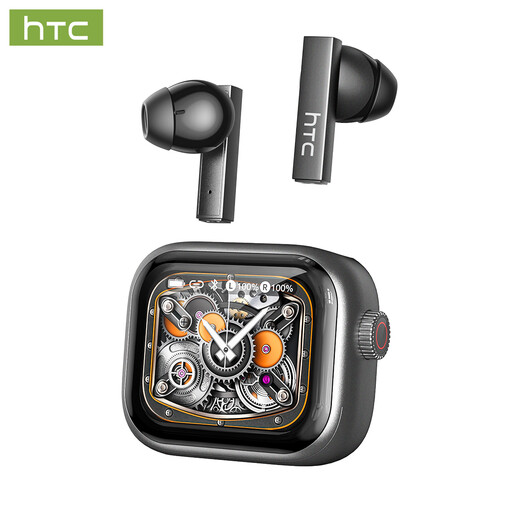
Why it suits this profile: A versatile model for the office, study, phone calls and everyday use with a smartphone or tablet.
The specifications state a Bluetooth range of 10 metres and make it clear that translation can be used through apps on a connected device.
Bluetooth 6.0, LED display, touch controls, a built-in microphone and a charging case with a stated total usage time of up to approximately 24 hours.
We have put together a complete, up-to-date list of products that fully meet these strict selection criteria and the applicable European safety regulations.
Not always, but many models use a smartphone app for translation. Check whether the chosen app offers offline language packs. Without this information, you cannot assume that translation will work without mobile data.
It varies by model and usage. The VoxorAI models mentioned provide approximately 5 to 7 hours of playback time. The HTC NE40 states around 3.5 hours per charge, while the charging case extends the total usage time. Frequent translation, calls and high volume levels can reduce the actual battery life.
Yes, provided that your smartphone and the translation app you use support this. However, a standard Bluetooth connection does not automatically turn earbuds into a standalone AI translation device. Check that the microphone, app compatibility and desired language combination are suitable for your needs.
