
Vandaag of morgen in huis

Kwaliteit gegarandeerd

Welkomstaanbiedingen ontgrendelen: GRATIS bezorging | Tot 80% korting | Gratis 30 dagen JoyPlus-proefperiode
Download de app
Having a conversation in another language sounds easy until the translation is delayed, the app cannot connect or the earbuds run out of power after a few hours. AI translation earbuds can be useful for travellers, students, expats and business travellers, but product titles do not always tell the whole story.
That is why it is important to watch out for these common pitfalls:
When it comes to real-time translation through earbuds, the software is at least as important as the Bluetooth connection. Before buying, check:
The product information for the VoxorAI M76, XH12 and M113 states support for approximately 150 languages. The instructions say that you need to scan the QR code in the manual to download the app, then pair the device through the app. Treat this as a product specification rather than a guarantee that every language combination works equally well or offline.
The HTC NE40 states that, once connected via Bluetooth, you can use a translation app on a phone or tablet. This makes it more suitable as a pair of Bluetooth earbuds for translation apps than as a completely standalone AI translation headset.
For conversations on the go, a stable connection and sufficient battery life are important. Pay attention to:
A manufacturer’s battery-life claim depends on volume, phone use, translation functions and connection quality. Treat the stated figure as a guideline and compare the testing method where this information is available.
In-ear translation headphones partially block the ear canal. This can make conversations clearer, but not everyone finds them comfortable. Open-ear Bluetooth headphones or bone-conduction headphones allow more ambient sound through. This is particularly relevant when cycling, walking or travelling in busy Dutch cities.
According to the product description, the Sanag S7S is an open-ear bone-conduction headphone. The model sits over the ear and uses bone conduction, without an earbud inserted into the ear canal. The description also mentions “Open AI Translation”. The supplied information does not specify supported languages, battery life or an IP rating. Check these details on the product page before ordering.
Water resistance also deserves attention. The MINISO MS106 lists IPX5, but this does not cover prolonged immersion. The product information recommends limiting exposure to rain and sweat and charging the earbuds only when they are dry. The HTC NE40 is described as having a water-resistant design, but no specific IP rating is given. If you take part in intensive exercise, check which protection rating has been officially stated.
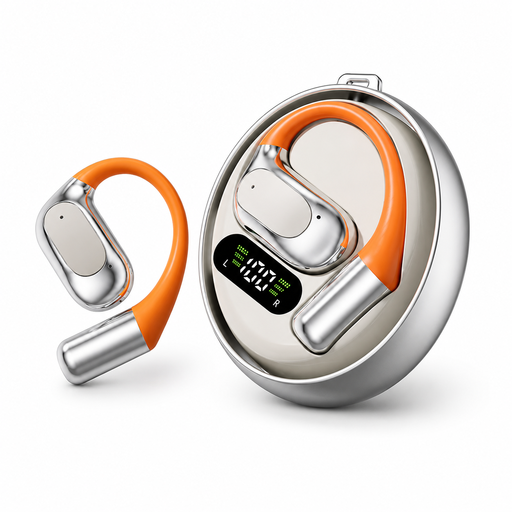
Why it suits this profile: The M76 combines Bluetooth 5.4, touch controls and an in-ear design for studying, travelling and business conversations.
The instructions clearly state that pairing takes place via an app and QR code. You should therefore check the approximately 150 supported languages in the app.
Bluetooth 5.4, touch controls, charging case and a stated battery life of approximately 5-7 hours.
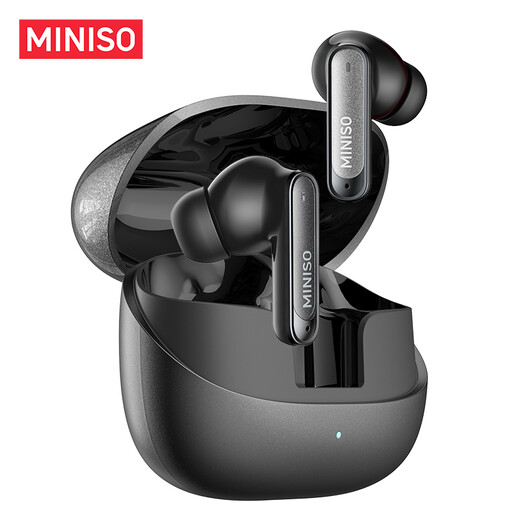
Why it suits this profile: Alongside translation apps, this model is designed for music, calls, commuting and sport.
The product information specifically mentions IPX5, a microphone and compatibility with multiple devices. The translation function may depend on a connected app.
Bluetooth 6.0, IPX5 rating, 10mm driver, six microphones according to the product description and up to 55 hours with the charging case.
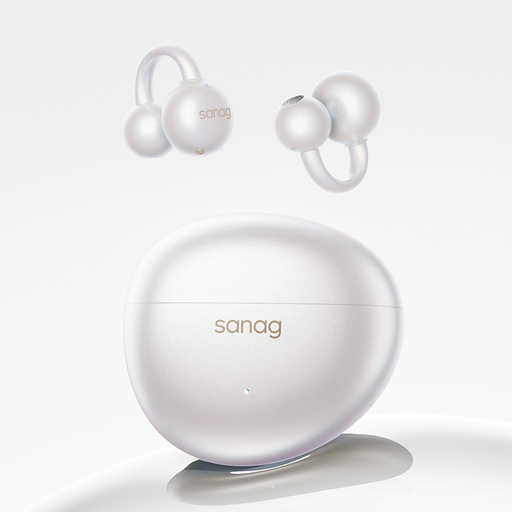
Why it suits this profile: The open-ear design is intended for users who want to remain aware of their surroundings while walking, cycling or exercising.
The product description makes the open-ear and bone-conduction construction clear. No specific language capability is stated, so check the translation app and compatibility before buying.
No earbud sits inside the ear canal, ambient sound remains easier to hear and the headphones connect wirelessly via Bluetooth.
Check the following before completing your order:
We have compiled a complete, up-to-date list of products that fully meet these strict selection criteria and the applicable European safety regulations.
It varies from model to model. The instructions for the VoxorAI models refer to an app and smartphone connection. The HTC NE40 also states that a translation app on a phone or tablet may be required. Always check whether offline translation is explicitly mentioned.
The stated battery life varies. VoxorAI lists approximately 5 to 7 hours for the M76, XH12 and M113. The HTC NE40 offers around 3.5 hours per charge and up to 24 hours with the case. Intensive use of translation, calls and high volume can reduce the actual battery life.
They can be practical for short conversations, asking for directions and informal communication. For contracts, legal arrangements or medical information, it is advisable to have the content checked by a human interpreter or language professional. A translation app may misinterpret context, technical terms and nuances.
