
Vandaag of morgen in huis

Kwaliteit gegarandeerd

Welkomstaanbiedingen ontgrendelen: GRATIS bezorging | Tot 80% korting | Gratis 30 dagen JoyPlus-proefperiode
Download de app
A kitchen full of half-empty packets isn’t just untidy. Open bags of rice, flour or sugar can also attract moisture, odours and pests. Airtight storage jars make it easier to keep dry foods together and see at a glance when you’re running low.
But not every storage jar is automatically suitable for everyday use. Marketing terms such as “airtight”, “keeps food fresh” and “insect-proof” only tell you so much: you’ll also need to look at the material, closure and dimensions. Here’s what to consider when choosing storage jars for your kitchen.
A loose-fitting lid may be fine for short-term use, but it’s less suitable if you want to store rice, flour or sugar for longer. Check whether the product description explicitly says airtight and whether the jar has a locking mechanism, silicone seal or another type of closure.
Also look out for the difference between “sealable” and “airtight”. They don’t always mean the same thing. For example, the 5five Scandinavian Rice Storage Box is described as airtight, while its lid is referred to as a loose-fitting lid. That makes the box suitable for a particular use, but it’s worth checking the closure carefully before buying in bulk.
Glass storage jars are transparent, so you can quickly identify what’s inside. Glass generally doesn’t absorb food odours or colours, but it’s heavier and more fragile than plastic or metal. Wooden lids can add a warm touch, but often need to be washed by hand.
So don’t choose on looks alone. Check:
A compact jar is handy for spices, nuts or small amounts of sugar. But if you regularly cook rice or pasta for your household, a jar that’s too small can quickly become impractical. On the other hand, a large storage container takes up unnecessary space if you only use flour occasionally.
Measure the depth and height of your shelf first. Check the overall external dimensions, not just the stated capacity. A 2-litre jar with a wide shape may take up more cupboard space than a tall, narrow one.
When choosing storage containers for rice and pasta, capacity and opening size are the first things to consider. A wide opening makes it easier to refill the jar and scoop out what you need. A tall, narrow jar makes efficient use of shelf space, but may be harder to clean.
A few useful guidelines:
The stated capacity doesn’t tell you exactly how many grams a jar will hold. Rice, flour and pasta vary in density and shape.
When storing dry foods, a good closure matters more than a decorative lid. A silicone seal, clip closure or snug-fitting design helps protect the contents. Always check the technical description of a product rather than relying on the product photo alone.
The product name for the JORDAN&JUDY Grain Storage Bin mentions protection against insects and moisture. This is a product specification from the listing, not a guarantee that food will stay fresh indefinitely in all conditions. Store the jar somewhere dry and out of direct sunlight, and make sure it’s clean before use.
Glass is handy if you want to see the contents straight away. Metal is lightweight and practical for foods such as rice, but pay extra attention to the inside and the closure. Wood gives a natural look, but is generally less suitable for the dishwasher.
It’s also best not to place storage jars right next to a hob or kettle. Heat and condensation can affect the quality of dry foods, even when the jar is well sealed.
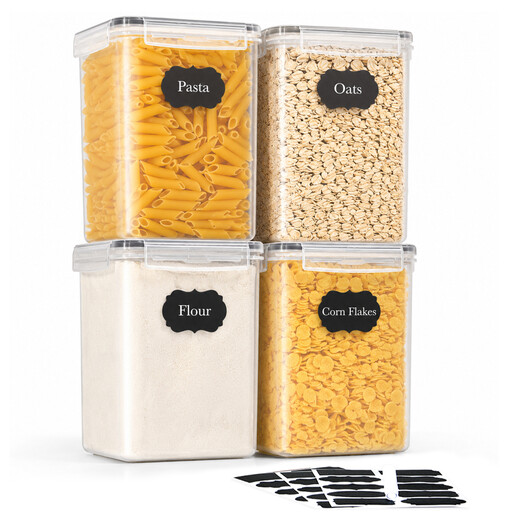
Why it suits this type of shopper: A compact set is a practical starting point if you want to organise a few essentials without buying a large kitchen storage set straight away.
Starting with a small number of jars helps you avoid buying too many sizes that end up unused.
Set of 4; designed for foods including fusilli, macaroni, rice, sugar and flour; labels included according to the product name.
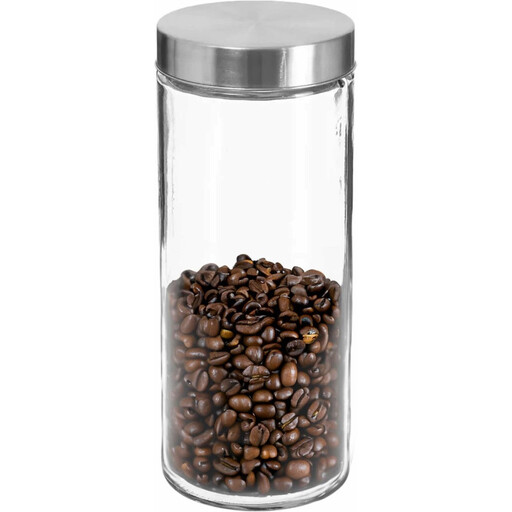
Why it suits this type of shopper: This glass jar is a good choice if you want to see what’s inside and need a spacious single jar for rice, pasta, salt or sugar.
Its 2-litre capacity makes it less likely that a jar you use often will feel too small. The lid is best washed by hand.
Glass body; 2-litre capacity; dimensions 11 x 27,5 cm; jar is described as dishwasher-safe.
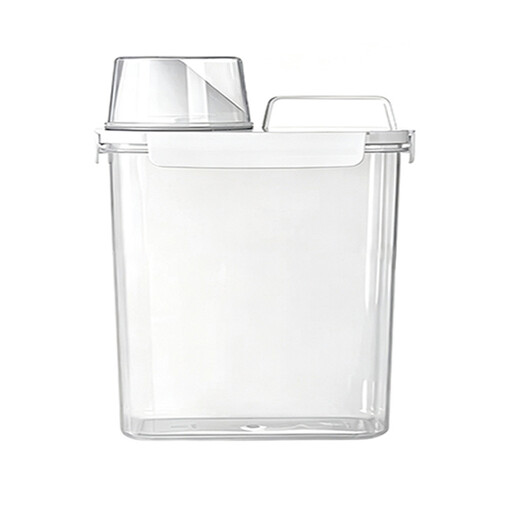
Why it suits this type of shopper: A spacious storage container makes sense for households that regularly use rice, flour or other grains and want to cut down on loose packets.
With a stated capacity of 2.5 litres, you’re less likely to need several small containers for a staple ingredient. Check the external dimensions and available shelf space first.
2.5-litre capacity; product name mentions protection against insects and moisture; designed for rice, grains and flour.
Use clear labels with the product name and, if you like, the date you bought it. This makes it easy to see which jar needs topping up first. Store food in a dry cupboard where possible, and don’t automatically pour new supplies on top of old contents. Empty and clean the jar first.
Small spice jars with wide openings are handy for herbs and spices. Larger stackable jars or a dedicated rice storage container are more practical for rice and pasta. A jar with a wooden lid can look great on an open shelf, but check that the lid has a seal if airtight storage matters to you.
We’ve put together a complete, up-to-date list of products that meet these strict selection criteria and the applicable European safety regulations.
Yes. Glass jars are often used for dry foods such as rice, flour, pasta and sugar. Check that the lid fits securely and that the jar is big enough for your needs. Bear in mind that glass is heavier and can break.
That depends on the food, its use-by or best-before date, and the conditions in your kitchen. An airtight jar won’t keep food fresh indefinitely. Store the contents somewhere cool and dry, away from direct sunlight, and always follow the date and instructions on the original packaging.
Not necessarily. Wood mainly tells you about the look and material of the lid. Check whether it has a silicone seal or closure, or whether the product description explicitly says it’s airtight. Wooden lids are often best washed by hand; let all parts dry completely before refilling the jar.
