
Vandaag of morgen in huis

Kwaliteit gegarandeerd

Welkomstaanbiedingen ontgrendelen: GRATIS bezorging | Tot 80% korting | Gratis 30 dagen JoyPlus-proefperiode
Download de app
An air purifier for your home can be useful in a bedroom, living room, home office or home with pets. However, it can be difficult to compare the options. Manufacturers use different testing methods, filters and recommended room sizes. A compact air purifier, for example, may be suitable for a bedroom but unable to move enough air around a spacious living room.
So focus on specifications you can verify, rather than relying on claims such as “powerful air purification” or “suitable for the whole home”.
A manufacturer may quote a large coverage area, but that doesn’t always mean the air in that room will be filtered quickly. Instead, look at the CADR, or Clean Air Delivery Rate. This tells you how much clean air the device can deliver per hour.
A model described as suitable for rooms up to 65 m² may work more quickly in a smaller room than in an open-plan living room with high ceilings. Also check how many air changes per hour the figure is based on. A stated coverage of 130 m² at one air change isn’t the same as 28 m² at several air changes.
An air purifier with a HEPA filter is primarily designed to capture fine particles such as dust, pollen and skin flakes. A layer of activated carbon is useful for odours and certain gaseous substances. A pre-filter also helps trap larger particles such as dust and hair.
So a device with only a fine-particle filter isn’t necessarily a good choice if your main aim is to reduce cooking smells, smoke or pet odours. Also check whether the filter needs replacing and how much a suitable replacement costs.
A quiet air purifier can be useful in a bedroom, but the lowest setting usually moves less air. So compare the noise level in sleep mode with the highest stated level. A sensor, automatic mode and dimmable lights are practical features, but they can’t make up for a CADR that’s too low.
Use the stated room size as a guide, not a guarantee for every home. A compact air purifier is often enough for a bedroom or office. A higher airflow rate makes more sense for a large living room. Models such as the Blueair Blue Pure 511i Max quote a CADR of 212 m³/u, while the Philips PureProtect Mini 900 Series has a CADR of 250 m³/u, according to the product information.
For larger rooms, pay particular attention to the relationship between the room size and the number of air changes. An air purifier for large rooms may run more quietly on a low setting, but it needs greater capacity on a higher setting to circulate the air quickly.
A practical filter set-up often includes:
According to the relevant brands’ product descriptions, some models can capture 99.97% of certain particles. This is a product specification based on stated testing conditions, not a medical promise. An air purifier for allergies may help reduce airborne particles, but it’s no substitute for ventilation or professional advice.
Check the expected filter life. The Homerunpet D1 states that its combined filter should be replaced after around 6 to 12 months, depending on use and the number of pets. The Blueair Mini Restful states around 9 months. According to the product description, the Shark NeverChange Max has a filter life of up to five years; always check the conditions of use and the filter indicator.
For an air purifier for the bedroom, sleep mode and the maximum noise level are important. The Philips PureProtect Mini 900 Series states a noise range of 20,5 tot 49 dB(A). The Blueair Blue Pure 511i Max states 19 dB on its lowest setting and a maximum of 48 dB.
A smart air purifier can be controlled using an app, scheduling or voice controls. A PM2.5 sensor and automatic mode can adjust the fan speed based on measured readings. That’s useful, but check whether you can view the sensor readings without a subscription and whether Wi-Fi is needed for basic controls.
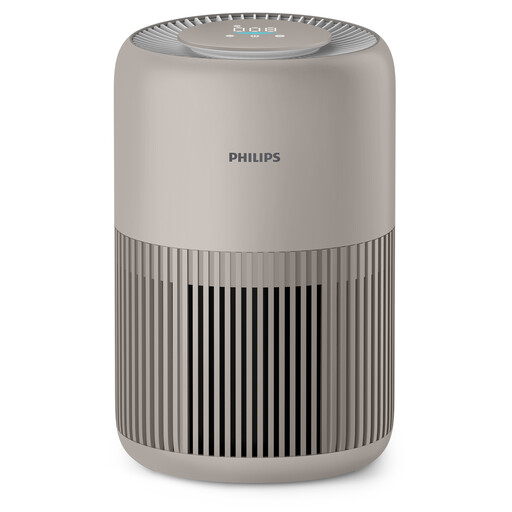
Why it suits this user: A compact option for smaller rooms, with automatic mode and a stated CADR of 250 m³/u.
The product specifications give both the maximum room size and the CADR, so you don’t have to rely on square metres alone.
20,5 dB(A) in sleep mode, PM2.5 sensor, maximum power of 21 W and a filter indicator.
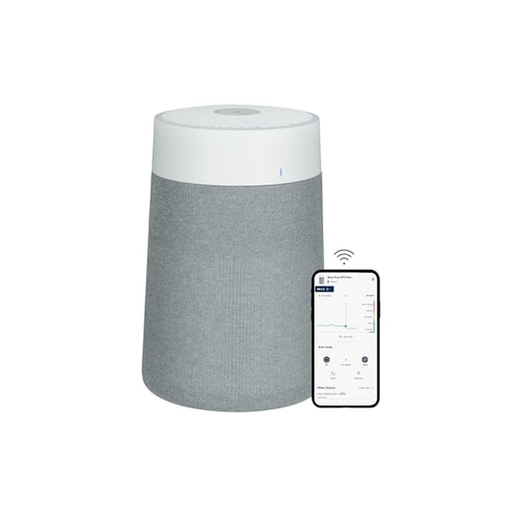
Why it suits this user: A good fit if you want quiet operation and remote control, with a stated coverage area of up to 43 m².
The description gives both the low and high noise levels, as well as a CADR of 212 m³/u.
App control, night mode, 19 dB on the lowest setting and a stated maximum of 48 dB.
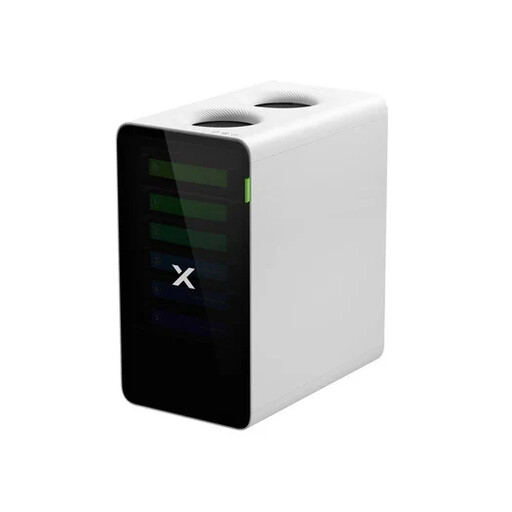
Why it suits this user: Designed for a specific working environment involving laser engraving, rather than as a general-purpose air purifier for living rooms.
The product description positions this model for dealing with smoke, dust and odours from laser equipment. Use it in accordance with the safety instructions.
Six-layer filtration according to the product description, plus quiet operation for use with diode, fibre and CO₂ lasers.
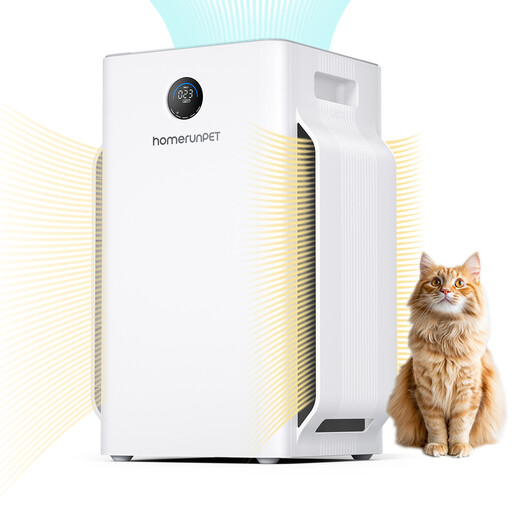
Why it suits this user: Designed for homes with cats, dogs or other pets, with a stated coverage area of up to 40 m².
The product specifications list a washable pre-filter, a HEPA and carbon filter, and a filter replacement interval of around 6 to 12 months.
Sleep mode from 25 dB, automatic air quality monitoring, child lock and a secure filter compartment.
We’ve put together a complete, up-to-date list of products that meet these strict selection criteria and the applicable European safety regulations.
Place the device on a flat, stable surface, with enough clear space around the air inlet and outlet. Put it in the room where you spend most of your time, and keep windows and doors closed as much as possible while it’s running. An air purifier isn’t a substitute for normal ventilation.
This varies by model, how long it’s used and the amount of dust, smoke or pet hair in the air. Product information for various models gives an expected life of around six to twelve months. Check the filter indicator, and consider the price and availability of replacement filters before ordering.
As well as the purchase price, you’ll need to pay for electricity and filters. Check the rated power, for example 21 to 35 W for compact models, and the recommended filter replacement interval. Low energy consumption doesn’t automatically make a model cheaper to run if replacement filters are expensive or hard to find.
