
Vandaag of morgen in huis

Kwaliteit gegarandeerd

Welkomstaanbiedingen ontgrendelen: GRATIS bezorging | Tot 80% korting | Gratis 30 dagen JoyPlus-proefperiode
Download de app
An air purifier can help reduce airborne particles, dust and odours in your home. However, it is unwise to rely solely on terms such as “powerful”, “quiet” or “suitable for allergies”. The differences between models often come down to capacity, filter maintenance and noise levels.
For UK households, three pitfalls are particularly important:
Below, we explain which specifications you should compare and which air purifier is best suited to different usage situations.
The CADR rating, or Clean Air Delivery Rate, indicates how much filtered air a device can deliver per hour. A higher CADR is generally relevant for larger rooms or when you want the air to circulate more quickly.
Also check how the manufacturer defines room capacity. “Up to 50 m²” may be based on one air change per hour, while another manufacturer may specify a smaller area based on multiple air changes per hour. Therefore, wherever possible, compare the CADR in m³/h rather than just the number of square metres.
As a practical guideline:
An air purifier with a HEPA filter is worth considering if you mainly want to tackle fine particles, pollen and dust. A pre-filter captures larger particles such as hair. An activated carbon filter is mainly designed for odours and certain gaseous substances.
A commonly used system consists of:
Pay attention to the difference between a reusable pre-filter and a disposable filter. Do not simply wash a HEPA filter; always follow the instructions. According to the product information provided by the relevant brands, filter life often ranges from around six to twelve months, depending on usage and indoor air quality.
A quiet air purifier is important in a bedroom, nursery or home office. Do not just look at the lowest noise level; also check the level on the medium and highest settings. Quiet mode may, for example, be around 20 to 25 dB, while the highest setting will be noticeably louder.
An air purifier with an air quality sensor can adjust the fan speed automatically. A PM2.5 sensor measures fine airborne particles, while a colour indicator makes changes visible. This is useful if you do not want to adjust the settings manually all the time.
A sensor does not replace ventilation. Continue to ventilate rooms according to the conditions in your home and do not use an air purifier as a medical treatment.

Why it suits this profile: This compact model has a CADR of 250 m³/h and, according to the product information, is intended for rooms of up to 65 m². The automatic mode and compact size make it straightforward to operate.
The stated CADR provides more useful guidance than a general claim about room size alone. The filter also has a replacement indicator.
Two-layer HEPA filtration, PM2.5 sensor, automatic mode and a stated noise level from 20.5 dB(A).
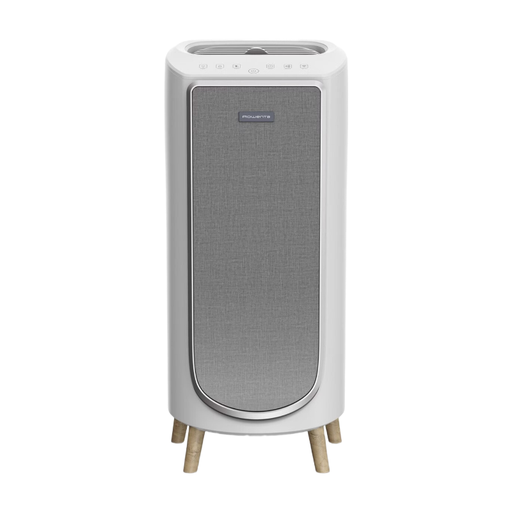
Why it suits this profile: This model is aimed at users who value Wi-Fi control, automatic detection and multiple operating modes. Its stated CADR is 360 m³/h.
You can compare the stated capacity, the 32 dB noise level on the low setting and the filter construction, rather than judging the product on design alone.
Wi-Fi and app control, automatic pollution detection, day, night, boost and quiet modes, plus HEPA, carbon and nanofiltration according to the product description.
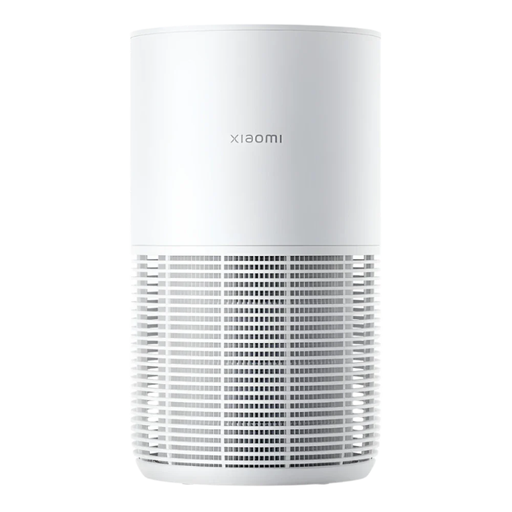
Why it suits this profile: This air purifier for pets has a three-layer filter, a stated CADR of 230 m³/h and a coverage range of 16 to 27 m². The app and automatic control are useful for everyday use.
The pre-filter is designed for larger particles such as hair. This makes it clearer which component needs regular maintenance.
HEPA and activated carbon filter, PM2.5 sensor, app and voice control, child lock and a stated power consumption of 27 W.
We have put together a complete, up-to-date list of products that fully meet these strict selection criteria and the applicable European safety regulations.
Place an air purifier on a stable, level surface with at least approximately 20 to 30 cm of clear space around the air inlet and outlet. Do not place the device behind curtains, directly next to a radiator or in a damp room such as the bathroom.
For effective operation:
According to the product information provided by many brands, a model with a pre-filter and HEPA filter is designed to filter airborne pollen and dust particles. The result depends on the room, the capacity selected, the condition of the filter and the length of use. Dust on furniture and pollen that has already settled will not be removed automatically.
This varies by model and usage. Manufacturers often state around six to twelve months. In a home with pets, a lot of dust or intensive use, the filter may need to be replaced sooner. Always check the filter indicator and make sure a suitable replacement filter is available.
In addition to the purchase price, you will pay for electricity and filters. Energy consumption depends on the power rating and the number of hours the device operates. A 25 W device running continuously uses less energy than a 60 W model on a high setting. Therefore, compare the stated power rating, filter price and recommended replacement interval before you buy.
