
Vandaag of morgen in huis

Kwaliteit gegarandeerd

Welkomstaanbiedingen ontgrendelen: GRATIS bezorging | Tot 80% korting | Gratis 30 dagen JoyPlus-proefperiode
Download de app
An air purifier can help reduce airborne particles, dust and odours in your home. However, an expensive model is not automatically the right choice for your living room, bedroom or home office. Many disappointing purchases result from three recurring pitfalls:
If you want to reduce dust, pollen, smoke, pet odours or fine particulate matter in your home, it is therefore sensible to consider performance, room size and everyday use together.
CADR stands for Clean Air Delivery Rate and indicates how much filtered air an air purifier can deliver per hour. A higher CADR is generally suitable for a larger room, but always compare models using the same unit of measurement: m³/h.
For example, a model with 150 m³/h is mainly suitable for a bedroom or small office. For a larger living room, 260, 360 or 450 m³/h may be more practical. Also check how the brand calculates the coverage area. A claim such as “up to 120 m³” does not always mean the same as “suitable for 48 m²”.
For an air purifier for large rooms, the combination of CADR, air intake and fan speed is more important than the marketing label “whole room” alone.
A practical filtration system often consists of several layers:
An air purifier with a HEPA filter is therefore not automatically suitable for odours. A carbon filter is needed for this. For homes with pets, an easily accessible pre-filter is useful, as hair can otherwise put more strain on the main filter.
Some manufacturers use their own name, such as HEPASilent. According to Blueair’s product information, this technology combines mechanical and electrostatic filtration. The stated filtration claims come from the product specifications and should not be interpreted as a medical guarantee.
A quiet air purifier for the bedroom should not only have a low minimum noise level. Also check the noise level at higher settings. A device that states 20 dB on its lowest setting may exceed 50 dB at maximum speed.
An air purifier with an air quality sensor can automatically adjust the fan speed. This is useful if you do not want to keep changing the setting manually, for example while cooking or working from home. However, check whether the sensor measures PM2.5, uses only a colour indicator, or also detects odours and gases.
Finally, check:
A filter marked as non-washable should not be rinsed. This can damage the filter structure.
The selection below is based on stated specifications such as CADR, filter construction, noise level, sensors and controls. Claims about removal rates or odour reduction come from the product information provided by the relevant brands or sellers.

Why it suits this profile: A compact model for a bedroom, study or another room where straightforward controls are important.
The specifications state both CADR and the noise range, making it easier to assess coverage and overnight use.
CADR of 250 m³/h, PM2.5 sensor, automatic mode and a stated sleep mode from 20.5 dB(A).
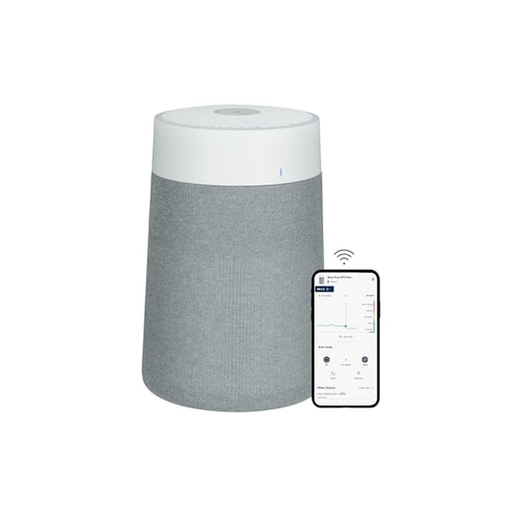
Why it suits this profile: Suitable for anyone looking for a smart air purifier with app control, scheduling and remote monitoring.
According to the product information, the app displays air quality data and filter notifications, making it less likely that maintenance will be forgotten.
CADR of 212 m³/h, coverage of up to 43 m² according to the product specification, and a stated noise level of 19 to 48 dB.
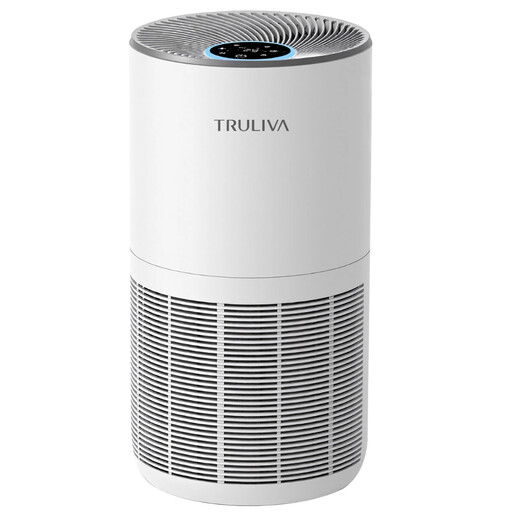
Why it suits this profile: An option for households with a larger living area, pets or recurring odours.
The filter construction is clearly specified, with a pre-filter, H13 HEPA filter and activated carbon layer.
CADR of 450 m³/h, 360° air intake, PM2.5 display, timer and child lock. The stated noise level reaches up to 66 dB(A).
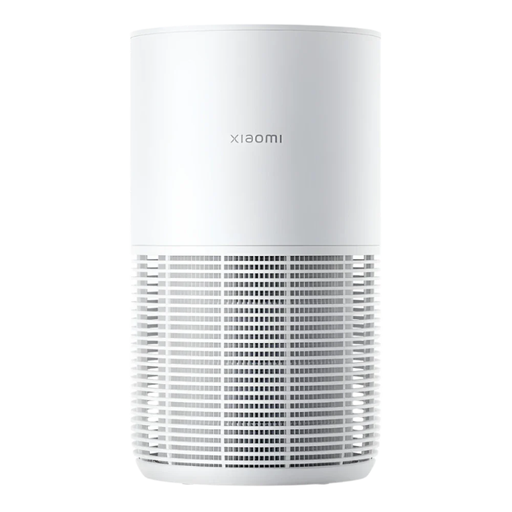
Why it suits this profile: Designed for smaller spaces with pets, where app control and quiet automatic operation are desirable.
The product specification mentions a pre-filter for larger particles and a three-stage filtration system, rather than just a general HEPA label.
CADR of 230 m³/h, coverage of 16–27 m², Xiaomi Home app, voice control and child lock.
We have put together a complete, up-to-date list of products that fully meet these strict selection criteria and the applicable European safety regulations.
Place an air purifier on a flat surface and leave enough space around it for the air intake and outlet. Do not position the device behind a sofa, curtain or cupboard. In a bedroom, the low setting is often suitable overnight; a higher setting may be needed temporarily during the day.
An air purifier is not a substitute for ventilation. Continue to ventilate according to the conditions in your home, and tackle the source of smoke, moisture or dust. A device can filter the air in the room, but it cannot prevent new particles from entering.
According to the product information, a model with a suitable HEPA or comparable fine-particle filter is designed to filter airborne particles such as dust and pollen. Dust on furniture and floors still needs to be removed in another way.
This varies by model, usage time and air quality. In the product specifications mentioned above, intervals range from approximately six to twelve months. Always follow the filter indicator and the instructions. A saturated filter can restrict airflow.
As well as electricity consumption, you need to factor in replacement filters. A low-wattage device may be economical during prolonged use, but an expensive filter can increase the total cost. Before ordering, compare the power consumption, recommended replacement interval and price of a suitable original filter.
