
Vandaag of morgen in huis

Kwaliteit gegarandeerd

Welkomstaanbiedingen ontgrendelen: GRATIS bezorging | Tot 80% korting | Gratis 30 dagen JoyPlus-proefperiode
Download de app
An air purifier can help reduce airborne particles, dust and certain odours indoors. However, the differences between models are not limited to the filter. Airflow, noise levels, room size and replacement-filter costs also determine whether a device remains practical and pleasant to use.
Anyone who focuses only on terms such as “HEPA”, “smart” or “suitable for large rooms” may end up buying a device that moves too little air, produces too much noise or costs more to maintain than expected. Below are the key considerations for Dutch homes, bedrooms, home offices and living rooms.
Manufacturers sometimes advertise a large maximum coverage area. Always check the conditions under which that figure applies. For example, a device may treat a 60 m² room once per hour, while providing noticeably higher air circulation only in a much smaller room.
That is why you should focus primarily on the CADR, or Clean Air Delivery Rate. This value is expressed in m³/h and indicates how much filtered air the device can deliver per hour. A higher CADR is generally better suited to a large living room, open-plan kitchen or space with a high dust load.
A claim such as “99.97% filtration” sounds clear, but it is only useful when you also know:
According to product information from various brands, a HEPA air purifier may capture 99.97% of certain particles measuring up to 0.3 or 0.1 microns. This is a stated product specification, not a guarantee of a particular level of air quality in every home. Also look for a pre-filter for hair and coarse dust, as well as an activated-carbon layer for odours.
A quiet air purifier for the bedroom may produce just 19 to 25 dB on its lowest setting, while the maximum noise level can range from around 48 to 66 dB. For everyday use, it is important to know how much noise the device produces at the setting you will actually use.
Also check whether the lighting can be switched off, whether a sleep mode is available and whether the device has a child lock. A bright display or unexpected increase in fan speed can be disruptive at night.
Use the stated room coverage as a guideline and compare it with the CADR. Here are several examples from current product information:
These figures are not directly comparable when brands use different measurement methods or air-change rates. It is better to choose a model with sufficient capacity for your room than a compact device that has to run constantly at its highest setting.
A practical filtration system usually consists of several layers:
A readily accessible pre-filter is useful in homes with pets. If cooking smells or smoke are your main concerns, look for a model with a clearly specified activated-carbon layer. A filter is not a reason to reduce ventilation; use an air purifier alongside normal ventilation.
An air purifier with a PM2.5 sensor displays an indication of fine particles in the air and can adjust the fan speed automatically. The reading is useful for tracking trends, but a consumer device does not replace professional measurement.
A smart air purifier, or one with an app, can be useful for:
However, check whether Wi-Fi is required and whether the main functions remain available without the app.
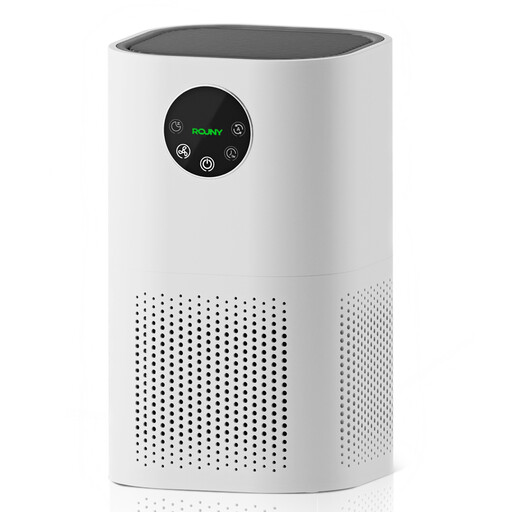
Why it is a good fit: A compact option for a bedroom, office or pet area. The model has four fan speeds, an air-quality display and a timer settable to 2, 4 or 8 hours.
The 150 m³/h CADR and stated coverage of 20–50 m² make the capacity more tangible than a vague claim about cleaning “entire rooms”.
H13 filter according to the product description, sleep mode down to ≤25 dB and a red-yellow-green air-quality indicator.
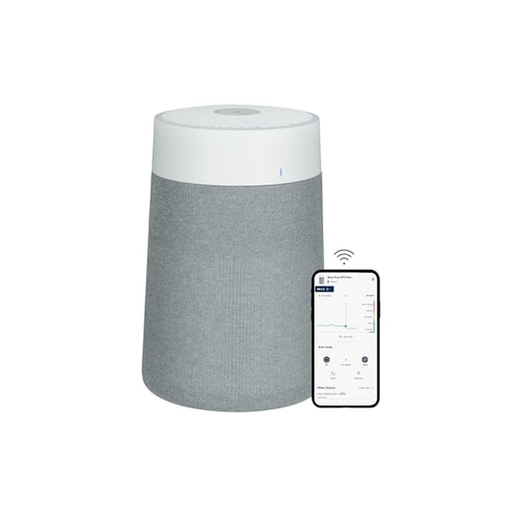
Why it is a good fit: For a bedroom or home office where quiet operation and app-based control are important.
The specifications state 19 dB on the lowest setting, a maximum of 48 dB and a CADR of 212 m³/h. This makes the difference between night-time and maximum operation clear.
HEPASilent filtration according to Blueair, app control, scheduling, air-quality monitoring and a pre-installed filter included.
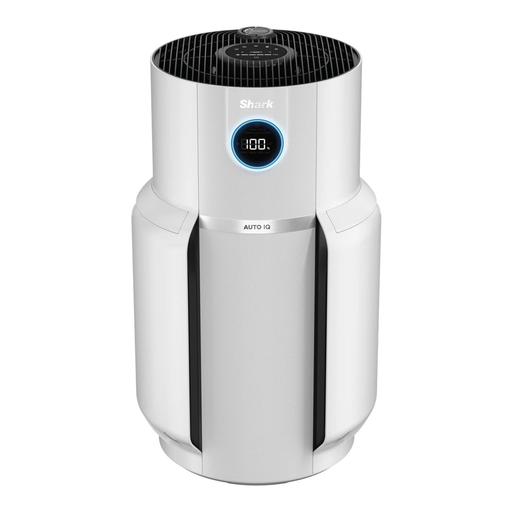
Why it is a good fit: For households with a spacious living room, multiple pets or higher daily exposure to dust and odours.
The product information distinguishes between 130 m² at one air change per hour and 28 m² at 4.8 air changes per hour.
Four-layer filtration system, Auto IQ, LED air-quality display and, according to the product description, filter life of up to five years.
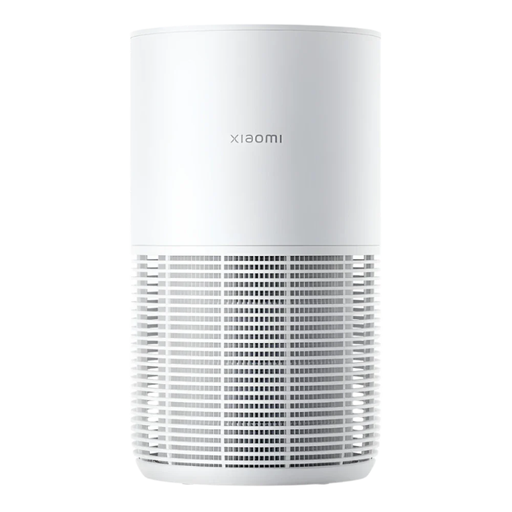
Why it is a good fit: For smaller homes with pets and users who want control via the Xiaomi Home app or voice commands.
The coverage of 16–27 m² and CADR of 230 m³/h are listed separately. This helps you avoid choosing a device that is oversized or undersized for the room.
Three-layer filter with pre-filter, HEPA and activated carbon, PM2.5 sensor, child lock and a stated power consumption of 27 W.
Browse a current selection of models and compare filter type, CADR, noise level and features for your home.
Place the air purifier on a level surface with sufficient clearance around the air inlet and outlet. Do not position the device directly behind a sofa, curtain or cabinet. Remove dust from the pre-filter according to the manual, but do not wash a combined HEPA filter unless the manufacturer explicitly permits this.
Filter life varies considerably. Product information commonly cites periods of 6–8 months, 6–9 months, 9 months and 12 months, while the Shark NeverChange Max is stated to last up to five years. This depends on operating time, fan speed and the amount of dust in the home. Before buying, check the price and availability of the original replacement filter. An inexpensive device with costly or difficult-to-source filters may prove less economical over time.
A model with a pre-filter and HEPA filter may, according to the product description, be designed to target airborne particles such as dust and pollen. Performance varies by device and room. Choose a model with sufficient CADR, position it with adequate clearance and continue ventilating normally. Medical complaints or asthma require advice from a doctor; an air purifier is not a medical treatment.
That depends on the model and how it is used. Manufacturers often specify a period of approximately six to twelve months, although some systems claim a longer service life. Follow the filter indicator and the instructions in the manual. Replace the filter sooner if airflow noticeably decreases or the device operates for long periods in a dusty environment.
Consumption depends on the wattage and the number of operating hours. A 25 W model running for 8 hours a day uses approximately 6 kWh per month. Multiply this by your current electricity rate and add the cost of replacement filters. An automatic mode can reduce the number of hours spent at high speed, but actual consumption varies by home and settings.
