
Housemate who needs napkins again quickly
If you regularly wash a small number of cloth napkins, consider whether active heat is worth the extra electricity use and space required.


A heated airer is worth considering if you often need clean cloth napkins again quickly and don’t mind the extra electricity use and space it takes up. A regular airer dries laundry without using electricity, but doesn’t provide heat. Measure the space available and, if you’re considering an electric model, check whether the required CE marking applies to that exact version; the NVWA explains the rules that apply to electrical products.
If you regularly wash a small number of cloth napkins, consider whether active heat is worth the extra electricity use and space required.
In a shared kitchen or room, check whether the airer fits when fully opened and can be put away afterwards. A tower and a narrow airer need different space checks.
If you can wait for your napkins to air-dry, an airer without active heating may suit your preference for drying laundry without using electricity.
A good fit if: you regularly need your napkins again quickly and have room for the airer when fully opened.
Bear in mind: electricity use and ventilation; drying laundry releases moisture into the air indoors.
A good fit if: floor space is limited and you want to hang napkins on different levels. Silvergear describes its tower as compact.
Bear in mind: the height required and whether you can easily reach each level.
A good fit if: you don’t need dry napkins straight away and want to dry them without active heating.
Bear in mind: there’s no active heat; make sure the room is ventilated when drying laundry indoors.
| What to consider | What to look for when buying | Who is this important for? |
|---|---|---|
| Using napkins again quickly | Check that small items can be spread out on the rails or levels; only factor in a timer if the exact model includes one. | If I often need my napkins again soon after washing them, active heat may be worth the electricity use and space required. Around 36% of consumers prioritise being able to reuse them quickly. |
| Space for use and storage | Compare the dimensions when opened and folded, and check that walkways will remain clear. | In a shared room or kitchen, I want the airer to fit when it’s open and to be easy to put away afterwards. Around 29% of consumers prioritise the space available. |
| Electricity use | Check the power rating of the exact electric version and factor in how long you’ll use it and your own price per kWh. | If I can wait, I’d rather choose a drying method that doesn’t use electricity. Around 21% of consumers put avoiding electricity use first. |
| Hanging space for several housemates | Check how many usable rails or levels there are and whether the napkins can hang separately. | When doing a shared load of laundry, I want enough separate hanging space so wet items aren’t touching. Around 14% of consumers prioritise shared drying capacity. |
Even when an airer is heated, drying laundry indoors releases moisture into the air. Milieu Centraal recommends extra ventilation when you dry laundry indoors.
Before buying, decide where the airer can go and how you’ll ventilate the room.
A stated drying length doesn’t tell you whether the airer will fit in a shared space when fully opened.
Compare the dimensions of the exact version, both open and folded, with the space you have available.
A feature of the model on its own doesn’t tell you how long your napkins will take to dry or how much electricity a drying session will use.
Compare the power rating in kW, how long you’ll use it and your own price per kWh; don’t assume a set drying time.
According to its Dutch product pages, Silvergear offers both a heated airer with rails and a heated drying tower.
The Classic 100 Easy, model 72700, is a non-electric, foldable airer to consider if you don’t need active heat.
The HangOn version in Matt Black reviewed here is a non-electric airer for anyone who needs separate hanging space.
These product options are designed for hanging cloth napkins in student accommodation: a heated airer with side wings and a foldable wall-mounted airer.
 No image available
The side wings provide extra hanging space when small items need to be kept separate.
Dimensions: 144 × 53 × 91 cm. The product name states a power rating of 230 W.
According to the product description, it’s designed for indoor use on a stable, level surface; keep it at least 31 cm away from walls and ventilate the room. Before buying, check whether the required CE marking applies to this exact electric version.
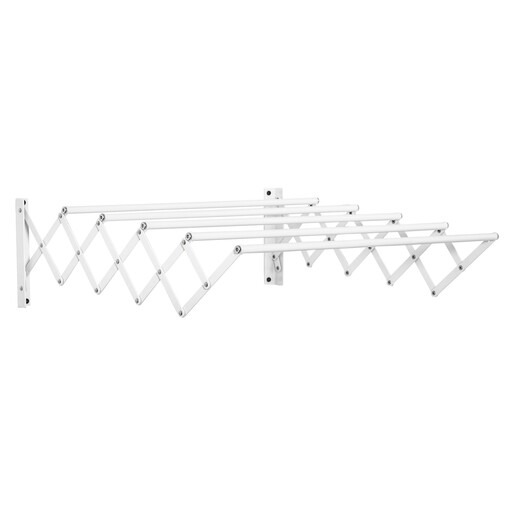 No image available
A wall-mounted airer may suit you if you want to make use of hanging space without putting an airer on the floor; bear in mind that it needs to be installed.
Dimensions: 63,5 × 60 × 20 cm. The product description lists 5 rails, a maximum total load of 10 kg and a maximum of 2 kg per rail.
No, drying doesn’t replace washing. Follow the care label on the napkins; a heated airer isn’t a substitute for the washing instructions.
Choose a spot where the airer fits when fully opened and where you can ventilate the room. Drying laundry indoors adds moisture to your home; Milieu Centraal recommends extra ventilation. The Fire Service warns students not to overload plug sockets or connect extension leads to one another.
Multiply the power rating in kW by the number of hours you use it, then multiply that figure by your own price per kWh. A stated power rating on its own doesn’t tell you how long drying will take or how much electricity a full drying session will use.
That depends on the rules that apply to the exact version. The NVWA includes electrical products with a nominal AC voltage of 50–1,000 V among the products that require CE marking. Check the marking for the specific model; CE is a declaration by the manufacturer and doesn’t mean that every individual item has been independently tested.
If a product is faulty, contact the retailer. According to the Dutch government, you’re entitled to a product that works properly and the retailer must find a solution if there’s a problem; a manufacturer’s warranty doesn’t replace your statutory rights.