
Vandaag of morgen in huis

Kwaliteit gegarandeerd

Welkomstaanbiedingen ontgrendelen: GRATIS bezorging | Tot 80% korting | Gratis 30 dagen JoyPlus-proefperiode
Download de app
An air purifier can help filter airborne particles, dust and certain odours from indoor air. However, it is unwise to rely solely on terms such as “powerful purification” or “suitable for large rooms”. Performance depends heavily on the room, the filter, the air circulation and how often you use the appliance.
For households with pets, people who are sensitive to dust or pollen, and anyone wanting a calmer bedroom environment, there are several factors to consider. Below, you’ll find out which specifications matter and which models suit different situations.
The stated coverage area is not always comparable between brands. So, check the CADR rating, or Clean Air Delivery Rate. This shows how much filtered air the appliance can deliver per hour. A model listed as covering 65 m² may clean a large living room more slowly than a compact bedroom.
Also consider the room’s height, open connections to other rooms and your preferred fan speed. A compact model is often sufficient for a 15 m² bedroom. For an open-plan living room, an air purifier for large rooms with a higher CADR may be the more logical choice.
An air purifier with a HEPA filter is mainly designed to target fine particles such as dust and pollen. For odours, cooking smells and certain volatile substances, an activated carbon filter is relevant. A pre-filter captures larger particles such as hair and fluff.
So, check the complete filter setup:
A filter is also a consumable item. Before buying, check the recommended replacement interval and whether a suitable replacement filter is available.
A stated noise level of, for example, 20 or 25 dB usually applies to the sleep or lowest setting. At a higher fan speed, the noise can increase noticeably. So, compare the range rather than just the lowest figure.
For an air purifier for the bedroom, a night mode, dimmed lighting and a timer are practical features. For an appliance in the living room, an automatic mode with an air quality sensor may be more important than the minimum noise level.
If you’re looking for an air purifier for dust and pollen, it’s worth checking the filter class and the stated particle size. Manufacturers use different measurement methods for this. Claims such as “99.97% filtration” are product claims; according to the relevant brand’s own product specifications, they apply under certain test conditions.
Also consider maintenance. A washable pre-filter can be useful if you have pets, but the HEPA filter itself usually must not be washed. Always follow the instructions. A saturated filter can reduce airflow.
CADR is generally more comparable than a stated coverage area alone. Some examples from the product information:
Use these figures as a point of comparison, not as a guarantee of the same cleaning speed in every home.
An air purifier with an air quality sensor can adjust the fan speed automatically. Check which values are measured, such as PM2.5. An air purifier with an app may also offer schedules, notifications and remote control. Not every model with a display also has Wi-Fi.
The rated power gives an indication of electricity consumption, but actual usage depends on the selected setting and operating time. A 20 to 30 W model on a low setting will generally use less energy than an appliance running continuously on turbo mode.
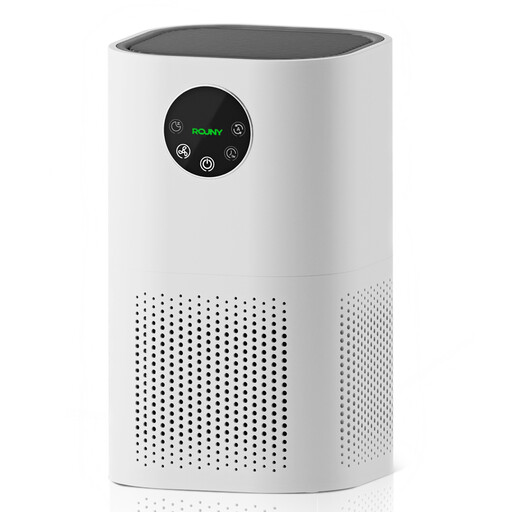
Why it suits this profile: According to the product information, this model combines an H13 True HEPA filter, four fan speeds and an air quality display for bedrooms, offices and rooms measuring 20 to 50 m².
The product specifications state both the CADR of 150 m³/h and the sleep-mode noise level, so you don’t have to rely solely on a general marketing label.
H13 HEPA filter, sleep-mode noise level of up to 25 dB according to the product information, air quality indicator and 2, 4 or 8-hour timer.

Why it suits this profile: With a CADR of 250 m³/h, automatic mode and a stated noise level from 20.5 dB(A), this model is an appealing choice for living rooms, home offices and bedrooms.
The stated performance is linked to specific figures such as CADR, maximum room size and noise range. This makes it easier to compare than relying solely on terms such as “quiet” or “powerful”.
250 m³/h CADR, PM2.5 sensor, automatic fan control, two-layer HEPA filtration and a stated maximum power consumption of 21 W.
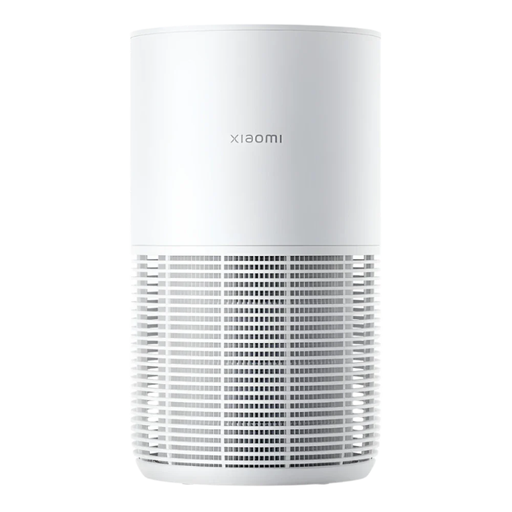
Why it suits this profile: According to the product description, this model is designed for households with pets and rooms measuring 16 to 27 m², with app control, voice control and a 360° filtration system.
The product specifications cover not only filter technology, but also CADR, coverage area, tool-free filter replacement and a child lock.
Three filter layers, 230 m³/h CADR, Xiaomi Home app, PM2.5 display, stated power consumption of 27 W and child lock.
We’ve put together a complete, up-to-date list of products that fully meet these strict selection criteria and the applicable European safety regulations.
That depends on your goal and the ventilation in the room. A model with a night mode, low noise level and dimmable lighting is generally better suited to use while sleeping. Do not place the appliance directly next to curtains or furniture, and leave enough clear space around it for the air intake.
The interval varies depending on the model, filter type, operating time and amount of dust in your home. The product information for the models mentioned states periods of approximately six to twelve months. Use the filter indicator as a guide, but also regularly check whether the filter is visibly dirty. Replace filters according to the instructions and do not use the appliance without a correctly fitted filter.
Electricity consumption is mainly determined by the power rating and the selected fan setting. A 25 W appliance running for 24 hours theoretically uses 0.6 kWh per day; actual consumption may be lower when automatic or sleep mode is active. Also factor in the cost of replacement filters when comparing the total running costs.
