
Vandaag of morgen in huis

Kwaliteit gegarandeerd

Welkomstaanbiedingen ontgrendelen: GRATIS bezorging | Tot 80% korting | Gratis 30 dagen JoyPlus-proefperiode
Download de app
An air purifier can help filter airborne particles, dust and certain odours from indoor air. However, there are significant differences between models. A compact air purifier for a bedroom, for example, has a different capacity from one designed for a spacious living room. Terms such as “HEPA”, “smart” and “for large rooms” only tell you so much, so it’s worth checking the technical specifications.
This buying guide explains what to look for and which models may suit different households in the Netherlands.
Manufacturers sometimes quote a very large maximum floor area. However, that figure depends on the number of air changes per hour. A model might treat a 60 m² room once an hour, but faster air circulation is needed for noticeably quicker filtration.
So, focus on the CADR rating and compare it with the room where you’ll actually use the appliance.
A HEPA air purifier is designed for fine particles such as dust and pollen. Odours and gases are generally tackled with a layer of activated carbon. Not every HEPA model has a carbon filter, and the amount of carbon varies between products.
According to the relevant manufacturer’s product description, a carbon filter can help reduce smoke and cooking odours. Treat this as a product specification, not a guarantee that every odour will disappear completely.
An air purifier at home often runs for several hours a day. A high fan setting may be noisier than sleep mode, so check the noise level at both low and high settings.
Also look at the lifespan and price of replacement filters. A low-cost appliance could work out more expensive in the long run if its filter needs frequent replacement or is hard to find.
CADR, or Clean Air Delivery Rate, is measured in m³/h. It indicates how much filtered air the appliance can deliver per hour. A higher figure is generally better suited to a larger room or to households that want to respond more quickly to smoke, dust or pollen.
Examples from product specifications:
Use the manufacturer’s stated floor area as a guide. An open-plan living room and kitchen often need more capacity than an enclosed bedroom of the same size.
A practical filter combination usually consists of:
For claims such as “99.97% of particles”, check the conditions under which this was measured. Results from the brand’s own tests or measurements, for example, may relate to a particular type or size of particle, or to laboratory conditions. So don’t treat these percentages as a general guarantee for your whole home.
If you’re looking for an air purifier for allergies, pollen or dust, the combination of filter type and CADR is more relevant than the marketing name alone.
A quiet air purifier for the bedroom ideally has a sleep mode with dimmed lights. Stated noise levels vary widely: some models quote around 20 dB on the lowest setting, while the highest setting may exceed 50 dB.
An air purifier with a PM2.5 sensor can show fine-particle levels in the room and adjust the fan speed in automatic mode. A sensor makes the appliance more convenient, but it won’t automatically detect every possible substance or odour.
A smart air purifier with app or voice control is useful for setting schedules and operating it remotely. Check whether Wi-Fi is required and whether the main functions work without the app.
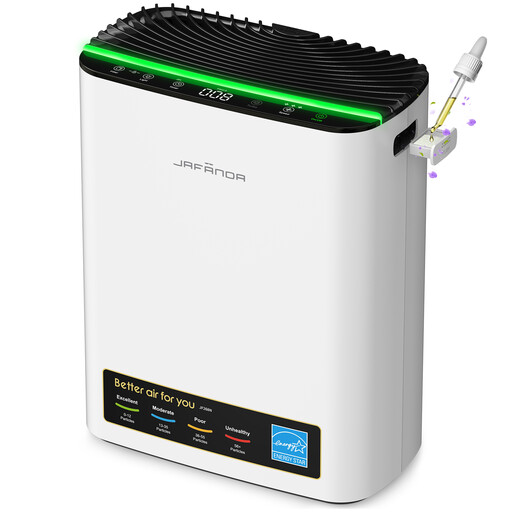
Why it suits this profile: This model combines a 3-in-1 filter, PM2.5 display and automatic mode with a sleep mode rated at 20 dB according to the product specifications. It’s a straightforward choice for a bedroom, home office or medium-sized living space.
The manufacturer lists both the CADR and noise levels for low and high settings. This gives you a better idea of what to expect from everyday and more intensive use.
CADR 268 m³/h, PM2.5 sensor, automatic mode, timer and a stated filter lifespan of 3000 hours.

Why it suits this profile: This compact Philips model has a CADR of 250 m³/h, a PM2.5 sensor and a stated noise level starting at 20.5 dB(A). Philips says it’s designed for rooms up to 65 m²; be sure to consider how many air changes you want.
The stated CADR, dimensions and noise range make it easier to judge than a general claim about room size alone.
Compact design, automatic mode, 21 W maximum power and a filter reminder.
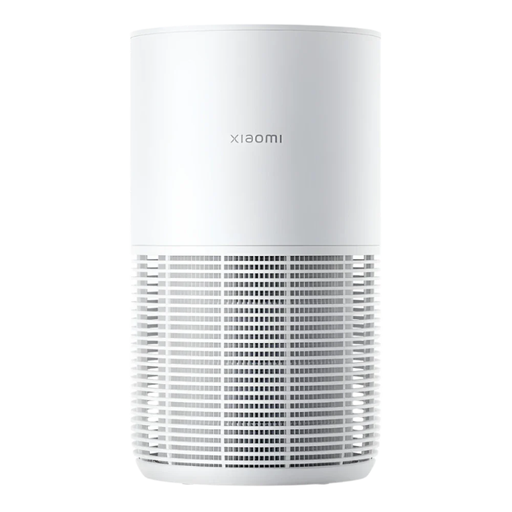
Why it suits this profile: This model is designed for households with pets and rooms measuring 16 to 27 m². Its 360° filter design, app control, voice control and child lock make it well suited to everyday use in a busy home.
The product specifications cover not only the filter layers, but also CADR, coverage and tool-free filter replacement.
CADR 230 m³/h, PM2.5 sensor, activated carbon, app and voice control, and child lock.

Why it suits this profile: The manufacturer quotes a CADR of over 700 m³/h and coverage of up to 154 m² at one air change per hour. This makes it suitable for large living rooms or open-plan spaces.
Its capacity is linked to a specific CADR rating. Check that its dimensions of 43,7 × 39,3 × 39,3 cm will fit in your home.
App and voice control, automatic mode, night mode and a stated filter replacement interval of around 6 to 9 months.
We’ve put together a complete, up-to-date list of products that meet these strict selection criteria and current European safety regulations.
Compare the size of your living room with the CADR rating and the stated number of air changes. An open-plan living room or kitchen often benefits from extra capacity compared with an enclosed room. Also consider where you can place the appliance.
It depends on the model, how long you use it and the air quality. The specifications for the models mentioned give intervals ranging from around 6 to 12 months, while some manufacturers state a longer theoretical lifespan. Always follow the filter indicator and the instructions for your specific appliance.
Energy use depends on the rated power, the fan setting you choose and the number of hours it runs. A 20 W model running for ten hours a day uses less electricity than a 60 W appliance on a high setting. Multiply the power in kW by the number of hours and your current electricity tariff to get a personal estimate.
