
Vandaag of morgen in huis

Kwaliteit gegarandeerd

Welkomstaanbiedingen ontgrendelen: GRATIS bezorging | Tot 80% korting | Gratis 30 dagen JoyPlus-proefperiode
Download de app
An air purifier can be a practical addition to a bedroom, living room, home office or home with pets. However, it’s easy to pay extra for features you won’t use. A large figure on the box, for example, doesn’t tell you much if the appliance isn’t suitable for your room size or only moves enough air on its highest setting.
The main pitfalls are:
CADR, or Clean Air Delivery Rate, indicates how much filtered air an appliance can deliver per hour. A higher CADR is generally better suited to larger rooms or situations where you want to filter the air more quickly.
Pay attention to the relationship between CADR and room size, too. A compact air purifier for a bedroom may be perfectly suitable for a small room, but not move enough air in an open-plan living room. Large-room models such as the Rowenta, with a stated coverage of up to 140 m², or the Blueair Blue Signature Large, with a CADR of more than 700 m³/u, are designed for different needs from an appliance rated at 130 to 150 m³/u.
An air purifier with a HEPA filter usually uses several filter layers:
According to the product descriptions from the brands concerned, various models quote figures such as 99,97% or 99,99%. These figures relate to the stated particle size and test method; they don’t mean that all pollutants will disappear from an entire home. An air purifier for allergies is no substitute for ventilation, cleaning or medical advice, either.
An air purifier with an ioniser can use charged particles to make particles clump together. If you’re considering one, always check the information on ozone emissions, safety and whether the ioniser can be switched off. A mechanical HEPA filter is easier for many households to assess.
For a quiet air purifier in the bedroom, the lowest sleep-mode setting matters. The Blueair Blue Pure 511i Max is rated at 19 dB on its lowest setting and a maximum of 48 dB. The Jafända JF268N is rated at 20 dB in sleep mode and 53 dB at high speed. So always compare the full range.
A PM2.5 sensor can show the measured air quality, while an automatic mode can adjust the fan speed accordingly. That’s useful, but sensors don’t detect every type of odour or gas. Also check whether replacement filters are available and how often the product information says they should be changed. Many models recommend replacing them every six to twelve months, depending on use and indoor air quality.
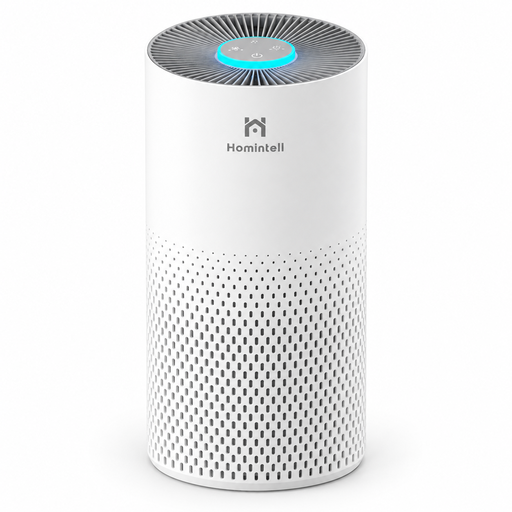
Why it suits this profile: According to the product information, this compact model is designed for rooms of around 16 to 18 m². It has three speeds, a timer and a 3-in-1 filter.
The stated CADR and room capacity make it easier to avoid choosing a model that’s too large or too small.
CADR of 130–150 m³/u according to the product information, plus a timer, sleep mode and a filter with HEPA and activated carbon layers.
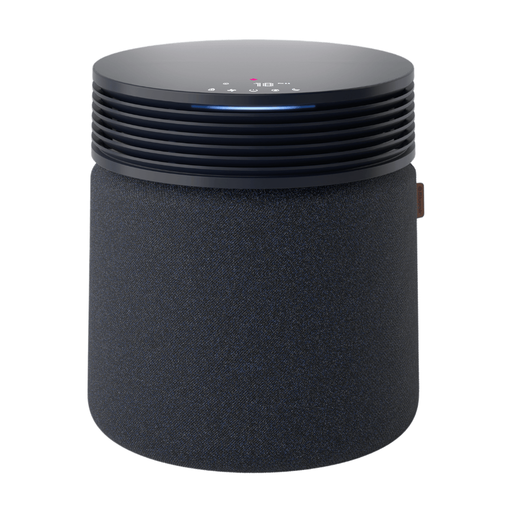
Why it suits this profile: For a large living room or open-plan space, this model offers a high stated CADR, app control, automatic mode and multi-layer filtration.
The product specifications state the CADR and intended coverage, so you don’t have to rely solely on a marketing claim about room size.
According to the product description: CADR above 700 m³/u, automatic and night modes, app and voice control, and an OdorFence filter.
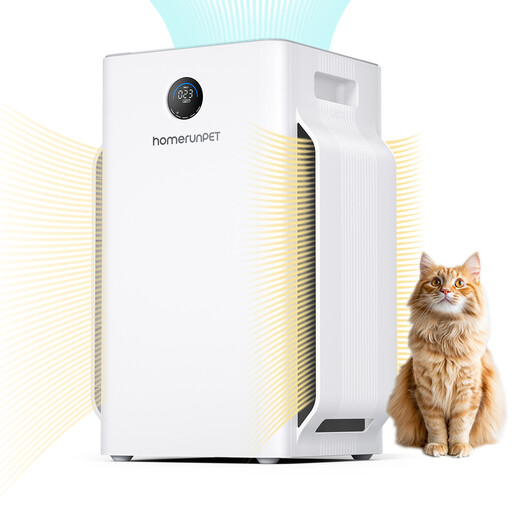
Why it suits this profile: This model is designed for homes with cats or dogs. It combines a HEPA filter with activated carbon, a PM sensor and a quiet sleep mode.
The washable pre-filter helps trap larger hairs and dust first. The filter replacement interval will still depend on the number of pets and how often you use it.
Stated coverage of up to 40 m², sleep mode from 25 dB, automatic mode, child lock and filter reminder.
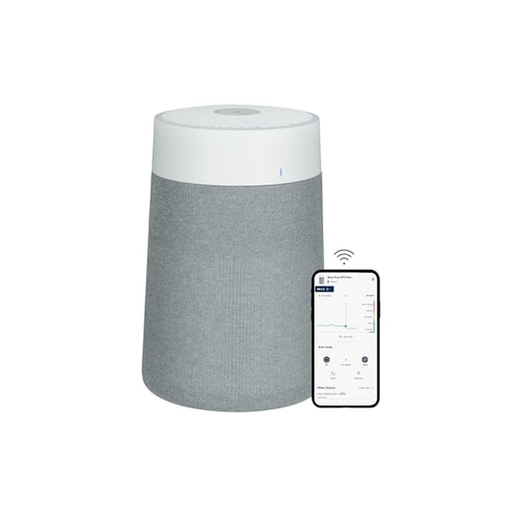
Why it suits this profile: Its compact size, app features and stated noise level of 19 dB on the lowest setting make it a good fit for a bedroom or study.
The low and high noise levels are listed separately. This makes it clear that a quiet sleep mode isn’t the same as quiet operation at maximum speed.
CADR 212 m³/u, stated coverage of up to 43 m², night mode and control via the Blueair app.
Place the air purifier on a flat, stable surface, ideally with at least 20 to 30 cm of clearance around the air inlet and outlet. Don’t place it behind a curtain, right next to a heat source or in a damp bathroom.
Use automatic mode if your appliance has a PM2.5 sensor, but check the pre-filter and filter indicator regularly. Only vacuum or clean parts that the manual says are suitable for cleaning. A HEPA or combined filter usually shouldn’t be washed. Unplug the appliance before moving it or carrying out maintenance.
We’ve put together a complete, up-to-date list of products that meet these strict selection criteria and the applicable European safety requirements.
It depends on the air quality, ventilation and your personal circumstances. Choose a model with a verifiably low noise level in sleep mode, dimmable lights and a capacity suited to your bedroom. If you want to filter the air in one room, keep the windows and doors closed as much as possible while the purifier is running.
It depends on the model, how long you use it and the amount of dust, smoke or pet hair in your home. Product descriptions often recommend replacing the filter every six to twelve months. Always follow the filter indicator and the manual. A saturated filter can restrict airflow and reduce performance.
As well as electricity, you’ll need to pay for replacement filters. An appliance rated at 20 to 60 W may use relatively little electricity if it runs continuously, but the exact cost depends on your energy tariff and chosen fan speed. Before buying, check both the wattage and the price and availability of the right filter.
