What should you look for when choosing?
Start with the room’s volume and the cleaning speed you want. Then check which fan speed delivers it and whether it’s suitable for use during conversations.
These points are for anyone looking to filter airborne pollen in a shared living space.
| What to consider |
What should you check? |
Who is this important for? |
| Capacity for the room |
Calculate floor area × ceiling height and compare the room volume in m³ with the particle CADR in m³/h. Take the layout of the space into account. |
I want the appliance to handle the whole shared living space, not just part of it; around 36% of consumers prioritise sufficient capacity for the room. |
| Noise while in use |
Where possible, compare the noise level and cleaning capacity at each fan speed. |
When we’re talking or relaxing, I want a speed that’s suitable for the occasion; around 29% of consumers prioritise comfort during conversations. |
| Replacement filters |
Check the exact filter number and the replacement indicator for your chosen model. |
I want to know in advance which filter the appliance needs and how we’ll manage maintenance; around 21% of consumers make replacement filters and maintenance their main consideration. |
| Shared controls |
Check which features work using the buttons and whether app control requires an account, an app or a separate hub. |
If several housemates use the appliance, I want the controls to be clear to everyone; around 14% of consumers prioritise shared use. |
For its own room-size guidance, the Consumers’ Association assumes a ceiling height of 2.5 metres and four air changes per hour. These are the assumptions behind that guidance, not a fixed measure for every living space. What’s more, a stated maximum floor area doesn’t automatically tell you what capacity you’ll get at a comfortable fan speed.
Air purifiers at Joybuy
These product picks focus on filtering particles in a shared living space. Compare the stated capacity with the volume of your room and the fan speed you want to use.
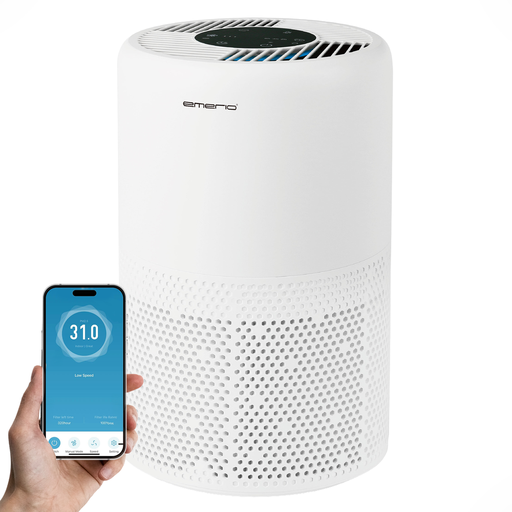 Image unavailable
Emerio AP-132324 air purifier, HEPA 13 and carbon filter
Compare the stated airflow with the volume of your living space if you’re looking for a model with several fan speeds.
The product description lists an airflow of 221 m³/h, use in rooms up to 25 m², three speeds and control via the panel or app. It also mentions an ioniser; before using the appliance in an occupied room, check whether it intentionally generates ozone.
Joybuy
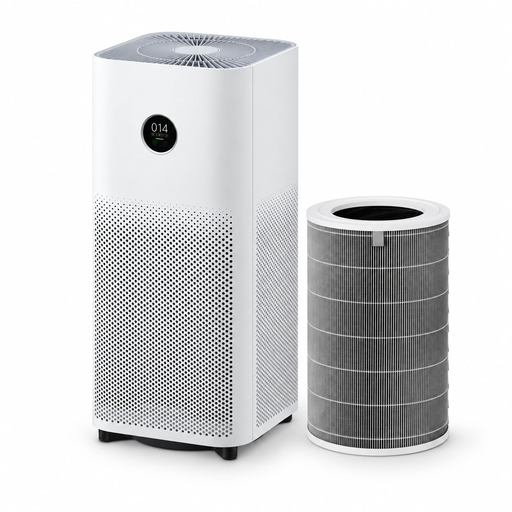 Image unavailable
Xiaomi Smart Air Purifier 4 Pro with replacement filter
Compare this model with the volume of a larger living space and check whether the fan speed you need is suitable for shared use.
The product title lists a CADR of 500 m³/h, coverage up to 60 m², app control and a replacement filter included in the bundle. Xiaomi Netherlands states a maximum particle CADR of 500 m³/h for the Smart Air Purifier 4 Pro; the stated floor area alone doesn’t tell you which speed is right for your room.
Joybuy
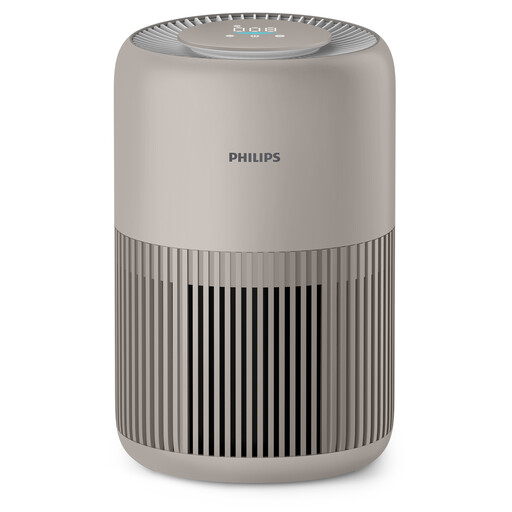 Image unavailable
Philips PureProtect Mini 900 Series AC0921/14
The stated CADR gives you a useful point of comparison when checking whether this model suits the volume of your room.
The product title lists a CADR of 250 m³/h, a two-layer HEPA filter, sleep mode and a sensor. Check the capacity you need for your room and the speed you want to use.
Joybuy
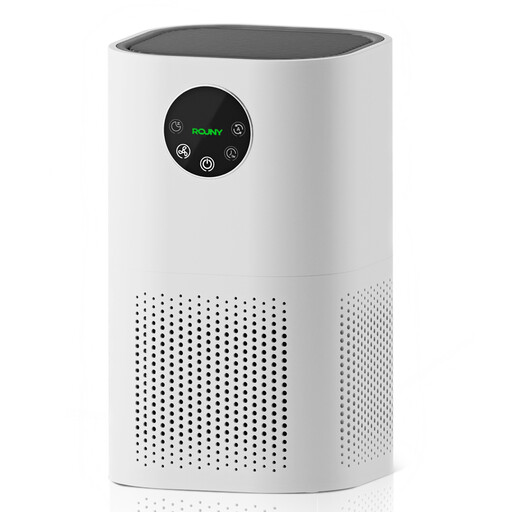 Image unavailable
ROUNY AP-T1 air purifier, H13 True HEPA filter
This model offers several speeds and a sleep mode; compare its stated capacity with the needs of your shared living space.
The product title lists a CADR of 150 m³/h, stated coverage of 20–50 m², sleep mode at up to 25 dB, an air quality display and four fan speeds.
Joybuy
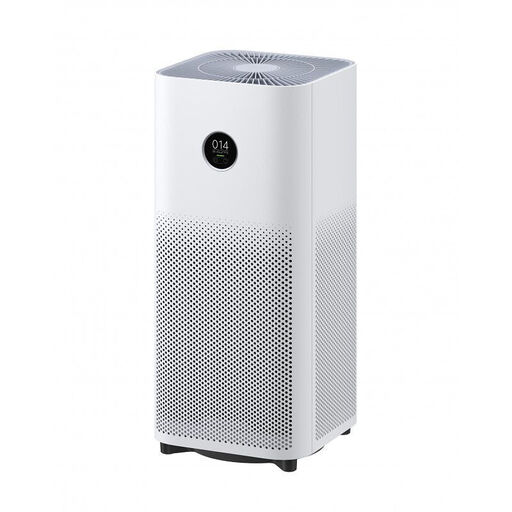 Image unavailable
Xiaomi Smart Air Purifier 4 Pro
Compare the stated capacity with the volume of the room and consider which controls will suit the housemates using the appliance.
Xiaomi Netherlands states a maximum particle CADR of 500 m³/h for this model. The product description lists a HEPA filter, OLED display, automatic mode, Wi-Fi and app control, and automatic adjustment based on PM2.5.
Joybuy
Frequently asked questions
How can I tell whether the CADR is right for my shared living space?
First, calculate the room volume by multiplying the floor area by the ceiling height. Then divide the CADR in m³/h by that volume to get the theoretical number of air changes per hour. The Consumers’ Association uses a ceiling height of 2.5 metres and four air changes per hour for its own room-size guidance; the layout of your space and the fan speed you can comfortably use may call for a different choice.
Does an air purifier replace ventilation in a shared living space?
No. An air purifier complements ventilation and doesn’t remove all pollutants. Milieu Centraal recommends increasing ventilation when lots of people are present.
How often should I replace the filter?
It depends on the exact filter, how often you use it and how dirty it gets. Check your model’s manual and filter indicator, and look up the corresponding filter number; a maintenance indicator doesn’t guarantee a set lifespan in every home.
Is an air purifier a proven treatment for hay fever?
No. The Consumers’ Association reports that there is no scientific evidence that air purifiers help with hay fever. Assess an appliance by its stated filtration of airborne particles, and don’t treat it as a remedy for medical symptoms.
Can I use an air purifier with an ioniser in a room where people are sitting?
First check whether the specific appliance intentionally generates ozone; the presence of an ioniser alone doesn’t prove that it does. The U.S. Environmental Protection Agency describes ozone generators as appliances that intentionally produce ozone. Don’t use an ozone generator while people are in the room.


