
Vandaag of morgen in huis

Kwaliteit gegarandeerd

Welkomstaanbiedingen ontgrendelen: GRATIS bezorging | Tot 80% korting | Gratis 30 dagen JoyPlus-proefperiode
Download de app
An air purifier for pets can help reduce airborne hair, dust particles and odours around your home. However, not every model is suitable for a home with a dog or cat. A small air purifier, for example, may work well in a bedroom but struggle to move enough air around a spacious living room. Terms such as “HEPA” or “quiet” also tell you little on their own without the specifications to back them up.
In this buying guide, you’ll find out what to look for, which common pitfalls to avoid and what type of air purifier may suit your home.
An air purifier with a HEPA filter can capture fine particles such as dust, pollen and pet dander. Larger hairs are usually caught first by a pre-filter. However, a HEPA filter alone isn’t enough to tackle odours. For that, you’ll need an activated carbon filter.
It’s also worth considering maintenance. A pre-filter that quickly fills with hair can restrict airflow. Check whether the pre-filter can be removed or cleaned, and whether replacement filters are available.
Manufacturers often specify a maximum room size, but real-world performance also depends on factors such as ceiling height, doors, ventilation and how often you want the air to be refreshed. So pay particular attention to the CADR rating, measured in m³/h. This tells you how much filtered air the appliance can deliver per hour.
A model rated at 150 m³/h is more suited to a smaller room. For a living room or open-plan space, a higher rating, such as 230 to 360 m³/h, is usually more practical. A stated coverage range doesn’t guarantee that every room will be cleaned at the same speed.
A quiet air purifier can be a good choice for a bedroom, but the lowest noise rating often applies only in sleep mode or at the lowest fan speed. Noise levels can be considerably higher at the top setting.
So check both figures: the noise level in sleep mode and at the highest setting. An automatic mode and dimmable display are also handy if you plan to leave the appliance running overnight.
For homes with dogs and cats, a three-stage filtration system is often a practical choice:
According to the product descriptions from the brands below, these filters are designed to capture different types of particles and odours. Treat such brand claims as product specifications, not as a medical guarantee. An air purifier also doesn’t replace vacuuming, ventilation or cleaning pet beds and fabrics.
Use CADR as a point of comparison. A higher CADR means the appliance can process more air per hour, but it doesn’t automatically mean that a model will work optimally in every room.
Also consider:
An air purifier with a PM2.5 sensor can measure fine-particle levels, and some models can automatically adjust the fan speed. However, a sensor won’t detect every odour or directly measure the amount of allergens or pet hair present.
A smart air purifier with app or voice control is useful if you want to set schedules or control the appliance remotely. If you’re looking for a straightforward solution, physical buttons and a timer may be a better fit.
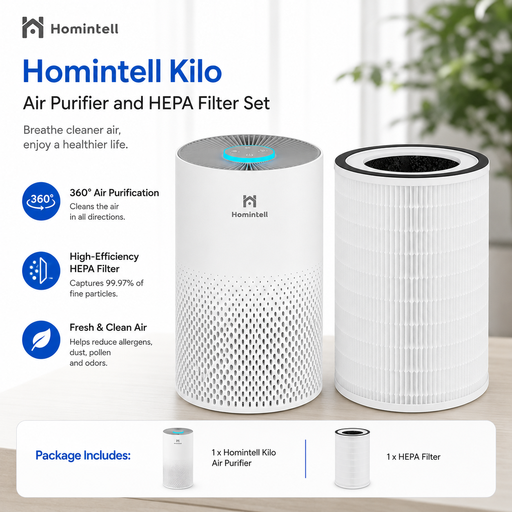
Why it suits this type of buyer: This compact model is designed for smaller rooms of around 16–18 m², and offers three speeds, a timer and touch controls.
The product description gives both the CADR of 150 m³/h and the filtration system, which includes a pre-filter, HEPA filter and carbon filter. This makes it easier to compare the capacity with your room size.
3-in-1 filter, 2/4/8-hour timer, three speeds and an extra replacement filter, according to the product listing.

Why it suits this type of buyer: This model combines a compact design with a CADR of 250 m³/h and automatic operation based on a PM2.5 sensor.
The stated figures include both the CADR and a noise range of 20.5 to 49 dB(A). This makes it easier to decide whether it’s better suited to a bedroom or living room.
250 m³/h CADR, sleep mode, automatic mode and a filter replacement indicator, according to the product specifications.
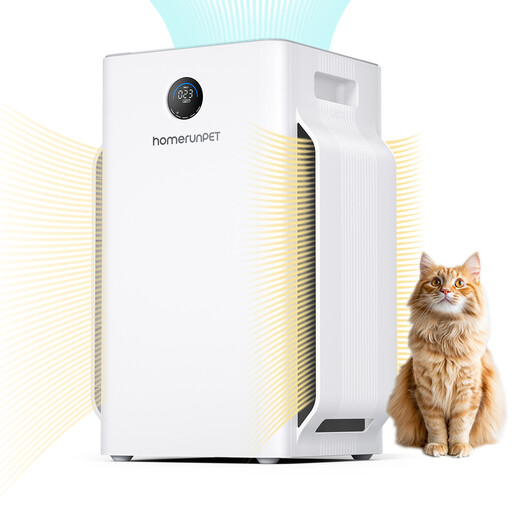
Why it suits this type of buyer: This model is designed specifically for households with dogs, cats and other pets, with a stated coverage area of up to 40 m².
The product information lists a reusable pre-filter and a separate combined HEPA and carbon filter. This suits regular maintenance to tackle hair and odours.
Sleep mode from 25 dB, according to the product listing, PM sensor, automatic mode, child lock and filter reminder.
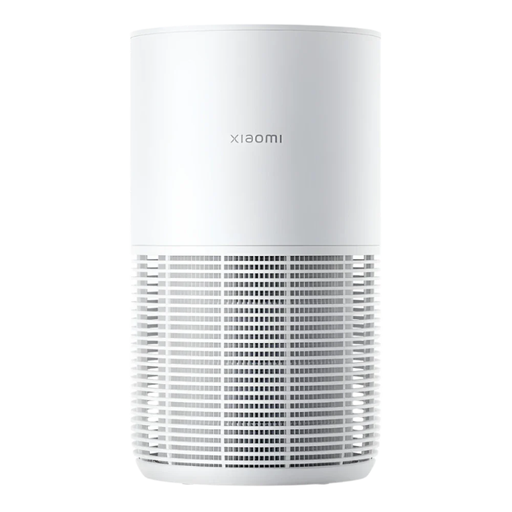
Why it suits this type of buyer: App and voice control, a PM2.5 sensor and coverage of 16–27 m² make this a good fit for anyone who wants to manage settings remotely.
The specifications list a CADR of 230 m³/h and a three-stage filter. So you can assess the model on more than just its smart features.
Pre-filter, HEPA filter and activated carbon filter, stated power of 27 W, child lock and tool-free replacement.
We’ve put together a complete, up-to-date list of products that meet these strict selection criteria and current European safety regulations.
Place an air purifier for dogs and cats in the room where your pet spends most of its time. Keep the air inlet and outlet clear, and leave the space around the appliance recommended by the manufacturer. Don’t place it right next to a litter tray, radiator or damp area.
For longer-lasting performance:
An air purifier for pet odours also works best alongside regular cleaning and ventilation. Filtering the air alone won’t remove odours trapped in sofas, rugs or curtains.
According to product specifications, a HEPA filter can capture airborne fine particles such as dust, pollen and pet dander. That doesn’t mean an air purifier treats allergies or removes all allergens from your home. Regular cleaning and ventilation are still important.
It varies by model, how long you use it and the amount of dust or pet hair in the air. Product information for various models gives an interval of around six to twelve months. Always follow the filter indicator and the manual for your specific appliance.
Energy use depends on the appliance’s power rating and how many hours it runs. A 27 W model running for 10 hours a day would theoretically use 0.27 kWh per day. The actual cost depends on your energy tariff, the fan speed you choose and standby consumption.
