
Someone sensitive to pet allergens
You want to tackle airborne dander in the room you use most, without treating filtration as a cure or a way to remove every allergen. The RIVM explains that dander can remain airborne for a long time.


Start with the room where you and your pet spend the most time. Match the particle CADR to that space, then decide what noise level you find acceptable at a fan setting you can actually use. A particle filter targets airborne dander; if odours are also a concern, check separately whether the model includes a carbon filter. An air purifier is no substitute for ventilation or cleaning.
You want to tackle airborne dander in the room you use most, without treating filtration as a cure or a way to remove every allergen. The RIVM explains that dander can remain airborne for a long time.
You want to be able to use the appliance while you rest, so you need to balance the noise at a useful filter setting against the airflow. The Consumers' Association includes noise in its air purifier tests.
You want to know before buying which replacement filter fits the model and how often the manufacturer recommends replacing it for your intended use.
First measure the room you want to treat, then compare the particle CADR, the noise at your preferred setting and the type of filter included. The RIVM stresses that an air purifier removes particles from indoor air but does not refresh it; the US Environmental Protection Agency recommends matching the CADR to the size of the room.
| What to consider | What to check before buying | Who should pay particular attention? |
|---|---|---|
| Particle filtration | Compare the particle CADR in m³/u with the room you want to treat. Also check how the stated room size was calculated. | If my main aim is to tackle airborne dander in the room where I spend time with my pet, I look at the capacity for that particular space. Around 40% of consumers give particle filtration top priority. |
| Noise | Compare the noise at the fan setting you actually plan to use; also check the night mode and the space available. | If the appliance will be close to where I sleep or work, I want to know whether the noise is acceptable to me at a useful setting. Around 30% of consumers put quiet operation first. |
| Replacement filters | Check the exact filter code and the replacement interval recommended by the manufacturer for that version. | If I want to plan for ongoing maintenance, I check which filter fits the model and how often it should be replaced. Around 20% of consumers make this their main concern when choosing. |
| Odours as well as particles | Check whether the exact version includes a carbon filter and whether it comes with the appliance or must be bought separately. | If pet odours matter more to me than the other points listed, I check whether the filter also contains activated carbon. Around 10% of consumers give odour control top priority. |
A stated m² range is not automatically comparable with that of another model. Xiaomi lists 16–27 m² in the specifications for the Smart Air Purifier 4 Compact; the 48 m² claim on the overview page is based on two air changes per hour.
Compare the particle CADR with the room you actually want to treat. If a room size is quoted in m², check what assumptions it is based on.
Particle filters and carbon filters have different functions. IKEA sells the carbon filter for the FÖRNUFTIG separately; Philips states that the FY0611/30 replacement filter does not contain activated carbon.
If odour control is one of your reasons for buying, check the exact filter version and what is included in the pack.
Some models may need a separate carbon filter, so allow for the cost of buying an additional filter.
An air purifier does not refresh indoor air or remove every allergen, including material that has settled on surfaces.
Keep ventilating and tackle allergens at the source, as well as on furniture and floors.
The US Environmental Protection Agency warns that ionisers and some other electronic air purifiers may produce ozone in certain circumstances. This does not, on its own, tell you what a specific model emits.
Compare standard particle filtration first. For additional electronic features, ask for information that applies to the exact version you are considering.
According to Philips, the 600i series AC0650/10 is designed for use in a room and has a stated particle CADR of 170 m³/u.
WINIX lists a CADR of 250 m³/u for the ZERO Compact and an O-filter set containing a pre-filter, carbon and particle filter.
IKEA describes the FÖRNUFTIG as suitable for floor or wall placement and designed for spaces of up to 8–10 m², depending on the fan speed.
For the Smart Air Purifier 4 Compact, Xiaomi lists a particle CADR of 230 m³/u and an effective range of 16–27 m²; according to Xiaomi, the appliance can be placed on a table or on the floor.
This selection includes portable air purifiers for use in individual rooms, with a focus on airborne particles and, where specified, odour filters and night-time use.
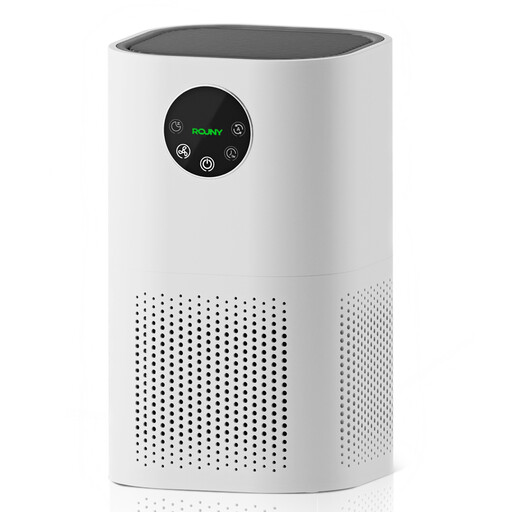 No image available
Could suit you if you are looking for an air purifier for a home with pets and want to use it in sleep mode too.
The product title lists an H13 True HEPA filter, a CADR of 150 m³/u, four fan speeds and a maximum noise level of 25 dB in sleep mode.
Check that the stated coverage of 20–50 m² suits your room and preferred setting.
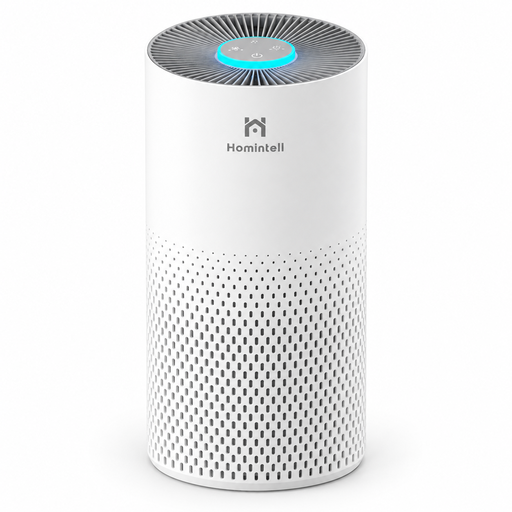
 No image available
Could suit you if you want to consider both airborne particles and odours when choosing an air purifier for a room.
The product information lists a HEPA filter, a pre-filter, activated carbon and a particle CADR of 230 m³/u.
The stated coverage is 16–27 m²; the information also mentions app or voice control. Check which control option suits the way you plan to use it.
 No image available
Could suit you if you are looking for an appliance for a smaller room and want to consider a carbon filter too.
The product information lists HEPA and carbon filters, a CADR of 150 m³/u and use in rooms of up to 18 m².
The information also mentions a sleep mode and timer; check which settings suit your everyday use.
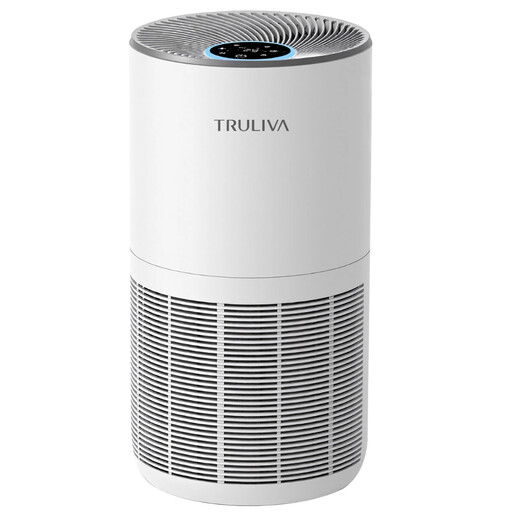 No image available
Could suit you if you are looking for a higher stated particle CADR and want to factor in a carbon filter too.
The product information lists a CADR of 450 m³/u, coverage of 32–55 m² and a HEPA filter with activated carbon.
Check that the stated coverage and operating setting suit the room you want to treat.
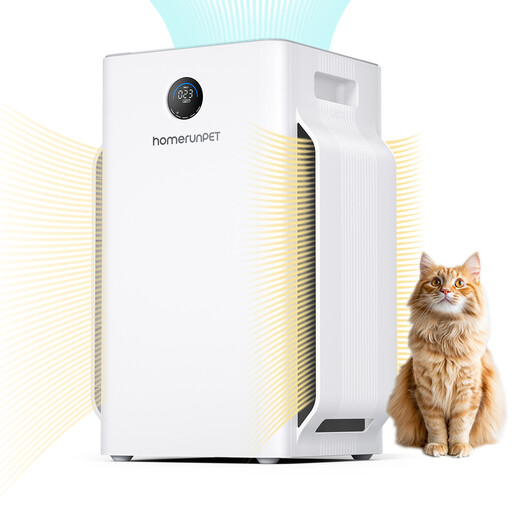 No image available
Could suit you if you are looking for an air purifier for a home with pets and want to consider the filter setup and use while sleeping.
The product information lists a HEPA filter, a washable pre-filter, a carbon filter and stated coverage of up to 40 m².
A filter for persistent odours is listed as optional and sold separately; check what is included with the version you choose.
No. A portable air purifier is designed for a room or area and will not remove every allergen. Choose the room that matters most and tackle allergens at the source and on surfaces too.
Follow the placement instructions for your chosen model and keep the air inlet and outlet clear. Keep ventilating: according to the RIVM, an air purifier removes particles from indoor air but does not refresh it.
Look up the filter code for the exact model and version, and check the replacement interval recommended by the manufacturer. Philips lists FY0611/30 for the AC0650 and AC0651, with a life of up to one year depending on use; Xiaomi recommends replacing the Smart Air Purifier 4 Compact filter every six to twelve months. These are model-specific recommendations, not fixed intervals for all brands.
According to Ondernemersplein, electrical appliances placed on the Dutch market are subject to applicable European product safety rules. The manufacturer must apply the relevant CE marking and draw up an EU declaration of conformity. Check that the documentation relates to the exact version you want to buy.
For a standard online consumer purchase, you generally have a statutory cooling-off period of up to 14 days after delivery, subject to applicable exceptions; ACM ConsuWijzer explains this period. The seller is also responsible for the statutory guarantee if a product does not meet what you are entitled to expect. A commercial manufacturer's guarantee does not replace this right.