Choose a model with particle filtration and a cleaning capacity suited to the size of your bedroom. Also compare the noise levels and cleaning performance on the setting you’ll actually use at night, and check which replacement filter fits the exact model. Filtration complements ventilation and reducing exposure to the source; it does not remove the source or guarantee that allergy symptoms will disappear.
Who might find an air purifier in the bedroom useful?
Sleepers looking to tackle airborne pet particles
Your main aim is to reduce airborne skin flakes in the bedroom, and you’re looking for a capacity suited to the room. An air purifier filters the air that passes through it, but it doesn’t remove the source.
Light sleepers
You want to be able to use the purifier at night without being disturbed by fan noise or light. So, consider the sleep mode as well as its cleaning performance on that setting.
Pet owners who also want to tackle odours
You want to take both airborne particles and odours into account. Compare particle filtration and any carbon filtration as separate features.
What should you look for when buying?
First decide which need matters most to you. Then compare the relevant specifications and check the maintenance requirements for the exact model.
| What to consider |
What to look for when buying |
Who is this important for? |
| Filtration of airborne particles |
Compare the type of particle filter, the CADR in m³/u and the stated room coverage on a like-for-like basis. Check that the capacity suits the size of your bedroom. |
If I mainly want to tackle airborne skin flakes, I’ll look first at particle filtration and capacity for my room. Around 33% of consumers make filtration their top priority. |
| Cleaning while you sleep |
Check the noise level and whether the lights can be dimmed in sleep mode. Also compare the cleaning performance on that setting, if the information is available. |
If noise could disturb my sleep, I want to know whether the purifier can run comfortably in night mode and how well it performs on that setting. Around 27% of consumers make a good night’s sleep their top priority. |
| Filter maintenance and use |
Make a note of the exact filter model and maintenance instructions. Check which filters need replacing and look at the energy use on the setting you expect to use. |
If I plan to use the purifier often, I want to know in advance which filter it takes and what maintenance it requires. Around 20% of consumers make ongoing running and filter costs their top priority. |
| Odours as well as particles |
Check whether the specific model has a carbon filter and how it is maintained or replaced. Assess odour treatment separately from particle filtration. |
If I want to tackle pet odours as well as airborne particles, I’ll look for both filter functions and assess them separately. Around 20% of consumers make tackling odours and particles together their top priority. |
Common mistakes when choosing
-
Assuming a large room coverage means effective cleaning in sleep mode
A stated capacity or room size doesn’t tell you how much the purifier cleans on a quieter setting. The Consumentenbond describes its own air purifier test as being carried out on the highest setting; that result doesn’t automatically tell you how the purifier performs in night mode.
Compare CADR and stated room coverage on the same basis, and assess night mode separately.
-
Seeing an air purifier as a replacement for ventilation or tackling the source
An air purifier doesn’t provide fresh air or remove the source of allergens. The US Environmental Protection Agency describes air filtration as a way to reduce air pollution, not to remove all pollutants.
Keep ventilating and, where possible, reduce exposure to the source; use filtration as an additional measure.
-
Leaving filter maintenance until after you buy
Maintenance and replacement requirements vary by model. A pre-filter may have different instructions from the other filter layers; for example, Philips provides separate maintenance instructions for these filter parts on its own air purifiers.
Before buying, check the exact filter part, its maintenance instructions and whether a suitable replacement is available.
With regular use, replacing filters and electricity consumption can be ongoing running costs.
-
Assuming ionisation or ozone means better particle filtration
An ionisation function is not the same as a particle filter. The US Environmental Protection Agency warns that ozone can irritate the lungs and that ion generators and some other electronic air cleaners can produce ozone.
Don’t use an ozone generator in an occupied bedroom. Assess any ionisation function separately and follow the instructions for the specific device.
Brands to consider
Philips
The PureProtect Mini 900 series is a compact option to compare for particle filtration and sleep mode. Check the full model number and version.
- Philips lists a CADR of 250 m³/u, a sleep mode of 20,5 dB and filter FY0900/30 for the refurbished AC0921/14R1.
- These manufacturer specifications apply to the refurbished AC0921/14R1 and don’t automatically apply to the new AC0921/14.
WINIX
ZERO Compact is worth comparing if you’re considering a pre-filter and carbon filter as well as particle filtration.
- WINIX lists a CADR of 250 m³/u for ZERO Compact, along with Filter O, which includes a pre-filter, carbon filter and HEPA filter.
- The stated CADR alone doesn’t tell you how well it cleans in sleep mode. Assess the separately listed PlasmaWave technology and how to use it according to the instructions; the US Environmental Protection Agency notes that ion generators and some electronic air cleaners may produce ozone.
Coway
Airmega 150 is a model to include when comparing particle cleaning, noise and maintenance.
- The Consumentenbond includes Airmega 150 variants on a list of recently tested air purifiers.
- That listing alone doesn’t tell you whether the purifier is suitable for your bedroom or performs better than other models.
Air purifiers at Joybuy
This selection includes air purifiers whose product titles mention HEPA filtration, including models that also specifically mention pets, bedroom use or room coverage.
 No image available
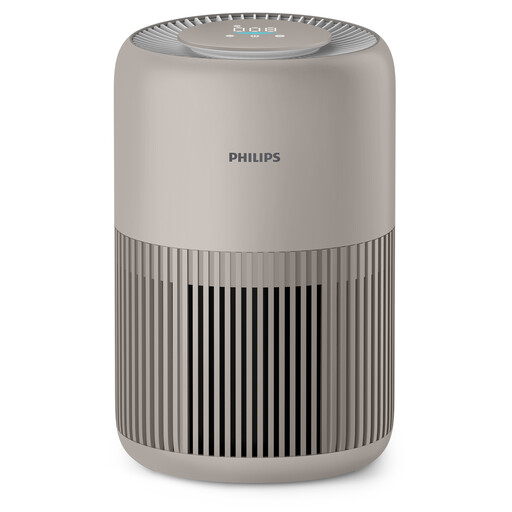
Philips PureProtect Mini 900 series, AC0921/14
The product title mentions a HEPA filter and sleep mode. Compare the stated capacity with the size of your bedroom and the setting you’ll use at night.
Listed features: CADR 250 m³/u, 2-layer HEPA filter, smart sensor and compact design.
View at Joybuy
 No image available
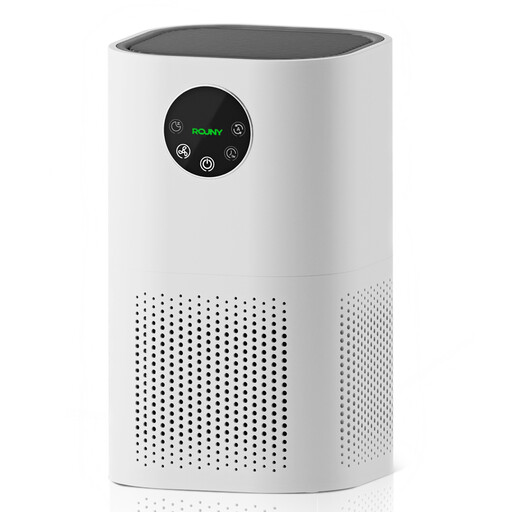
ROUNY AP-T1 air purifier
The product title mentions pets, a bedroom and sleep mode. Check whether the stated room coverage suits your space.
Listed features: H13 True HEPA filter, CADR 150 m³/u, stated coverage 20–50 m², sleep mode ≤25 dB and four fan speeds.
View at Joybuy
 No image available
Xiaomi Smart Pet Care Air Purifier
The product title describes a pet air purifier with HEPA and carbon filtration. Compare the filter functions separately if odours are also a concern.
Listed features: 3-stage filter, CADR 230 m³/u, stated coverage 16–27 m², PM2.5 sensor, app and voice control, and child lock.
View at Joybuy
 No image available
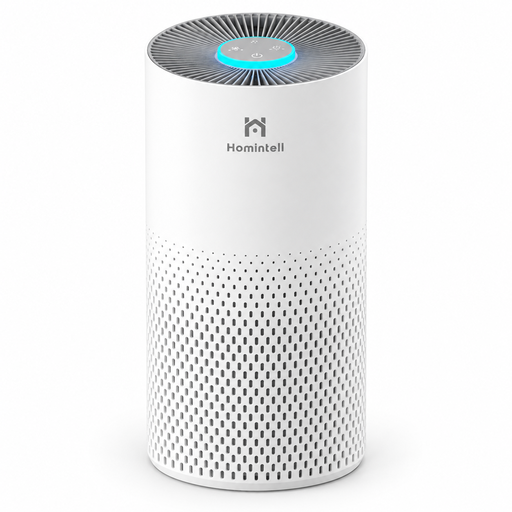
Homintell air purifier
The product title mentions HEPA and carbon filters and coverage of 18 m². Check that this coverage suits the size of your bedroom.
Listed features: CADR 150 m³/u, three speeds, timer and touch controls.
View at Joybuy
 No image available
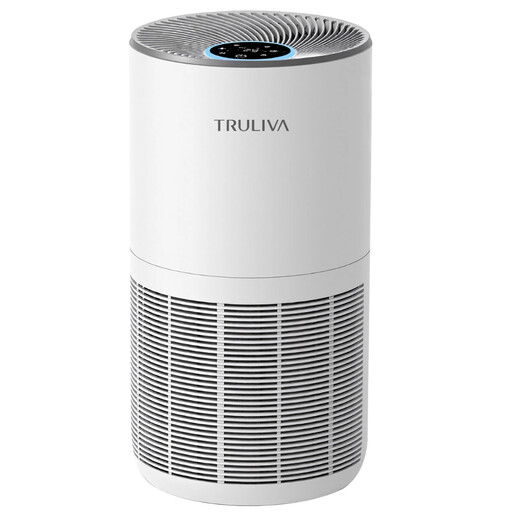
TRULIVA H13 HEPA air purifier
The product title mentions pet particles and a capacity of 450 m³/u. Compare this figure with the size of your bedroom and check performance on the setting you plan to use.
Listed features: H13 HEPA filter, CADR 450 m³/u, 360° air circulation and 24-hour timer.
View at Joybuy
Frequently asked questions
Can I compare the stated room sizes on packaging directly?
Not always: manufacturers may use different assumptions. Measure your bedroom and, where possible, compare CADR figures or room recommendations on a like-for-like basis. For its own calculation, the Consumentenbond uses a ceiling height of 2,5 metres and four air changes per hour; this is a test assumption used by the Consumentenbond, not a legal requirement.
Where should I put the air purifier, and can it run more quietly at night?
Follow the instructions and keep the airflow unobstructed. The Consumentenbond recommends running the purifier at a higher setting before bed, then switching to a quieter night mode if you wish; check that this setting suits your cleaning needs.
Can I wash a HEPA filter?
Follow the instructions for the exact model. For example, Philips distinguishes between a washable pre-filter and other filters that need replacing on its own air purifiers; these instructions aren’t universal washing advice.
Is an air purifier enough if I have allergy symptoms?
No. Filtration can reduce the amount of air pollution, but it won’t remove every substance or tackle the source. Keep ventilating and, where possible, limit contact with whatever you’re allergic to. Speak to your GP about symptoms that persist or have no clear cause.
What safety points should I consider with ionisation and ozone?
Don’t use an ozone generator in an occupied bedroom. The US Environmental Protection Agency describes ozone as a substance that can irritate the lungs and warns that ion generators and some electronic air cleaners can produce ozone. This doesn’t mean every ioniser is an ozone generator; assess the function and instructions for the specific device separately.


