
People with a spacious living room
You want enough particle filtration for one large living space and compare the stated capacity with your own room dimensions.


Choose an air purifier based on its particle CADR and stated room coverage, then check its noise level and airflow on the setting you plan to use. A particle filter can reduce airborne dust, but it won’t remove dust from furniture or replace cleaning and ventilation. Treat stated capacities as a guide, not a guarantee of the same results in every room.
You want enough particle filtration for one large living space and compare the stated capacity with your own room dimensions.
You want to be able to run the appliance in your living room, so you compare the noise level and airflow on the same setting you’d actually use.
You want to know in advance which filter fits the appliance, when it needs replacing and what ongoing purchases to expect.
Measure your living room first, then compare capacity on the settings you’ll actually use. Also consider filter maintenance and the difference between airborne dust and dust that has already settled on surfaces.
| What to consider | What should you look for? | Who is this important for? |
|---|---|---|
| Capacity for your living room | Compare the particle CADR in m³/u and stated room coverage with your room dimensions; check the conditions behind the coverage figure. | I want the capacity to suit my spacious living area, not just rely on a general area claim. Around 36% of consumers put room capacity first. |
| Noise level on the setting you’ll use | Check the noise level and airflow for each setting; a quiet setting may move less air than the setting used to quote the maximum CADR. | If I want to run the appliance while chatting or relaxing, the noise level and airflow on that setting both matter. Around 29% of consumers prioritise quiet operation. |
| Compatible replacement filters | Check the exact filter number, the maintenance instructions, and the current price and availability of replacement filters. | I want to know before buying whether I’ll be able to replace and maintain the right filter later. Around 21% of consumers put filter maintenance first. |
| Airborne dust and sources of dust | An air purifier filters the air that passes through it; it won’t remove dust that has already settled on furniture. Keep cleaning and ventilating. | If I mainly notice dust on floors and furniture, I want to tackle its sources too, rather than just filter the air. Around 14% of consumers focus first on reducing sources of dust. |
Area claims and maximum CADR figures don’t automatically tell you how much air the appliance moves on a setting you’ll find comfortable.
Compare the particle CADR, the conditions behind the room coverage and the noise level on the setting you intend to use.
A portable appliance filters the air in a room; it won’t remove dust that has already settled.
Use it as an extra measure for airborne particles, and keep removing dust and ventilating.
Cleaning remains a regular household task.
A replacement filter must fit the exact model and be maintained or replaced according to the model’s instructions.
Before buying, find the exact filter number and check the current cost and availability. Philips says in its filter maintenance instructions that its filters must not be washed or vacuumed and should be replaced; check the manual for your model.
You’ll need compatible replacement filters for as long as you use the appliance.
An ionisation function isn’t the same as a high particle CADR, and on its own it doesn’t prove that the appliance is better at removing household dust.
Assess particle filtration and information about any specific extra feature separately.
The refurbished 3000i AC3055/51R1 is an example of a model for XL rooms.
The Smart Air Purifier 4 Pro is worth comparing if you have a large living room and want sensor-controlled operation.
According to its product information, the ZERO Pro combines a pre-filter, carbon filter, HEPA filter and automatic sensors.
The Purifier Big+Quiet Formaldehyde BP04 is worth considering if you’re looking into air distribution and other features as well as particle filtration.
These air purifiers are described in their product information as suitable for larger rooms or for filtering airborne particles. Compare their stated capacity with the dimensions of your own living room.
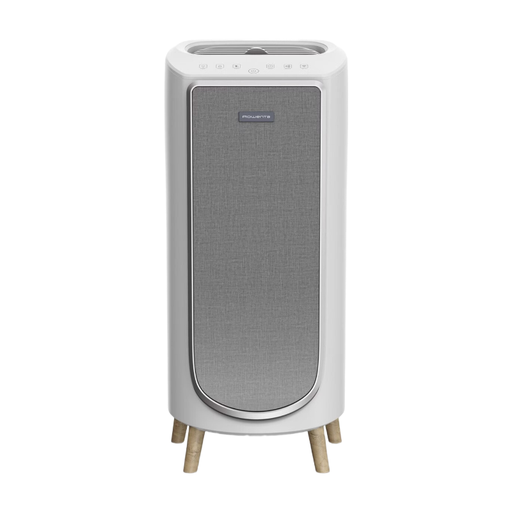 No image available
An option to compare if you’re looking for an air purifier for a larger living room.
The product information lists a CADR of 360 m³/u, coverage of up to 140 m² and a four-stage filtration system, including a pre-filter and HEPA filter. Check the conditions behind the area claim.
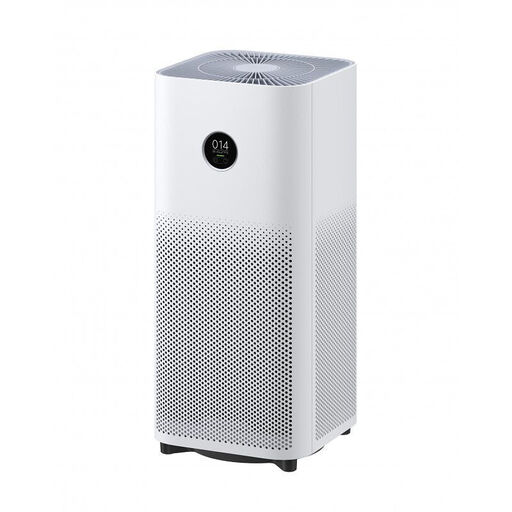 No image available
An option to compare if you’re looking for an air purifier with sensor-controlled operation for a large living room.
Xiaomi states a maximum particle CADR of 500 m³/u and effective coverage of 35–60 m². The product information lists a HEPA filter; check that its capacity suits your room and the setting you plan to use.
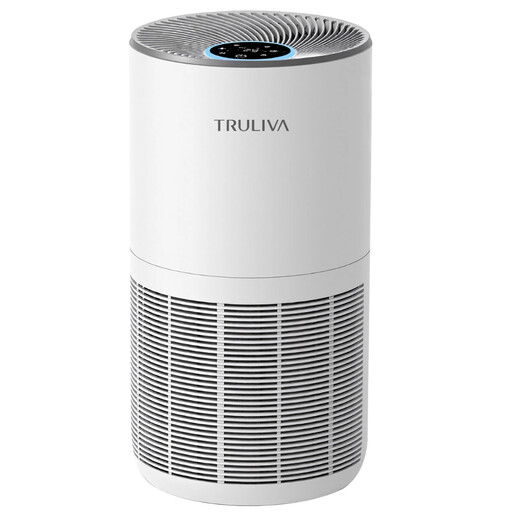 No image available
An option to compare if you’re looking for an air purifier with a HEPA filter for airborne particles.
The product information lists a CADR of 450 m³/u, an operating area of 32–55 m², and a pre-filter, H13 HEPA filter and activated carbon filter. Check that the stated operating area suits your room.
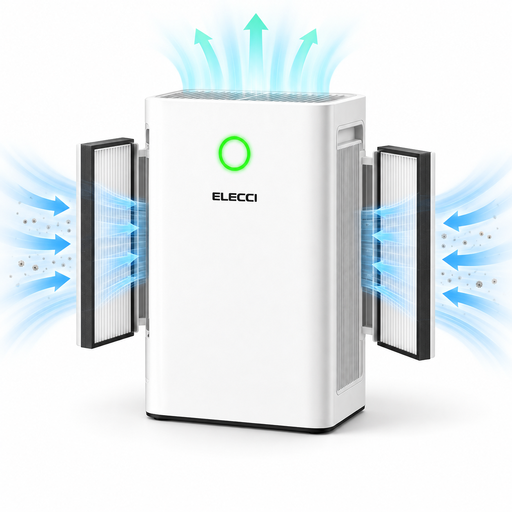 No image available
An option to compare if you’re considering a model with dual HEPA filtration for a larger room.
The product title lists a CADR of 550 m³/u and coverage of up to 48 m². The stated area is a model specification to compare with your own room, not a guarantee of the same results in every space.
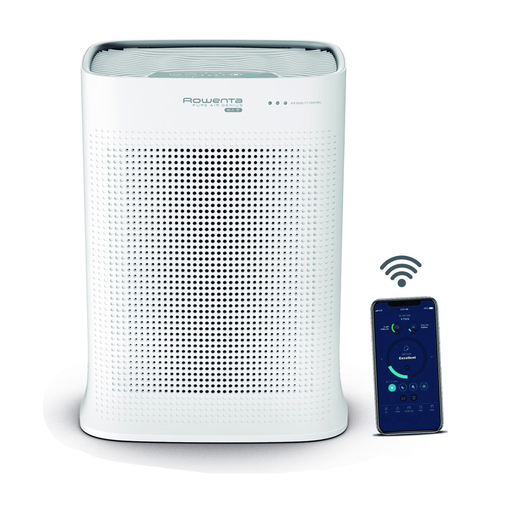 No image available
An option to compare if you’re looking for an air purifier with HEPA filtration for a larger room.
The product information lists a CADR of 360 m³/u, coverage of up to 140 m², four filtration stages and a noise level from 52 dB. Check the conditions behind the coverage figure and the noise level on the setting you plan to use.
Measure the room first, then compare the particle CADR and the conditions behind the stated room coverage. Next, check the noise level and airflow on the setting you actually plan to use; the maximum CADR and minimum noise level may apply to different settings.
No. A portable air purifier is an additional way to treat the air in a room; it won’t remove all pollutants or dust that has already settled on surfaces. Keep ventilating and clean up settled dust.
Follow the instructions for your exact model variant. Philips says in its filter maintenance instructions that its filters must not be washed or vacuumed and should be replaced; don’t apply this guidance to other filters or brands without checking.
No. Ionisation and mechanical particle filtration are different technologies. The US EPA warns that ion generators can produce ozone under certain operating conditions, but this does not establish the emissions of any specific model mentioned here.
For the specific model, check whether the relevant EU safety requirements and the required CE marking apply and are stated. A CE mark doesn’t mean the appliance has been proven to perform well against dust.