
Vandaag of morgen in huis

Kwaliteit gegarandeerd

Welkomstaanbiedingen ontgrendelen: GRATIS bezorging | Tot 80% korting | Gratis 30 dagen JoyPlus-proefperiode
Download de app
An air purifier for your home can help filter airborne particles, dust and certain odours from a room. However, it can be difficult to compare the options. Manufacturers use different methods to measure room coverage, noise levels and filter performance. As a result, a compact appliance may appear suitable for a large living room, even though it circulates the air less often than you might expect.
So don’t focus only on an impressive room-coverage figure. Look at the combination of CADR, filter design, noise level, sensors and replacement costs.
A manufacturer may quote a large maximum room size based on just one air change per hour. For a bedroom or living room where you want the air filtered noticeably faster, a higher rate of air circulation is preferable. So compare the CADR rating, measured in m³/h.
A simple rule of thumb: for a 20 m² room, it’s best to avoid an appliance that delivers only around 100 m³/h. For larger rooms, models offering around 250 to 450 m³/h are more practical, depending on the ceiling height and the setting you want to use.
A HEPA air purifier is designed primarily to capture fine particles. A pre-filter traps larger particles such as hair and dust. A carbon filter can help reduce certain odours. Each layer has a different function.
Also check whether the entire filter needs replacing and how often the product information says this should be done. An inexpensive appliance may end up costing more if its filters need replacing frequently.
An air purifier may produce a noise level of 20 to 27 dB in sleep mode, but be considerably louder on its highest setting. For a bedroom, it’s useful to check both the minimum and maximum noise levels. A quiet air purifier for a bedroom should also have a dimmable display or night mode if light in the room is likely to disturb you.
CADR, or Clean Air Delivery Rate, indicates how much filtered air an appliance can deliver per hour. A higher CADR is especially useful in a large living room, open-plan kitchen or room with lots of dust and pets.
Examples from the range:
Stated coverage isn’t a universal standard. So use the CADR alongside your room’s dimensions.
A practical filter combination usually consists of:
An air purifier for allergies or one designed to tackle household dust and pollen will often need a HEPA layer. If your main concern is cooking smells, smoke or pet odours, look for a model with a carbon filter too. Claims about percentages come from the brand’s product information and depend on the test conditions used; they don’t guarantee the same results in every home.
An air purifier with an air quality sensor can automatically adjust the fan speed based on the particles it detects. Check what the sensor measures: often it’s PM2.5, rather than every possible pollutant.
A smart air purifier or one with an app can be handy for setting schedules, controlling it remotely and receiving filter notifications. Bear in mind that you’ll need to check Wi-Fi compatibility and app availability. A simple model with buttons may be all you need if you’re only using the appliance in one room.
Clean the pre-filter regularly, following the instructions in the manual. Replace disposable filters on time, and check in advance that genuine replacement filters are available.
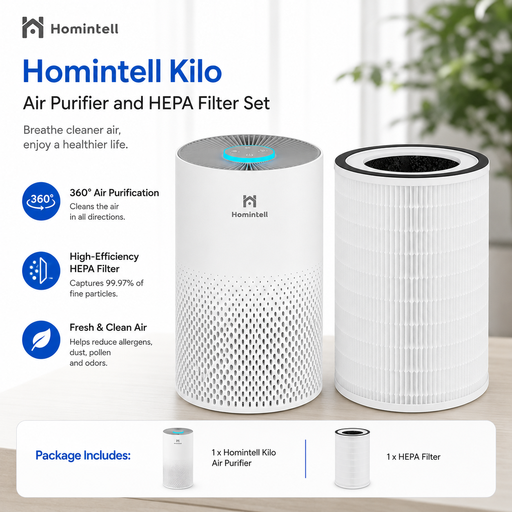
Why it suits this type of buyer: According to the product information, this compact model is designed for rooms up to 18 m². It has three fan speeds, a timer and touch controls. That makes it an easy choice for a first purchase, for example in a bedroom or home office.
The product information gives a CADR of 150 m³/h and a maximum suitable room size of 18 m². This makes it easier to understand what to expect than with an appliance that simply makes a broad marketing claim about covering large spaces.
3-in-1 filter with pre-filter, H11 HEPA and carbon; timer for 2, 4 or 8 hours.

Why it suits this type of buyer: According to the product specifications, this compact Philips model has a CADR of 250 m³/h, a PM2.5 sensor and a sleep mode from 20.5 dB(A). It’s a good fit if quiet operation and automatic control matter to you.
The stated coverage is backed up by a specific CADR and a separate noise range of 20.5 to 49 dB(A). This makes it easier to compare the performance with other models.
250 m³/h CADR; auto mode with PM2.5 sensor and sleep mode.
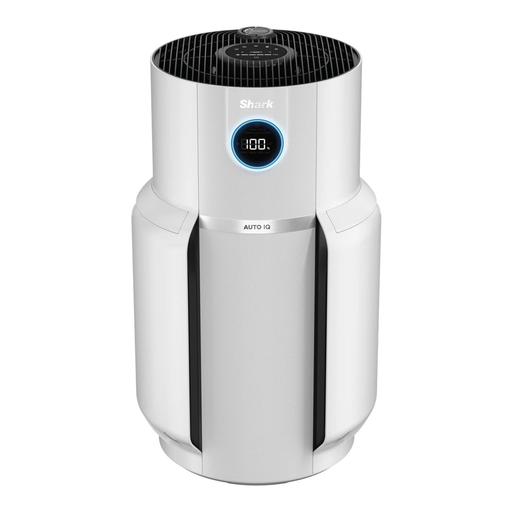
Why it suits this type of buyer: This model is designed for larger living spaces. According to the product description, it features Auto IQ, an LED display and a four-stage filtration system. The manufacturer states that the filter can last up to five years; always check the usage conditions and maintenance instructions.
The specifications distinguish between a maximum of 130 m² at one air change per hour and 28 m² at 4.8 air changes per hour. This avoids interpreting a single large coverage figure without context.
Suitable for larger spaces according to the stated figures; Auto IQ and filter status shown on the display.
We’ve put together a complete, up-to-date list of products that meet these strict selection criteria and the applicable European safety regulations.
According to the product information, a model with a pre-filter and HEPA filter is designed to filter airborne particles such as dust and pollen. An appliance is no substitute for cleaning, ventilation or looking after textiles. Choose a capacity that suits the room and run the air purifier for long enough.
This varies depending on the model, how long you use it and the air quality in your home. Product information often recommends replacing the filter roughly every 6 to 12 months, although some models state a longer lifespan. Use the filter indicator as a guide and check the manual. A saturated filter can restrict airflow.
Energy use depends on the wattage and the number of hours it runs. An appliance rated at 25 W running for 8 hours a day would theoretically use around 6 kWh per month. The actual cost depends on your energy tariff and the fan speed you choose. Before deciding, factor in the price and availability of replacement filters too.
