
Vandaag of morgen in huis

Kwaliteit gegarandeerd

Welkomstaanbiedingen ontgrendelen: GRATIS bezorging | Tot 80% korting | Gratis 30 dagen JoyPlus-proefperiode
Download de app
An air purifier with a HEPA filter can be a practical addition to a bedroom, living room, home office or home with pets. However, it is not wise to rely solely on terms such as “99.97% filtration”, “for large rooms” or “quiet operation”. The measurement method, room volume and cost of replacement filters are at least as important in determining whether a device suits your needs.
Brands sometimes state a maximum number of square metres. This figure may be based on just one air change per hour. For a bedroom or living space, you need to know how much air the device moves per hour and the room size for which that figure was calculated.
Pay attention to the CADR rating, expressed in m³/h. A higher figure generally means that the device can move air through the filter more quickly. Also check whether the stated capacity applies to one, two or more air changes per hour.
A HEPA filter is only one component. A pre-filter captures larger particles such as hair and visible dust. An activated carbon filter is designed to tackle odours and certain gaseous substances. Without a pre-filter, the fine-particle filter can become clogged more quickly; without a carbon layer, a device is less suitable for cooking smells or pet odours.
Also consider the difference between a standard HEPA designation, HEPA H13 and brand-specific technology. According to manufacturers’ own product information, filtration percentages can vary depending on particle size, testing method and fan speed. Treat such figures as product specifications rather than a guarantee for a particular living environment.
A quiet air purifier for the bedroom may produce very little noise on its lowest setting, but be considerably louder at its highest setting. Look at the full decibel range and check whether quiet mode also dims the lighting. This is particularly relevant if the device is placed next to the bed.
The Clean Air Delivery Rate, or CADR, indicates how much purified air a device delivers per hour. For a small bedroom, a model offering around 150 to 250 m³/h may be suitable. A living room or office will often require more capacity. For example, a model with 450 m³/h is intended for a different purpose than a compact device for a room of approximately 16 to 20 m².
Use the stated room coverage as a starting point, but take high ceilings, an open-plan kitchen, lots of textiles and pets into account. In these situations, extra capacity may be useful.
If you are searching for an air purifier for dust and pollen, an air purifier for pet owners or an air purifier for allergies, it is worth looking at the combination of:
A HEPA filter should generally not be washed. According to product information from various manufacturers, water can damage the filter layer. Always switch off the device and unplug it before replacing the filter.
An air purifier with a PM2.5 sensor can display the measured fine-particle level and adjust the fan speed automatically. This means you do not have to keep changing the settings manually. A smart air purifier can also be controlled via an app, schedule or voice assistant.
However, check whether Wi-Fi, an account or a specific app is required. A simple timer and physical buttons may be sufficient if you are mainly looking for a device for the bedroom.
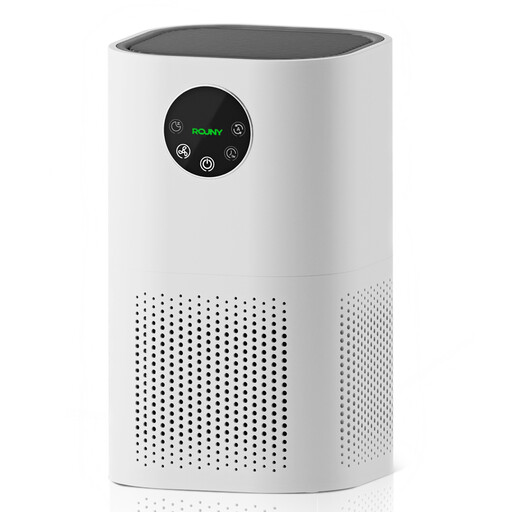
Why it suits this profile: With a CADR of 150 m³/h, a stated coverage of 20–50 m² and four fan speeds, this model offers a straightforward starting point for a bedroom, office or smaller living space.
The product specification states both the CADR and noise level: up to 52 dB and as low as 25 dB in sleep mode. A replacement interval of 6–8 months is also specified.
H13 filter, air quality indicator, 2/4/8-hour timer and four fan speeds.
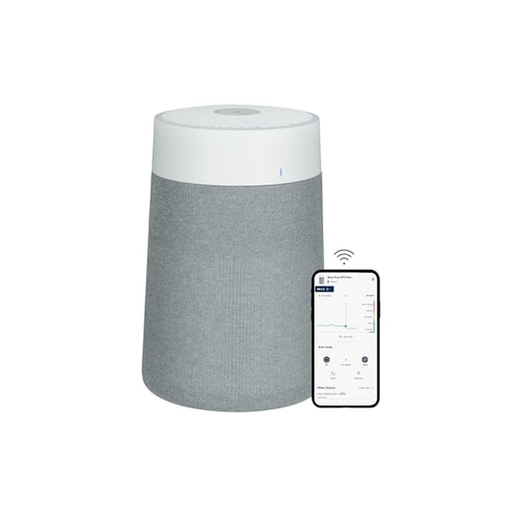
Why it suits this profile: This model is aimed at users who want a compact, quiet and connected air purifier for the home, with app control and support for voice assistants.
The stated figures are specific: CADR of 212 m³/h, 19 dB on the lowest setting and up to 48 dB. The stated coverage is 43 m².
App control, night mode, air quality monitoring and a compact design for the bedroom or home office.
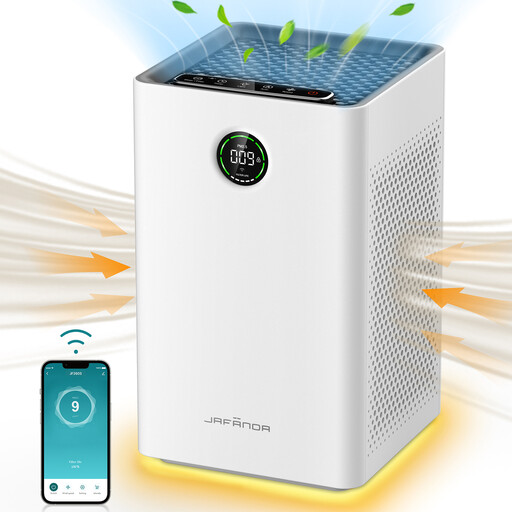
Why it suits this profile: With a stated CADR of 260 m³/h, five fan speeds, PM2.5 monitoring and Wi-Fi control, this model is designed for larger living spaces or more intensive daily use.
The product lists different coverage figures for different air-change rates: 238 ft² at five changes per hour, 595 ft² at two and 1190 ft² at one. This makes it easier to match the coverage to your room.
H13 filter with activated carbon layer, automatic mode, PM2.5 display and sleep mode from 23 dB according to the product information.
We have put together a complete, up-to-date list of products that fully meet these strict selection criteria and the applicable European safety regulations.
Keep the air purifier away from curtains, furniture and walls so that the air inlet and outlet are not blocked. Placing it centrally in the room can support air circulation. Do not run the device in a damp bathroom and keep it away from heat sources.
Clean the exterior according to the instructions and remove dust from a reusable pre-filter only if permitted by the manufacturer. Replace the main filter based on the indicator, usage time and amount of dust in your home. Check beforehand that a genuine filter is available and find out how much it costs.
It can be, provided the model has sufficient capacity for the room and offers a low-noise setting. Pay attention to the noise level in sleep mode, the option to switch off the lighting and whether a timer is included.
The lifespan varies depending on the model and how it is used. Product information may state approximately 6–8 months, 6–9 months, 9 months or longer. Smoke, pets, pollen and high levels of dust can shorten its service life. Always follow the filter indicator and instructions.
Power consumption depends on the wattage, selected fan speed and number of hours of use. As well as the power rating, consider the price of replacement filters. A device with a low purchase price may work out more expensive with intensive use if the filters need to be replaced frequently.
