
Vandaag of morgen in huis

Kwaliteit gegarandeerd

Welkomstaanbiedingen ontgrendelen: GRATIS bezorging | Tot 80% korting | Gratis 30 dagen JoyPlus-proefperiode
Download de app
An air purifier with a HEPA filter can be a practical addition to a bedroom, living room, office or home with pets. However, not every model is right for every room. For example, a high percentage on the packaging tells you little if the airflow is too low for your room.
The main pitfalls usually come down to three things:
An H13 True HEPA air purifier uses a fine-particle filter which, according to the product information for many models, can filter particles down to a certain size. You should consider this claim alongside the airflow, filter seal and maintenance requirements. The label alone is no guarantee of the same performance in every room.
A pre-filter traps larger particles such as dust and hair. This matters if you’re looking for an air purifier for pets. Check whether the pre-filter can be cleaned and whether the main filter must not be washed. On various models, the combined filter needs to be replaced as a whole.
An activated carbon filter is designed to deal with odours and certain gaseous substances. If you’re looking for an air purifier to tackle dust, pollen, smoke and smells, it’s worth checking how much carbon the filter contains. For example, the Jafända JF260S lists a 300-gram layer of activated carbon in its product description.
CADR, or Clean Air Delivery Rate, indicates how much filtered air an appliance can deliver per hour. A higher figure is generally better suited to larger rooms or more intensive use.
Look out for the difference between:
A model with 150 m³/h may be suitable for a bedroom or home office, while a large living room may need an appliance rated at around 400 m³/h or more. Always compare the stated CADR with the room where you actually plan to use the appliance.
For a quiet air purifier for the bedroom, the lowest noise setting matters. Models in this selection are listed as having sleep settings of around 20 to 27 dB, but the highest setting can be considerably louder. A timer, dimmable lights and a child lock are practical extras.
An air purifier with a PM2.5 sensor can show the measured air quality and adjust the fan speed in automatic mode. The sensor doesn’t measure every possible pollutant, so treat the indicator as a guide rather than a complete analysis of your indoor air.
A smart air purifier with an app is useful if you want to switch it on or off remotely, set schedules or check air-quality information. Check in advance that the app, Wi-Fi connection and any voice controls suit the way you plan to use it.
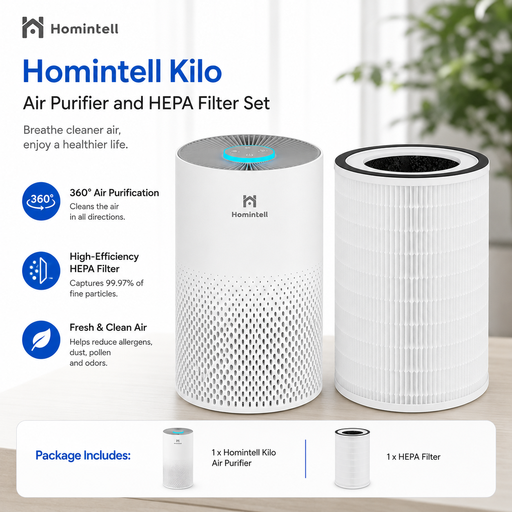
Why it suits this user: This compact model is designed for rooms of up to around 18 m² and offers three speeds, a timer and touch controls. It’s a good fit for a bedroom, study or student room.
The product information lists a CADR of 150 m³/h and clearly states its room coverage. This means you’re less reliant on a vague marketing claim when choosing.
3-in-1 filter with HEPA and carbon layers, a 2/4/8-hour timer and an extra filter, according to the product listing.
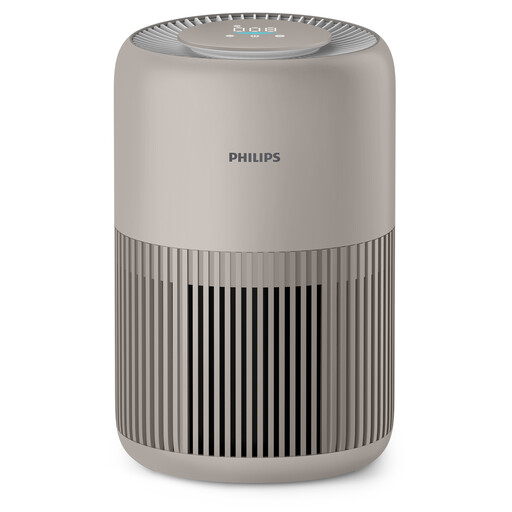
Why it suits this user: This compact Philips model combines automatic control, a PM2.5 sensor and a low-noise sleep setting. It’s designed for everyday use in small to medium-sized living spaces.
The stated CADR of 250 m³/h is accompanied by specific noise-level and filter-replacement figures. This makes it easier to estimate ongoing costs.
According to the product information, it runs at 20.5 dB on its lowest setting and offers automatic mode and a stated filter life of around twelve months.
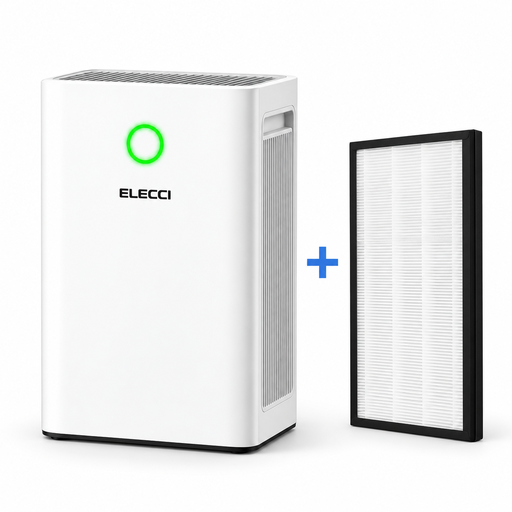
Why it suits this user: With a stated CADR of 550 m³/h, this model is designed for larger rooms of up to around 48 m², such as a living room or open-plan office.
The room coverage is backed up by a specific CADR. Bear in mind, though, that the stated 24 dB applies only in sleep mode; the product information also lists 69 dB.
Washable pre-filter, extra HEPA filter and an 8-hour timer, according to the product specifications.

Why it suits this user: This model is designed for rooms of around 16 to 27 m² and offers control via the Xiaomi Home app, voice control and a child lock.
The product information gives a specific CADR of 230 m³/h and suitable room coverage. This makes it clear that this compact model is not the best choice for a large living room.
3-layer filter with HEPA and activated carbon, PM2.5 sensor, app control and a stated power rating of 27 W.
We’ve put together a complete, up-to-date list of products that meet these strict selection criteria and the applicable European safety regulations.
Place the appliance on a level surface and leave plenty of space around it. Don’t put an air purifier in a damp bathroom or block the air inlet or outlet. Always remove the plastic wrapping around the filter before using the appliance for the first time.
Also bear the following in mind:
A HEPA filter is designed to filter fine particles from the airflow. According to product information, these models can trap dust and pollen particles, among others. An air purifier is no substitute for ventilation, cleaning or professional advice. Choose a model with a sufficient CADR for your room and replace the filter on time.
This varies depending on the model, how long you use it and the indoor air quality. Some product listings suggest replacing the filter after around six to eight months, while others specify a longer period. Check the filter indicator and make sure an original replacement filter is available before you buy.
Energy use depends mainly on the power rating and the fan setting you choose. Compact models in this selection, for example, are listed at 23 to 27 W, while larger appliances may use around 35 to 60 W. Sleep mode usually reduces the airflow and may lower energy use, but always check the product specifications.
