
Vandaag of morgen in huis

Kwaliteit gegarandeerd

Welkomstaanbiedingen ontgrendelen: GRATIS bezorging | Tot 80% korting | Gratis 30 dagen JoyPlus-proefperiode
Download de app
An air purifier can be useful in a bedroom, living room, home office or home with pets. However, it’s not a good idea to base your choice solely on terms such as ‘smart sensor’, ‘allergy filter’ or ‘large coverage area’. Performance depends mainly on the combination of filter type, airflow, room size and maintenance.
There are three common pitfalls for households in the Netherlands:
A large coverage area with no clear measurement method
Manufacturers may state a coverage area based on one air change per hour. This tells you less about how quickly a room is cleaned than a figure based on multiple air changes. Always check the CADR rating and make sure the stated room size suits your needs.
A HEPA label without considering the rest of the filter system
A HEPA filter is designed to capture fine airborne particles, while a pre-filter and carbon filter serve different purposes. A pre-filter captures coarser dust particles and hair, among other things. A carbon filter is designed to reduce odours and certain gases. Also check that replacement filters are available and find out how long they’re expected to last.
A low sleep-mode noise level that only applies to the lowest setting
A quiet air purifier can be a good choice for a bedroom, but a low figure such as 20 or 25 dB usually applies to sleep mode or the lowest fan speed. The noise level can rise significantly at a higher setting. Check both figures before you buy.
CADR, or Clean Air Delivery Rate, is measured in cubic metres per hour. The higher the figure, the more filtered air the appliance can deliver each hour. A CADR of around 200 to 250 m³/h may suit a small bedroom. A living room or larger space will often need a higher figure.
According to its product information, the MONSGA AP200 has a CADR of 280 m³/h and is recommended for rooms of around 33 m². The TRULIVA KJ450 lists a CADR of 450 m³/h and a coverage area of 32 to 55 m². Always compare these figures with the layout of your room and how intensively you plan to use the appliance.
A HEPA air purifier uses a fine-particle filter to capture pollen, dust and some airborne household dust. The H13 designation refers to a filter class, but on its own it doesn’t tell you how much air the complete appliance actually processes. So, consider these points together:
According to the product information provided by various brands, percentages are sometimes quoted for particle capture. Treat these as product specifications based on particular test conditions, not as a guarantee of the same performance in every home.
For an air purifier for the bedroom, sleep mode, dimmable lights and a low noise level are useful features. The Blueair Blue Pure 511i Max, for example, lists 19 dB on its lowest setting and a maximum of 48 dB. The Jafända JF268N lists 20 dB in sleep mode and 53 dB at high speed.
An air purifier with a PM2.5 display shows the measured fine-particle level or an indication of it. A sensor can adjust the fan speed automatically, but the reading depends on the sensor, its placement and the conditions in the room. An app is most useful if you want to set schedules, receive notifications and control the appliance remotely. If you’re choosing a smart air purifier, also check that its Wi-Fi connection is compatible with your network.
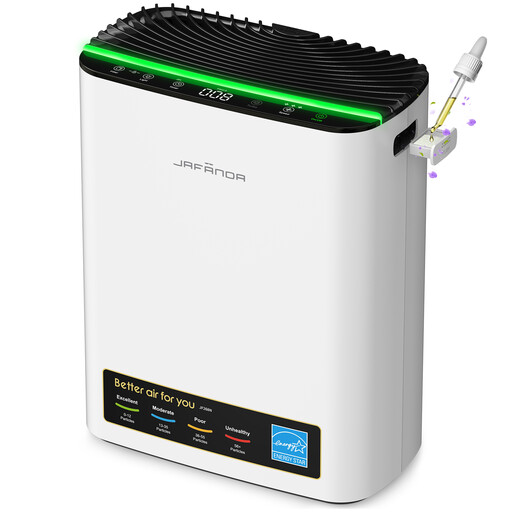
Why it suits this type of user: This model combines a PM2.5 sensor, automatic mode and timer with a stated CADR of 268 m³/h. That makes it a practical choice for a bedroom, office or medium-sized living room.
The product specifications state both the CADR and the noise levels at low and high speeds. This gives you a better idea of what to expect in everyday use.
3-in-1 filter with pre-filter, True HEPA and activated carbon filter; sleep mode from 20 dB; filter life stated as 3000 hours.
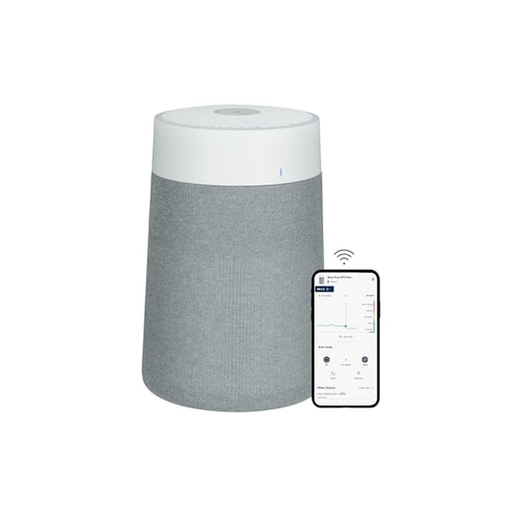
Why it suits this type of user: This model is designed for quiet operation and smart controls. According to the product information, the app offers features including air quality monitoring, scheduling and filter notifications.
The CADR of 212 m³/h and coverage area of up to 43 m² are listed separately. Both the low and maximum noise levels are also stated.
19 dB on the lowest setting; Wi-Fi app with scheduling and air quality information; HEPASilent filter according to the product specifications.
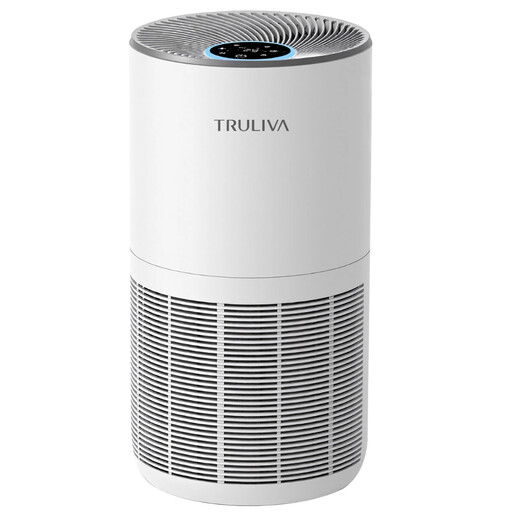
Why it suits this type of user: With a CADR of 450 m³/h, a 360° air intake and a carbon filter, this model is designed for larger living spaces and households concerned about dust, pollen, smoke or pet odours.
The coverage area of 32 to 55 m² is stated alongside the CADR. The PM2.5 display and filter indicator make everyday use and maintenance easier to keep track of.
H13 HEPA, pre-filter and activated carbon filter; 450 m³/h CADR; sleep mode, 24-hour timer and child lock.
We’ve put together a complete, up-to-date list of products that meet these strict selection criteria and comply with the applicable European safety regulations.
Put the appliance on a flat, dry surface, leaving enough space around the air inlet and outlet. Don’t place it behind curtains, right next to furniture or in a damp room such as a bathroom. In a bedroom, a spot with good airflow is usually more practical than a confined corner.
It varies depending on the model, how long it’s used and the level of airborne pollutants. Manufacturers often state a lifespan ranging from a few months to several years. The Blueair Blue Pure 511i Max has a filter notification and a recommended replacement schedule according to the product information; the Shark NeverChange Max HP300EU lists a filter life of up to five years. Always check the manual and the filter indicator. You can vacuum or clean the pre-filter on some models, but don’t wash a HEPA or composite filter unless the manual explicitly says you can.
As well as electricity use, you’ll need to factor in the cost of replacement filters. Check the stated power consumption, filter price and expected replacement interval. A model with automatic mode can adjust the fan speed, but actual energy use depends on the setting you choose and how long the appliance runs each day. Don’t leave your air purifier on its highest setting all the time if a lower one is sufficient for the room.
