
Vandaag of morgen in huis

Kwaliteit gegarandeerd

Welkomstaanbiedingen ontgrendelen: GRATIS bezorging | Tot 80% korting | Gratis 30 dagen JoyPlus-proefperiode
Download de app
An air purifier can help filter airborne particles, pollen, dust and certain odours from indoor air. However, not every model is suitable for every home. A compact air purifier for the bedroom may not be powerful enough for a large living room, while a large appliance can take up more space than necessary in a home office.
The main pitfalls usually aren’t about looks, but about the specifications and day-to-day maintenance.
A HEPA filter sounds reassuring, but the filter type doesn’t tell the whole story. Check the CADR rating too: this indicates the volume of filtered air delivered per hour. A HEPA air purifier with a low airflow may be less practical in a large room than a model with a higher CADR.
Also check whether it has a pre-filter and, if needed, an activated carbon filter. A pre-filter catches larger particles such as hair and dust. Activated carbon is used to deal with certain odours and gaseous substances. According to manufacturers’ own product information, performance can vary depending on the type of particle, operating mode and environmental conditions.
A claim such as “suitable for 45 m²” doesn’t guarantee the same performance in every situation. Ceiling height, room layout, ventilation and the selected fan speed all play a part.
So don’t just look at the maximum room size; pay particular attention to CADR in m³/u. A lower airflow is often enough for a bedroom or home office. A living room, open-plan kitchen or room with pets will usually benefit from greater airflow.
Filters are consumable parts. Depending on usage and air quality, product information often recommends replacing them after around six to twelve months. Before buying, check:
An inexpensive appliance with hard-to-find filters may work out less cost-effective in the long run.
CADR, or Clean Air Delivery Rate, shows how much filtered air an air purifier delivers per hour. A model rated at 150 m³/u is better suited to a small room than an appliance rated at 700 m³/u. Use the stated room capacity as a guide, and take into account open-plan layouts or strong sources of odours and dust.
For a bedroom air purifier, a quiet night mode and a low minimum noise level are often more important than maximum speed. In a living room, a higher CADR may matter more.
A common filter set-up consists of:
An air purifier for pollen or allergies isn’t a substitute for ventilation, cleaning or medical advice. An air purifier for dust mites won’t automatically remove their source from mattresses, carpets or textiles, either. Dust mites are mostly found on surfaces, not just in the air.
For smoke and odours, a combination of particle filtration and activated carbon is more relevant than a HEPA filter alone. A brand’s own research or product information may state removal rates achieved under specific test conditions; these don’t necessarily reflect results in every home.
A quiet air purifier for the bedroom shouldn’t only be quiet on its lowest setting. Check whether night mode dims the display, and how much noise the appliance makes at higher settings.
A smart air purifier with an app can be useful for scheduling, filter alerts and remote control. Do check whether you need an account, a Wi-Fi network or a particular app. An app can’t make up for poor positioning: place the appliance in a clear, stable spot, not directly behind a sofa or curtain.
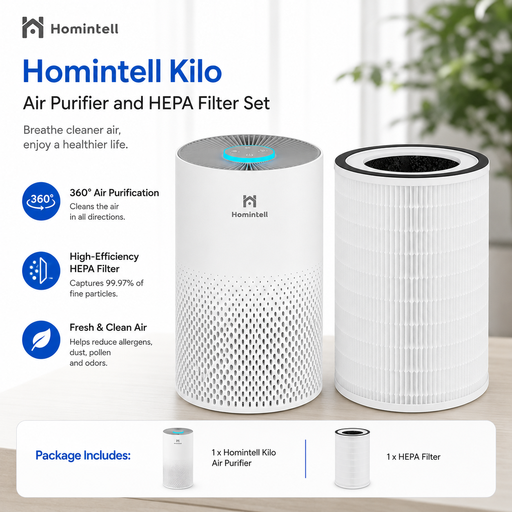
Why it suits this profile: This compact model is designed for rooms of around 16–18 m² and has three speeds, touch controls and a timer.
Its stated CADR of 150 m³/u and room capacity make it easier to assess where it can be used than a general claim about air purification alone.
3-in-1 filter with pre-filter, H11 HEPA and carbon; an extra replacement filter is included, according to the product listing.
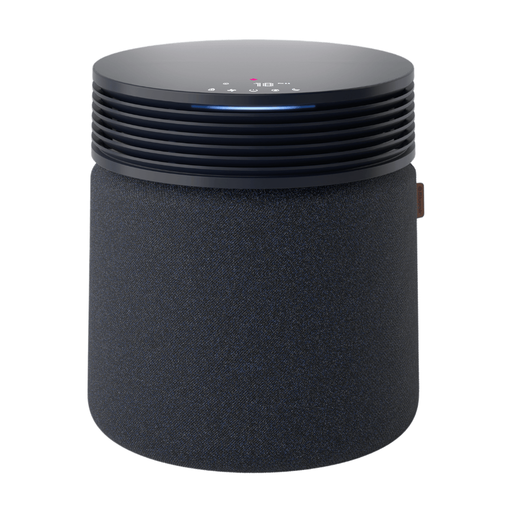
Why it suits this profile: With a stated CADR of over 700 m³/u and coverage of up to 154 m², this model is designed for large living spaces.
The combination of a high CADR, automatic mode and filter alert helps prevent a large room from being paired with an underpowered appliance.
HEPASilent and OdorFence technologies, according to the manufacturer; app control and support for Alexa and Google Home.

Why it suits this profile: This model is designed for households with pets and rooms of around 16–27 m².
Its stated CADR of 230 m³/u and three-stage filter make its capacity and filter design easy to check.
Pre-filter, HEPA and activated carbon layers; app and voice control, child lock and, according to the product information, low power consumption of 27 W.
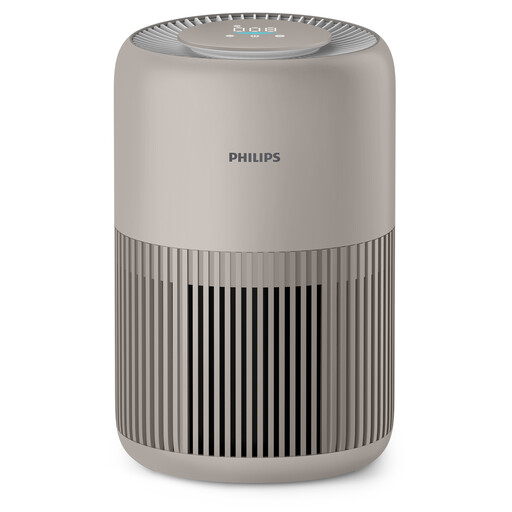
Why it suits this profile: Its stated minimum noise level of 20,5 dB(A), sleep mode and CADR of 250 m³/u make it suitable for overnight use.
The product information lists both noise levels and CADR, so you can assess quietness and airflow together.
Compact design, automatic mode and filter alert; according to the product information, an internet connection isn’t needed for basic operation.
We’ve put together a complete, up-to-date list of products that meet these strict selection criteria and the applicable European safety regulations.
Place your air purifier on a level surface with enough space around it. Keep the air inlet and outlet clear of curtains, furniture and clothing. In a bedroom, placing it next to the bed isn’t always ideal if the airflow is directed straight at your face. In a living room, an open, central position can help air circulate.
Clean the pre-filter according to the instructions and replace the main filter when the indicator tells you to. Don’t wash a HEPA or composite filter unless the manufacturer specifically says it’s safe to do so. An air purifier can help with smoke and odours, but ventilation and removing the source of the smoke are still essential.
It varies depending on the model, how long it’s used and the air quality. The product information for the models mentioned often gives an expected lifespan of around six to twelve months. Always check the filter indicator and availability of replacement filters.
Energy use depends on the power rating, fan speed and how long the appliance runs. A device with a low stated wattage uses less energy per hour, but a higher setting may use more. An automatic or night mode can help stop the appliance running at full speed all the time.
Place the appliance in a clear spot on a stable surface, leaving the recommended distance from walls and furniture. Ideally, choose a model with sleep mode, a dimmable display and a noise level that suits your sensitivity to sound. Keep it away from water and don’t block the air vents.
