
Vandaag of morgen in huis

Kwaliteit gegarandeerd

Welkomstaanbiedingen ontgrendelen: GRATIS bezorging | Tot 80% korting | Gratis 30 dagen JoyPlus-proefperiode
Download de app
An air purifier can help filter airborne particles, pollen, dust and certain odours from indoor air. However, not every model is suitable for every room. A small unit in a large living room will be less effective, while a powerful model could be unnecessarily noisy in a bedroom.
As Joybuy Product Recommendation Officer, I focus on specifications you can check. The main pitfalls usually have less to do with appearance and more to do with the stated room coverage, filter maintenance and the difference between marketing claims and measurable performance.
Manufacturers may use different assumptions when stating a model’s maximum room size. So check the CADR rating too: Clean Air Delivery Rate, or the volume of filtered air delivered per hour. A model with a higher CADR can generally circulate air around a room more quickly than a compact model with a similar stated coverage.
Also consider the layout. An open-plan living room and kitchen need more capacity than an enclosed bedroom of the same size.
A HEPA filter is designed to capture fine particles such as dust and pollen. An activated carbon filter is usually needed to help reduce odours and certain volatile substances. A pre-filter traps larger particles, such as hair and visible dust, and helps keep the main filter usable for longer.
So an air purifier for pets needs more than just a HEPA filter. Look at the combination of pre-filter, carbon layer and filter surface area, as well as the availability of replacement filters.
A quiet air purifier for the bedroom should have a low noise level on its lowest setting, but that’s not the only thing to check. Look at the maximum noise level too, and see whether night mode dims the lights.
Filters are consumables. Before you buy, check how often the product information says the filter should be replaced, which replacement filter you’ll need and whether there’s a filter indicator. A cheaper unit may be less appealing if replacement filters are hard to find.
Use room coverage to narrow down your options, then compare the CADR. For smaller rooms, models rated at around 117 to 250 m³/h are often practical. For larger living spaces, a rating of around 260 m³/h or more may be more useful. Actual performance also depends on doors, ceilings, ventilation and the fan speed you choose.
So, when looking for an air purifier for a large room, check that it offers suitable airflow as well as a large room coverage claim.
A HEPA air purifier targets fine airborne particles. A multi-layer system is more versatile:
Claims such as “99.97%” apply only under the conditions of the relevant test or product description. A brand may state that its own research found a particular filtration efficiency; that doesn’t automatically mean all the air in a room is filtered just as quickly or completely.
An air purifier with a PM2.5 sensor can show the level of fine particles in the air and, on some models, adjust the fan speed automatically. An air purifier with app control often offers scheduling, notifications and remote operation. Check whether Wi-Fi is required, which app you’ll need and whether you can use the basic controls without an internet connection.
For families, a child lock, stable positioning and a clear filter reminder are practical advantages. Always place the unit on a flat surface with enough space around the air intake and outlet.

Why it suits this profile: This compact model has a CADR of 250 m³/h, a PM2.5 sensor and a stated noise range of 20.5 to 49 dB(A). It’s a straightforward option if you’re looking for a purifier for a bedroom, home office or smaller living room.
The product information lists both the CADR and noise range, as well as a filter reminder. So you don’t have to rely on a general room coverage claim alone.
Two-layer HEPA filtration, Auto Mode, PM2.5 sensor and a stated maximum power consumption of 21 W.
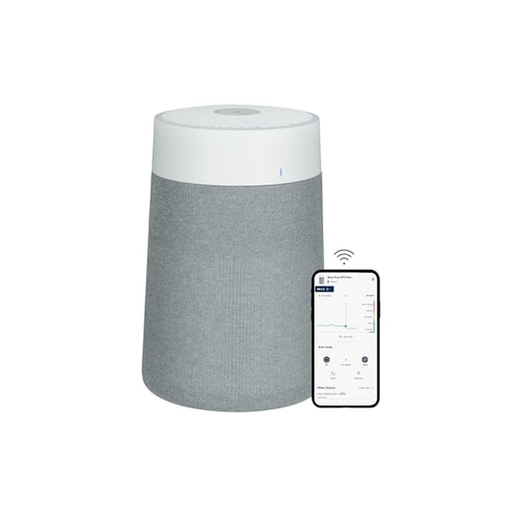
Why it suits this profile: With a stated CADR of 212 m³/h and coverage of up to 43 m², this model is a good fit for a living room, home office or bedroom where quiet operation and remote control matter.
The product information gives both a low noise level of 19 dB and a maximum of 48 dB. That gives you a more realistic picture than simply calling it “quiet”.
HEPASilent filtration according to the product information, Blueair app, scheduling, night mode and Alexa compatibility.
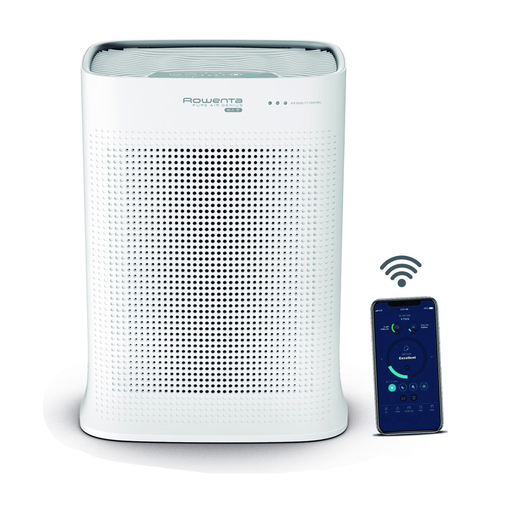
Why it suits this profile: According to the product information, this model is designed for rooms of up to 140 m² and has a four-stage filtration system. It’s suited to large living spaces or households that want to circulate plenty of air every day.
The choice is based on its filter set-up, 360° air intake, five speeds and Auto Mode, not just its large room coverage claim.
Pre-filter, activated carbon, HEPA and formaldehyde filters according to the product description, plus a filter replacement indicator.
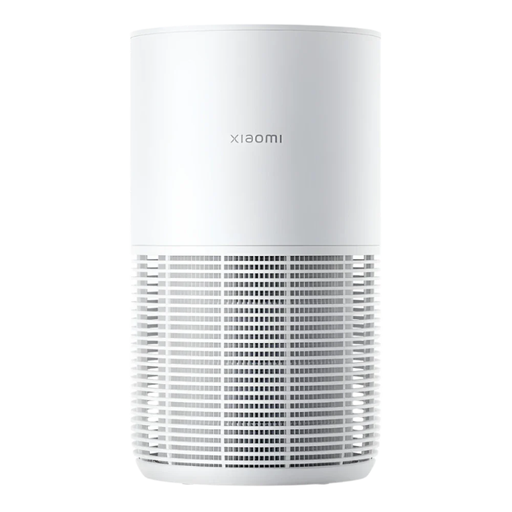
Why it suits this profile: Its three-stage filtration, app control, PM2.5 sensor and stated coverage of 16 to 27 m² make it a good match for a smaller home with pets.
The model combines a pre-filter for larger particles with HEPA and activated carbon filtration. That’s more practical for dealing with hair and odours than a fine-particle filter alone.
230 m³/h CADR, Xiaomi Home app, voice control, child lock and a stated power consumption of 27 W.
We’ve put together a complete, up-to-date list of products that meet these strict selection criteria and the applicable European safety requirements.
Place the unit on a stable, flat surface in the room where you want to filter the air. Leave at least 30 cm of space around it in most cases, and don’t block the air inlet or outlet with curtains, furniture or clothing. An air purifier generally works more effectively with the windows and doors closed, while normal ventilation remains important for overall air circulation.
It depends on the model, how long you use it and the level of pollution in the air. Product information for various models suggests around six to twelve months; some filters have a reminder in the app or on the unit. Replace the filter as instructed in the manual, and don’t reuse a disposable filter unless the manufacturer says you can.
As well as the purchase price, you’ll need to pay for electricity and replacement filters. Compare the stated power consumption, for example 21, 27, 50 or 60 W, and consider how many hours a day the unit will run. The lowest fan setting usually uses less power than the turbo setting, but always check the product specifications.
