
Vandaag of morgen in huis

Kwaliteit gegarandeerd

Welkomstaanbiedingen ontgrendelen: GRATIS bezorging | Tot 80% korting | Gratis 30 dagen JoyPlus-proefperiode
Download de app
An air purifier can help reduce dust, pollen, smoke particles and odours in your home. However, not every model is suitable for every home. A compact air purifier for allergies needs different features from an air purifier for large rooms or a device for a household with pets.
Most disappointing purchases come down to three common pitfalls:
The CADR, or Clean Air Delivery Rate, indicates how much filtered air a device can deliver per hour. A higher CADR is generally better suited to a larger room or a space where the air needs to circulate more quickly.
Don’t just look at the maximum number of square metres in the product title. Check how many air changes per hour that capacity is based on, too. For example, the Jafanda JF260S has a CADR of 260 m³/h. According to the product specifications, it’s suitable for 238 ft² at five air changes per hour, 595 ft² at two air changes and 1190 ft² at one air change.
For homes in the Netherlands, it’s best to measure the room rather than count the whole home. An air purifier in the living room won’t automatically filter the air efficiently in closed-off bedrooms.
A practical filter combination often includes:
A HEPA air purifier is particularly useful if you want to tackle dust, pollen or pet dander. An air purifier with an activated carbon filter is a better fit if odours, cooking smells or smoke are key reasons for buying one. Product descriptions from various brands state that combining these filters helps reduce such pollutants. This is not a medical benefit or a guarantee of a particular level of air quality.
A bamboo charcoal air purifier works differently. Zooly’s bags contain natural bamboo charcoal and are designed to absorb odours and moisture in places such as shoe cupboards, drawers, cars and wardrobes. They don’t replace an electric HEPA air purifier for an entire room.
A quiet air purifier is particularly important in a bedroom or home office. Check the stated noise level for each setting, as the lowest decibel rating usually applies only to sleep mode. For example, the Jafanda JF260S is rated at 20 dB on low speed and a maximum of 53 dB.
A PM2.5 sensor and automatic mode can make everyday use easier. Also check:
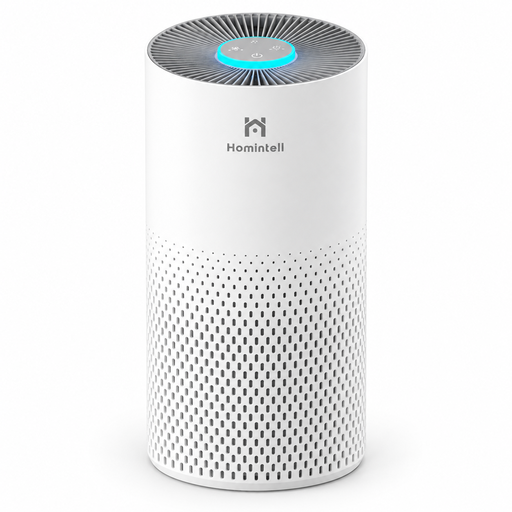
Why it suits this type of buyer: According to the product specifications, this compact model is designed for rooms of around 16–18 m². It has three speeds, a timer and touch controls, making it a straightforward choice for a first purchase.
The CADR and recommended room size are clearly stated, so you won’t choose a device for a room that’s too large based on a marketing label alone.
CADR of 130–150 m³/u according to the stated product specifications, a 3-in-1 filter and timer settings of 2, 4 and 8 hours.
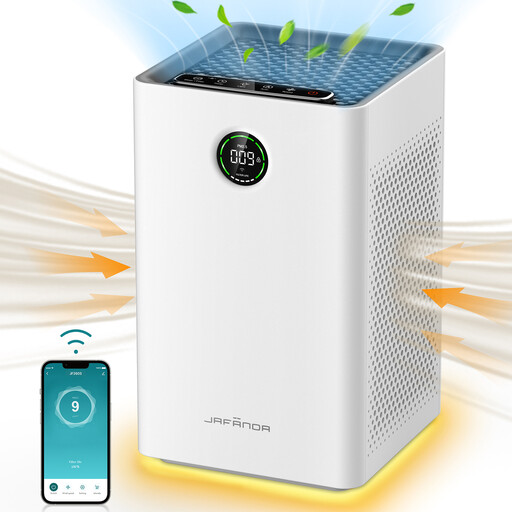
Why it suits this type of buyer: With H13 HEPA, 300 g of activated carbon, app control and a CADR of 260 m³/u, this model is well suited to a larger living room or open-plan space.
The product information gives different air-change rates for different room sizes. This helps you match the capacity more realistically to your room.
CADR of 260 m³/u, PM2.5 monitoring, five fan speeds, Wi-Fi and voice control, and a stated sleep-mode noise level from 23 dB.
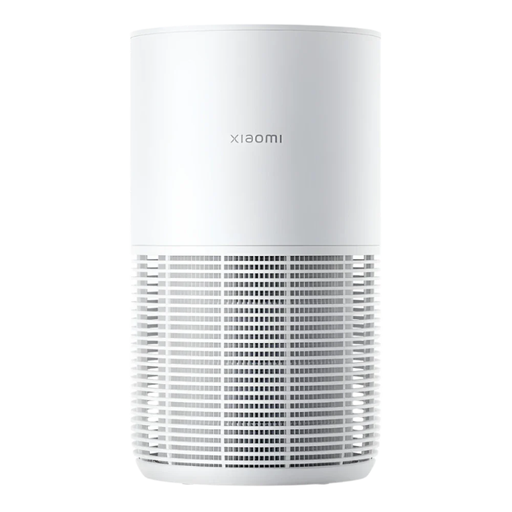
Why it suits this type of buyer: This model is designed for households with pets and, according to the product specifications, is suitable for 16–27 m². App and voice controls make it easy to use every day.
The three-layer design includes a pre-filter for larger particles, a HEPA filter and activated carbon. You can replace the filters without tools.
CADR of 230 m³/u, PM2.5 sensor, child lock, stated power consumption of 27 W and control via Xiaomi Home.
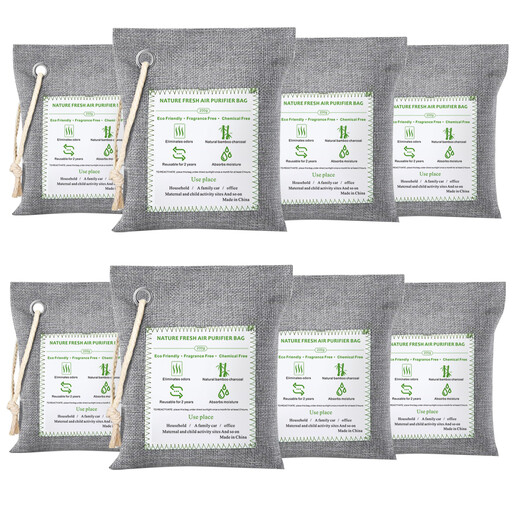
Why it suits this type of buyer: For shoe cupboards, cars, drawers, wardrobes or pet areas, a plug-free odour absorber can sometimes be more practical than an electric device.
The product description states that each bag covers a limited area. This makes it clear that you may need several bags for larger or particularly smelly spaces.
Odour-free material, hanging loop, no installation required and, according to the product information, up to two years of use when dried in the sun monthly.
We’ve put together a complete, up-to-date list of products that meet these strict selection criteria and the applicable European safety regulations.
Before buying, check which filter your device uses. An air purifier replacement filter isn’t universal. For example, TRULIVA filters for the KJ260 and KJ450 are only designed for their respective models. The Jafanda JF260S also uses a specific filter type. Always check the model number, dimensions and number of filter layers.
Replace the filter according to the manual or the device’s filter alert. Don’t wash a composite filter if the manufacturer says not to. You can carefully remove dust from the outside and around the air inlet, but make sure the device is unplugged first.
It depends on the room, the filter and the noise level. For a bedroom, choose a model with a quiet sleep mode, timer and suitable CADR. Position the device away from curtains and walls so the air inlet and outlet aren’t blocked.
Filter life varies depending on the model, how often it’s used and the amount of dust or smoke in the air. For example, products in this guide state a lifespan of around 2200 to 3000 operating hours. Use the filter indicator as a guide, but always follow the instructions for your specific device.
Electricity consumption depends on the device’s power rating and how many hours it runs. A 25 W device running continuously uses less electricity than the same model on a higher setting with greater power consumption. Use automatic mode or a timer if it suits your needs, and compare the stated wattage before buying.
