
Vandaag of morgen in huis

Kwaliteit gegarandeerd

Welkomstaanbiedingen ontgrendelen: GRATIS bezorging | Tot 80% korting | Gratis 30 dagen JoyPlus-proefperiode
Download de app
Sneezing, itchy eyes, or a constant layer of dust in your home? An air purifier can make a noticeable difference. But the market is flooded with models that make lofty promises. As a Product Recommendation Officer at Joybuy, I'm here to help you separate fact from marketing fiction. Before you buy an air purifier, it's crucial to know what to look for to avoid a bad purchase.
Many consumers fall for the same traps. Here are the most common ones:
To make an informed choice, ignore the marketing hype and focus on three objective specifications. These determine whether an air purifier is right for your situation.
The CADR is the most important specification. It indicates how many cubic metres of clean air a device can deliver per hour (m?/h). The higher the CADR, the faster and more effectively the room is purified.
To determine the right CADR for your space, you can use a simple calculation:
air purifier for allergies or in a home with pets, 4 to 5 ACH is recommended.A bedroom measuring 4m x 5m with a 2.5m ceiling has a volume of 50 m?. For 4 ACH, you would need an air purifier with a CADR of at least 200 m?/h.
An air purifier is only as good as its filter. An air purifier with a HEPA filter is the gold standard. A true HEPA (High-Efficiency Particulate Air) filter, by definition, captures at least 99.97% of all particles as small as 0.3 micrometres. This includes dust and pollen, pet dander, mould spores, and other allergens.
Many models combine a HEPA filter with:
Nobody wants a jet engine in their bedroom. A quiet air purifier is essential, especially for nighttime use. The noise level is expressed in decibels (dB).
air purifier for the bedroom.Pay close attention to the noise level on the lowest setting or the special sleep mode.
Based on these objective criteria, we have selected several models that suit different UK households.
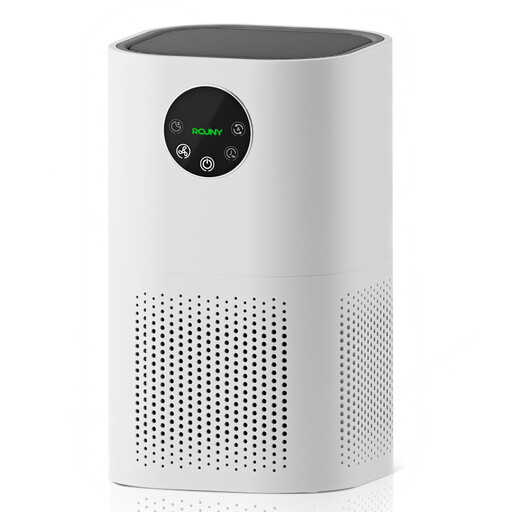
Why This Fits Their Persona: Perfect for the bedroom. This compact model is designed for tranquility. Its sleep mode is extremely quiet at ≤25dB, ensuring your sleep is not disturbed. Ideal for those sensitive to noise but still want clean air.
This model avoids the "massive coverage" myth by clearly specifying it's suitable for rooms of 20-50m?, which is realistic for its CADR of 150m?/h.
H13 True HEPA filter for effective allergen removal. The air quality indicator provides instant visual feedback.
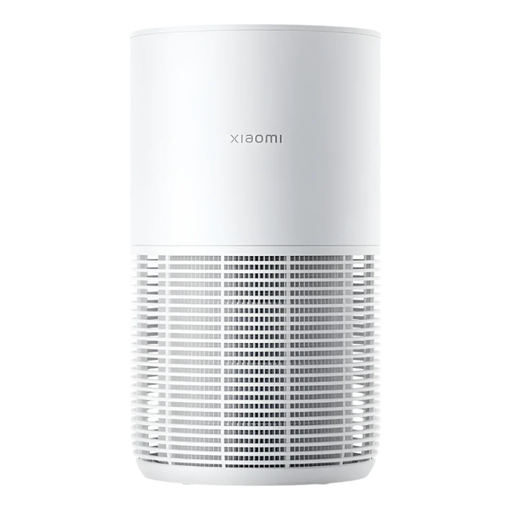
Why This Fits Their Persona: Specifically designed for the challenges of an `air purifier for pets`. Its triple-layer filter with a special carbon filter is focused on neutralising pet odours, while the HEPA filter tackles dander and hair.
This model avoids the "gimmick" trap. Its smart features, like the auto mode that responds to air quality, are practical, not superfluous. Furthermore, Xiaomi filters are widely available, sidestepping the "hidden costs" trap.
Targeted approach to pet odours and allergens. The CADR of 230 m?/h is solid for most bedrooms and living rooms. Control via app and voice assistant is a convenient bonus.
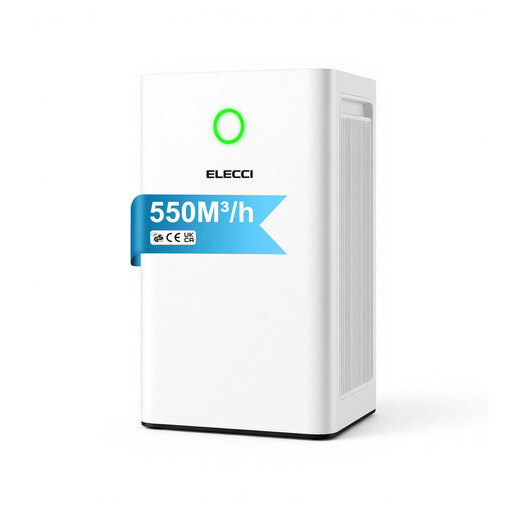
Why This Fits Their Persona: For those who want to effectively purify an open-plan kitchen or large living room. With a very high CADR of 550 m?/h, this model can rapidly exchange large volumes of air, which is ideal for open living spaces where cooking odours, dust, and allergens spread easily.
This model delivers the performance needed for its advertised coverage. The washable pre-filter helps extend the life of the HEPA filter, which helps control long-term maintenance costs.
Exceptional purification capacity. The auto mode adjusts fan speed based on measured air quality, ensuring efficiency without constant manual adjustments.
We have compiled a complete, up-to-date list of products that fully meet these strict selection criteria and UK safety regulations.
This depends on the model, usage intensity, and the air quality in your home. Generally, HEPA and carbon filters should be replaced every 6 to 12 months. Most modern air purifiers have an indicator that tells you when it's time for a replacement.
Place the air purifier in the room where you spend the most time, such as the bedroom or living room. Ensure there is at least 30-50 cm of free space around the unit to allow air to circulate freely. Do not place it in a corner or directly against a wall.
Power consumption is usually modest, especially on lower settings. An average air purifier consumes between 20W and 60W. A model that uses 30W and runs for 12 hours a day will use about 0.36 kWh per day. Annually, the costs are comparable to those of a small fan. Many models with an Energy Star certification are even more economical.
