
Households with airborne fluff
You want to capture textile fibres while they are still floating in the air in your shared living room. Think of an air purifier as an addition to cleaning, not a replacement for it.


An air purifier can capture airborne fluff if the air passes through a suitable particle filter and the appliance moves enough air for your living room. The Consumers' Association points out that a filter alone is not enough: consider the airflow too, as well as which setting those you live with will find comfortable. Fluff on furniture or the floor needs to be cleaned up, and an air purifier is no substitute for ventilation.
You want to capture textile fibres while they are still floating in the air in your shared living room. Think of an air purifier as an addition to cleaning, not a replacement for it.
You want to check whether the airflow from one appliance is right for the space. The Consumers' Association notes that performance depends not only on the filter, but also on how quickly air is circulated through the appliance.
You want a setting that stays comfortable while you chat or watch television, and you want to know in advance which filters need cleaning or replacing.
Suitable if: the fluff is mainly airborne and you can choose an appliance with enough airflow for your living room.
Trade-off: a higher setting may be noisier; settled fluff and ventilation still need separate attention.
Suitable if: the fluff is mainly on upholstery or floors, or keeps coming loose from the same textile.
Trade-off: cleaning needs to be repeated, and it won't continuously filter fluff as it floats through the room.
Check first: find out whether particles are captured in a filter and what the instructions say about ionisation and ozone.
Trade-off: the Consumers' Association explains that ionisation can cause particles to settle on surfaces; according to the US Environmental Protection Agency, some ionising appliances can produce ozone.
| What to consider | What to look for | Who it's important for |
|---|---|---|
| Capturing fluff | Check whether the appliance has a particle filter, and assess it alongside the airflow. Remove any fluff that has already settled separately. | If my main aim is to capture airborne fluff, I look for air to pass through the filter. Around 33% of consumers have this as their main reason for buying. |
| Room capacity | Measure your living room and compare the stated airflow in m³/h. Don't assume that maximum floor-area figures are directly comparable. | For a larger shared living room, I want to know whether one appliance can handle the space. Around 27% of consumers mainly want to treat the whole room. |
| Noise | Compare the stated noise level for each setting, especially the one you plan to use while chatting or watching television. Don't place the appliance behind furniture. | When we're sitting together in the living room, I want a useful setting that won't be a distraction. Around 20% of consumers prioritise quiet operation. |
| Filter maintenance | Find the exact number of the compatible replacement filters and follow the instructions for cleaning and replacement. | I want to know in advance what maintenance the appliance needs and which filters it takes. Around 20% of consumers mainly consider maintenance and ongoing filter costs. |
A filter claim alone doesn't tell you how much air the appliance draws through that filter in your living room. The Consumers' Association points out that the rate at which air is circulated matters too.
Compare the type of particle filter with the airflow and the fan setting you actually plan to use.
An air purifier filters the air that passes through it, but it won't remove fluff that has already settled on upholstery or the floor. Milieu Centraal describes ventilation as bringing in fresh air and removing polluted air.
Tackle loose fibres and settled fluff separately, and keep ventilating.
Ionisation can cause particles to settle on walls or furniture. The Consumers' Association and the US Environmental Protection Agency also point out that some ionising appliances can produce ozone.
Check how the specific appliance works and read its safety instructions. Don't choose an ozone generator as a solution for fluff in a living room that's in use.
Settled particles may mean extra cleaning for furniture or walls.
Filters need maintenance or replacing. An ill-fitting replacement filter can also let air bypass the filter.
Check the exact filter number before buying and follow the maintenance instructions for your chosen model.
Replacement filters mean ongoing maintenance and the cost of model-specific parts.
The 5500-2 is worth comparing if you want to assess an appliance with a higher stated airflow.
The Air 4000 is an option to compare for its stated airflow and filter maintenance requirements.
The Pure Air City PU2840 is a more compact option to consider for a smaller area.
The STARKVIND is worth comparing if control via the DIRIGERA hub is important to you.
These Joybuy air purifiers with particle filters are worth comparing for capturing airborne particles in a shared living room.
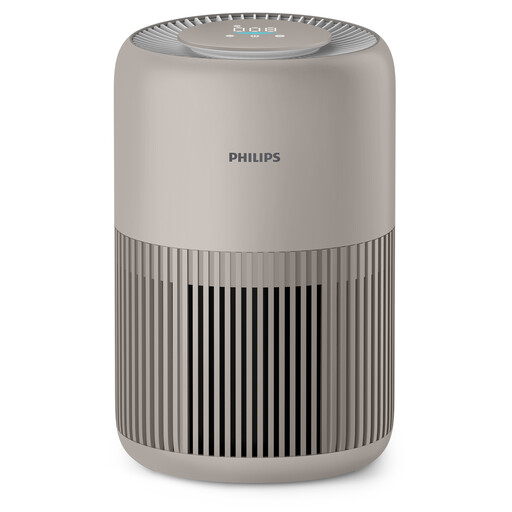 No image available
Worth comparing if you're looking for a compact model with a sleep mode for a shared space.
The product title lists a CADR of 250 m³/h, a two-layer HEPA filter and a smart sensor.
According to the product instructions, leave 30 cm of clearance around the appliance.
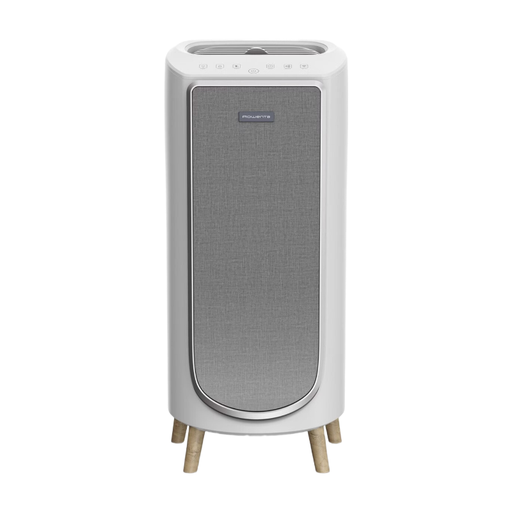 No image available
Compare this model's filter configuration and airflow with the dimensions of your living room.
According to the product information, Wi-Fi is required for full functionality; check that this suits the way you plan to use it.
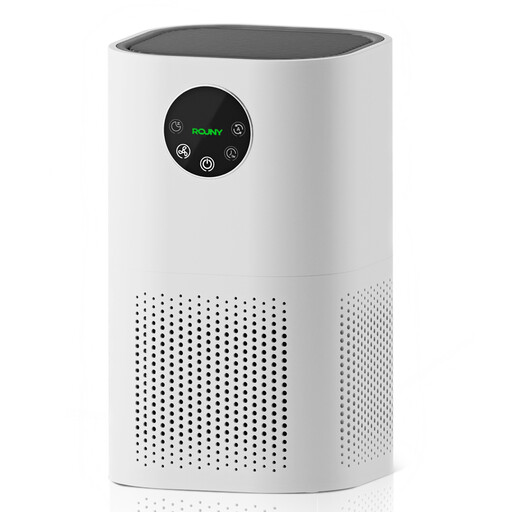 No image available
Worth comparing if its stated sleep mode and multiple fan speeds suit the way you'll use it together.
The product title lists H13 True HEPA, a CADR of 150 m³/h, a stated room coverage of 20–50 m² and a maximum of 25 dB in sleep mode.
The product information recommends replacing the filter after 6–8 months, depending on use and air quality.
 No image available
Worth comparing if you want to assess a pre-filter and app or voice control for your shared space.
The product title lists a three-stage HEPA and activated carbon filter, a CADR of 230 m³/h and a stated coverage of 16–27 m².
Compare the stated room coverage with the dimensions of your living room.
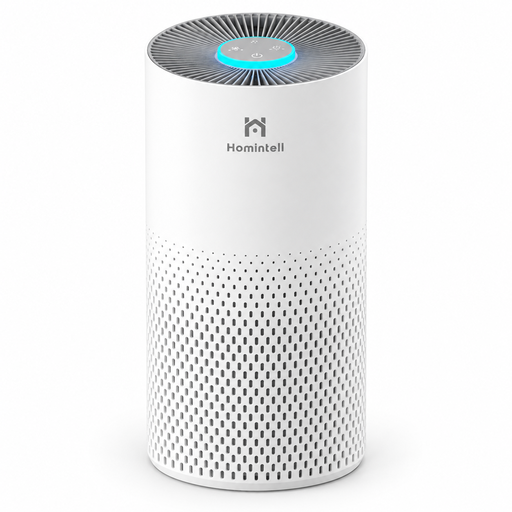 No image available
Worth comparing for a limited area; check the stated room coverage against the dimensions of your living room.
The product title lists a CADR of 150 m³/h, three speeds, HEPA and carbon filters, and a stated room size of up to 18 m².
No. An air purifier filters the air that passes through it. Clean up settled fluff and tackle the textile source separately, and keep ventilating.
Don't put the appliance in a corner or behind furniture, and leave space around the air inlet and outlet. Follow the placement instructions for your chosen model too; the Consumers' Association recommends leaving enough clear space around the appliance.
Don't assume the filter is washable: follow the instructions for your model. The Consumers' Association points out that a pre-filter and a particle filter may need different kinds of maintenance; check when replacement is due too.
With normal use, a product in the Netherlands must meet the standard you could reasonably expect. ACM ConsuWijzer explains that if a product is faulty, the retailer is responsible for providing an appropriate solution; the statutory guarantee isn't simply limited to two years.
That depends on the specific model and the rules that apply to it. Electrical equipment within the voltage range covered by the European Low Voltage Directive is subject to relevant conformity and CE marking requirements. Check the power specifications and applicable rules, as explained by the Dutch Government and EUR-Lex. CE marking alone says nothing about how well an appliance captures fluff.