
People dealing with lots of airborne dust
Your main aim is to reduce particles in the air in your shared living room. An air purifier won’t remove dust that has already settled on furniture.


Choose an air purifier with particle filtration and a capacity suited to the size and layout of your living room, as well as a setting your household finds comfortable. It can help reduce airborne particles, but it won’t replace cleaning, tackling sources of dust or ventilation. Also check which replacement filter fits the exact model variant and how often the manufacturer recommends replacing it.
Your main aim is to reduce particles in the air in your shared living room. An air purifier won’t remove dust that has already settled on furniture.
You use the living room to chat, read or relax. So, consider the noise level at the setting that cleans the air sufficiently for you. The Consumentenbond points out that a quoted minimum noise level isn’t the same as the noise level at a higher setting.
You want to match the capacity to the size and layout of your shared space. The Consumentenbond notes that stated room sizes can be difficult to compare, and that its own advice on maximum room size usually differs from manufacturers’ claims.
First compare particle filtration and capacity for your room. Then assess the noise at a usable setting, and finally check the exact replacement filter.
| What to consider | What to look for | Who is this important for? |
|---|---|---|
| Airborne dust particles | Compare particle CADR in m³/u and the filter type. Also check performance at a setting that’s practical for your living room. | If airborne dust in your shared space is your main concern, you’ll want to know how the appliance treats the air without expecting it to dust your furniture. Around 36% of consumers put reducing airborne dust particles first. |
| Noise during use | Compare the noise level at each fan setting with the cleaning performance at that same setting. | If housemates want to chat, read or relax at the same time, the noise level of the setting you’ll actually use matters most. Around 29% of consumers give usable noise levels the highest priority. |
| Room capacity | Take floor area, ceiling height and open-plan connections into account. Compare CADR figures measured on the same basis rather than relying only on stated room sizes in m². | If your living room is spacious or open-plan, you’ll want to match the capacity to the whole space, rather than relying on a general room-size claim. Around 21% of consumers look at room capacity first. |
| Filter maintenance | Check the exact filter number, compatible model variant, availability and recommended replacement interval. | If you want to use an appliance regularly, it’s worth checking in advance which filter it takes and when replacement is recommended. Around 14% of consumers start by checking filter compatibility and maintenance. |
Manufacturers don’t always use the same calculation for their maximum room size. So a room size in m² on its own doesn’t tell you how suitable the capacity is for your living room.
Make a note of the room’s volume and layout, and compare cleaning performance on the same basis where possible, such as particle CADR in m³/u.
A filter that isn’t replaced can become blocked and stop working effectively. It must also fit the exact model variant.
Before buying, check the filter number, its availability and the model’s replacement recommendations.
Ionisation isn’t the same as particle filtration. The US Environmental Protection Agency warns that ionisers can cause particles to settle on surfaces, and that some ionising appliances produce ozone indirectly.
For airborne dust, compare particle filtration separately and assess ionisation and the available information about ozone separately.
Philips offers a range of capacities and control options. The stated figures are manufacturer data for specific models, not results from a head-to-head real-world test.
According to Xiaomi, the Xiaomi Smart Air Purifier 4 Pro is designed for larger rooms. It has a stated particle CADR of up to 500 m³/u, automatic controls and a model-specific replacement filter.
WINIX describes the ZERO Pro as having a pre-filter, carbon filter, H13 HEPA filter and PlasmaWave. The manufacturer states a CADR of 470 m³/u.
These product picks focus on reducing airborne particles in a living room. Check each model’s capacity, operating setting and compatible replacement filter.
 No image available
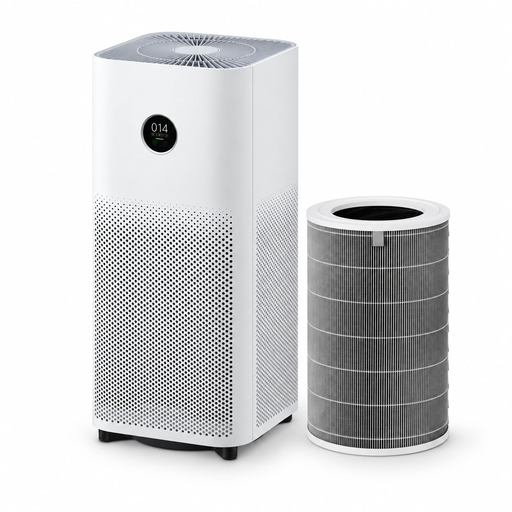
An option to compare if you’re looking for particle filtration and a stated capacity suited to a more spacious living room. Also check the noise level at your preferred setting.
The product title says a replacement filter is included. The product description lists HEPA filtration, a CADR of 500 m³/h, app control and a display showing PM2.5 information. According to Xiaomi, this model also has ionisation; consider that feature separately.
 No image available
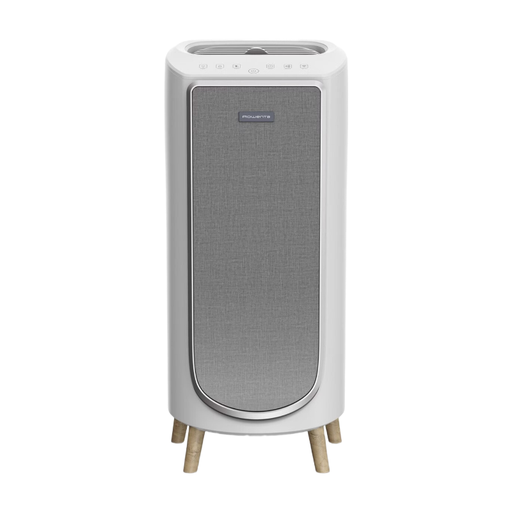
An option to compare if you’re looking for particle filtration with a choice of operating settings. Assess the noise level at a setting that suits shared use.
The product description lists HEPA filtration, a CADR of 360 m³/h, four operating settings and 32 dB(A) at the lowest speed. It also mentions automatic adjustment and app control.
 No image available
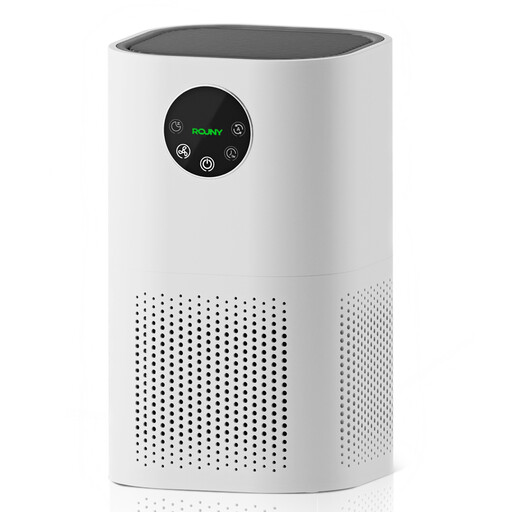
An option to compare if you want to weigh a stated CADR and several fan settings against noise during shared use.
The product title lists an H13 HEPA filter and a CADR of 150 m³/h. The product description mentions four fan settings and a sleep setting of ≤25 dB.
 No image available
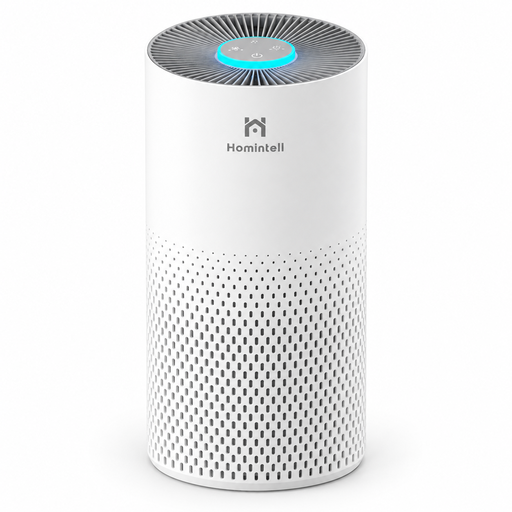
An option to compare if you’re looking for HEPA and carbon filters. Check the stated capacity and dimensions for the spot you have in mind.
The product title lists a CADR of 150 m³/h and HEPA and carbon filters. The product description mentions a PM2.5 sensor, a sleep setting and three speeds.
 No image available
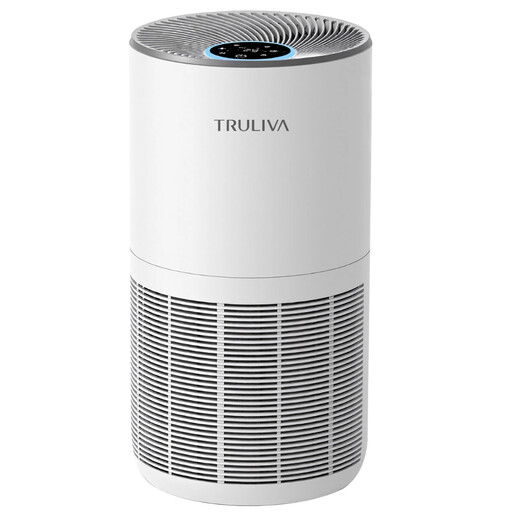
An option to compare if you’re looking for a higher stated CADR. Check that the operating setting and noise level suit your living room.
The product title lists a CADR of 450 m³/h and an H13 HEPA filter. The product description mentions a PM2.5 display, filter indicator, 24-hour timer and child lock.
No. A portable air purifier filters the air that passes through it; you’ll still need to clean settled dust. The RIVM describes ventilation as replacing indoor air with fresh outdoor air, which an air purifier doesn’t do.
Place the appliance somewhere that leaves the air intake and outlet unobstructed. The Consumentenbond advises against putting it in a corner and recommends leaving at least 20 cm of clear space around it, or following the instructions for the exact model.
Don’t assume you can wash these filters: according to the Consumentenbond, particle filters such as HEPA and carbon filters can’t be cleaned. Check the instructions for the exact model to find out when to replace the filter and whether there are any instructions for the pre-filter.
Check the filter number, compatible model variant, current availability and recommended replacement interval. Xiaomi recommends replacing the Smart Air Purifier 4 Pro filter after 6–12 months; how long it lasts may depend on how you use it.
No. Particle filtration is a separate way to reduce airborne particles. The US Environmental Protection Agency warns that ionisers can cause particles to settle on surfaces and that some ionising appliances produce ozone indirectly; this doesn’t establish the emissions of any specific model.