
If your home office is dusty
If your main aim is to reduce airborne dust particles, compare the particle CADR with the size of your individual home office. The Consumentenbond emphasises that both the filter and the airflow matter.


Choose an air purifier with a particle filter and a CADR suited to the size of your home office. Then compare the noise level at the setting you plan to use while working, and check which replacement filters you’ll need. An air purifier can reduce airborne particles, but it doesn’t replace cleaning or ventilation, and it won’t remove all the dust from a room, as the Consumentenbond, the EPA and the RIVM explain.
If your main aim is to reduce airborne dust particles, compare the particle CADR with the size of your individual home office. The Consumentenbond emphasises that both the filter and the airflow matter.
If you want to keep noise to a minimum during calls or focused work, check the noise level at each fan setting, not just the quietest one.
Check which filter is compatible with the exact model and follow the replacement instructions. The EPA points out that filters need to be replaced regularly.
Start with the type of dust problem and the size of your home office. Then consider the fan setting you can actually use and the filter maintenance required.
| What to consider | What should you check? | Who is this important for? |
|---|---|---|
| Particle filtration for your home office | Compare the particle CADR in m³/h with the size of the room. Also check the air-change assumptions used for the stated room size. | I want the airflow to suit my home office before choosing a device; around 33% of consumers put this capacity first. |
| Noise while working | Check the noise level at each fan setting and how much cleaning capacity is available at the setting you want to use. | I want to be able to run the device at a practical setting during calls or focused work; around 27% of consumers give noise while working top priority. |
| Filters and maintenance | Check the exact filter part, its availability and the replacement instructions for the model. | I want to know in advance which filter fits and when it needs replacing; around 20% of consumers prioritise filter maintenance and ongoing costs. |
| The type of dust problem | Work out whether airborne or settled dust is the main issue. Treat cleaning and ventilation as separate parts of your approach. | If the main problem is dust on my desk and floor, I want to decide first which approach is right; around 20% of consumers give this consideration priority. |
A filter claim on its own doesn’t tell you how much air the device moves. The combination of the filter and airflow partly determines what the purifier can do.
For dust, compare the particle filter and CADR, and check that the stated capacity is suitable for your room.
Manufacturers may use different air-change assumptions. Xiaomi bases the stated coverage of 48 m² for the Smart Air Purifier 4 Compact on two air changes per hour.
Check the basis for the coverage claim and compare the particle CADR in m³/h too.
Filters need replacing; according to the EPA, a dirty or overloaded filter works less effectively.
Before buying, find the exact filter part and check the replacement instructions and current availability.
The Smart Air Purifier 4 Compact is a compact option to compare for an individual home office.
The 1000i Series AC1715/11 is an alternative to compare if you’re looking for a higher stated CADR.
The Air 4000 is an option to compare, with information about its filter type and controls on the Consumentenbond product page.
The ZERO Compact is an alternative with a CADR of 250 m³/h stated by WINIX and its own all-in-one Filter Set O.
These product picks list HEPA filtration; compare the stated CADR, room details, noise information and filter requirements for each model.
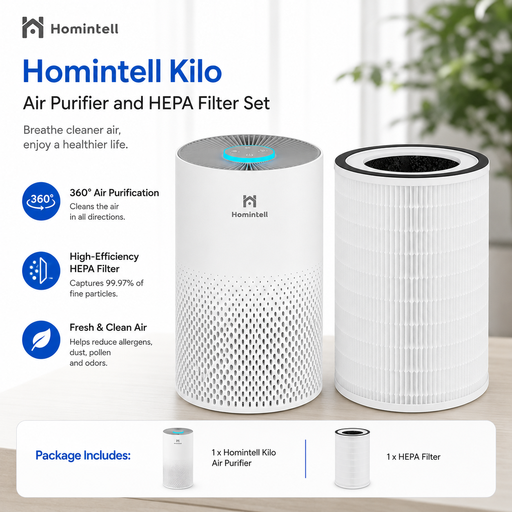 No image available
An option to compare if you’d also like to consider having a spare filter for a smaller home office.
The product name lists a CADR of 150 m³/h, use in rooms up to 18 m², three fan speeds and an 8-hour timer. An extra HEPA and carbon filter is included.
The product description recommends using original replacement filters only.
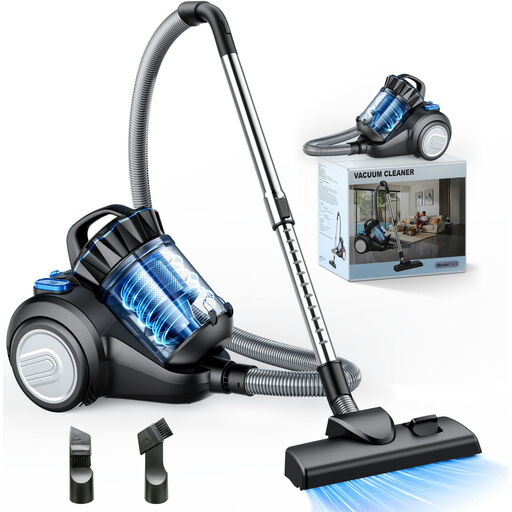 No image available
An option to compare if you’re specifically looking at an air purifier with an H12 HEPA filter.
The product name lists a power rating of 800 W and a noise claim of less than 60 dB. Check which setting the noise figure applies to.
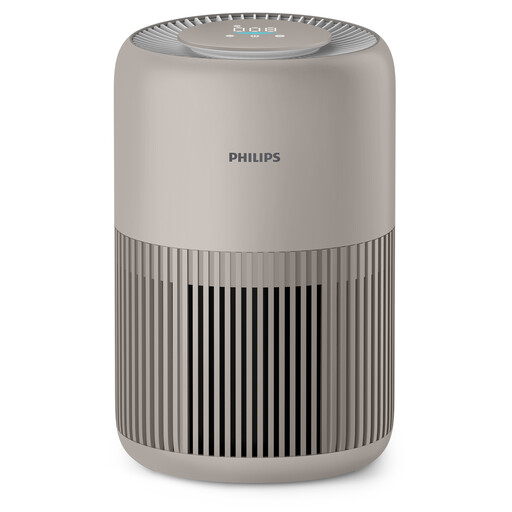 No image available
A compact HEPA option to compare if the stated capacity and filter design matter for your home office.
The product name lists a CADR of 250 m³/h, a two-layer HEPA filter, sleep mode and a smart sensor. The description says the filter usually needs replacing after around 12 months, depending on use.
Follow the filter indicator and check which replacement filter is compatible with the AC0921/14 model.
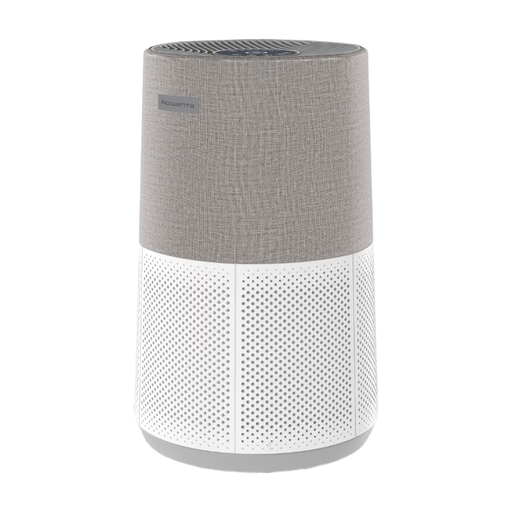 No image available
A compact HEPA option to consider alongside other models for a home office.
The product name lists a HEPA filter. According to the product information, a Wi-Fi connection is needed to use all the app’s features.
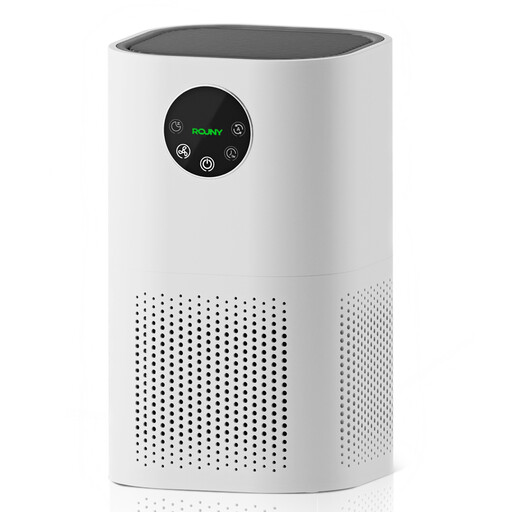 No image available
An option to compare if you want to weigh the stated CADR, room details and sleep mode against the size of your home office.
The product name lists a CADR of 150 m³/h, coverage of 20–50 m², a noise claim of ≤25 dB in sleep mode, a display and four fan speeds. Check the basis for the stated coverage and noise level.
The product description recommends replacing the filter every 6–8 months, depending on use and indoor air quality.
No. An air purifier filters the air that passes through it, but it won’t remove all the dust on surfaces. Tackle sources of dust and settled dust too.
Yes. The RIVM describes ventilation as replacing indoor air with fresh outdoor air; an air purifier doesn’t do the same job.
Don’t put the device in a corner or behind furniture, and keep the air inlet and outlet clear. Also follow the placement instructions for your chosen model.
Follow the replacement instructions for the exact model and check which filter part it uses. The EPA recommends replacing filters regularly; a dirty or overloaded filter works less effectively.
The NVWA advises against using these devices, or recommends ventilating the room thoroughly after use. For a specific model, check the emissions data and any warnings; don’t assume it emits ozone based on the technology name alone.