What should you look for when buying?
When choosing an air purifier for a conservatory, the main things to consider are the airflow you need, capturing airborne dust, noise and filter maintenance.
| What to consider |
What to look for when buying |
Who is this important for? |
| Sufficient airflow |
Work out the air volume to be cleaned and compare the CADR in m³/u for the exact model. Allow for an open connection to other rooms. |
If I want the appliance to suit the full air volume of my conservatory, capacity is my top priority. Around 36% of consumers put sufficient airflow first. |
| Capturing airborne dust |
Look at the combination of particle filter and airflow. Also plan to clean dust that has already settled on surfaces. |
If my main aim is to reduce airborne dust, I want to know what ends up in the filter and what remains on surfaces. Around 29% of consumers prioritise capturing airborne dust. |
| Noise during use |
Compare the noise information for each fan setting and think about which setting you’ll want to use while sitting in the conservatory. |
If I use the conservatory as a sitting room, I want to be able to choose a setting that I find acceptable there. Around 21% of consumers prioritise quiet operation. |
| Filter maintenance |
Check the exact replacement filter, replacement instructions and any filter indicator. Only clean components if the user manual says to. |
If I want to know in advance which filter I need and how often it requires attention, easy filter maintenance is a deciding factor for me. Around 14% of consumers put maintenance first. |
Air purifiers at Joybuy
These products are air purifiers with particle filters. Compare their stated CADR, operating settings and maintenance requirements with the air volume and how you use your conservatory.
 No image available
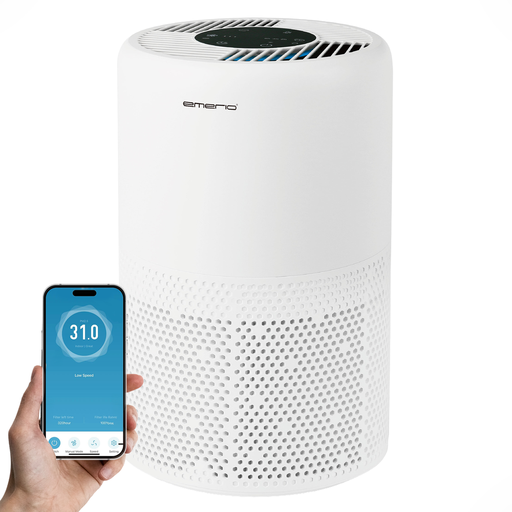
Emerio AP-132324 air purifier
An option to compare if you want to tackle airborne dust and adjust the fan speed to suit how you use your conservatory.
The product information lists an airflow of up to 221 m³/u, a HEPA 13 filter, a carbon filter and three speeds. The stated noise range is 26–52 dB. The filter needs replacing; the product information limits use to domestic indoor spaces and excludes wet areas.
View at Joybuy
 No image available
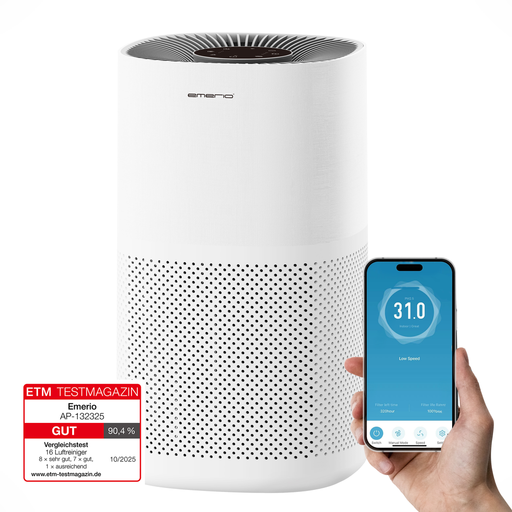
Emerio AP-132325 air purifier
Compare this version with your conservatory’s air volume if you want to include multiple fan speeds and a sleep mode in your decision.
The product information lists an airflow of 374 m³/u, HEPA 13 and carbon filters, four speeds and a sleep mode at 26 dB. The filter needs replacing and, according to the product information, the appliance is intended for domestic indoor use, not wet areas.
View at Joybuy
 No image available
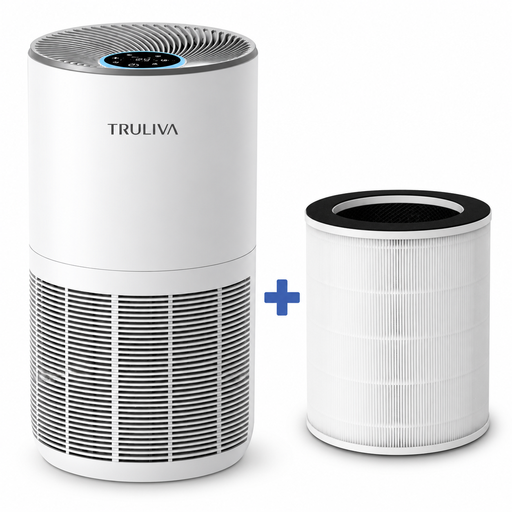
TRULIVA air purifier, 450 m³/u, with extra H13 filter
You can compare the stated CADR with your conservatory’s air volume; also check whether the operating and placement instructions are suitable for the room.
The title lists a CADR of 450 m³/u and one extra H13 HEPA replacement filter. The product information mentions a pre-filter, H13 HEPA filter and carbon filter, as well as a PM2.5 display, timer, sleep mode and child lock.
View at Joybuy
 No image available
Philips PureProtect Mini 900 Series AC0921/14
Include the stated CADR in your comparison if you want to see whether this model is suitable for your conservatory’s air volume.
The title lists a CADR of 250 m³/u. The product information mentions a pre-filter and two-layer HEPA filtration system, a sleep mode, a PM2.5 sensor and automatic mode. The stated noise range is 20,5–49 dB(A); there is a filter replacement indicator.
View at Joybuy
 No image available
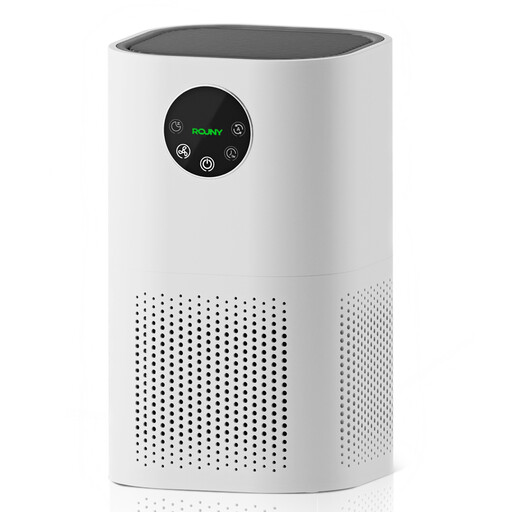
ROUNY AP-T1 air purifier, 150 m³/u
Compare the stated airflow with your conservatory’s air volume and consider which fan setting you’ll want to use while you’re in the room.
The product information lists a CADR of 150 m³/u, an H13 HEPA filter, four speeds and a sleep mode of up to 25 dB. According to the product information, the filter should be replaced every 6–8 months.
View at Joybuy
Frequently asked questions
How do I know whether an air purifier is powerful enough for my conservatory?
Work out the air volume to be cleaned and compare the CADR in m³/u for the exact model. Allow for an open connection to adjoining rooms; a stated maximum in m² doesn’t tell you how the appliance will perform in your conservatory without knowing the operating conditions.
Do I still need to ventilate when the air purifier is running?
Yes. An air purifier filters the air that passes through it; it doesn’t replace the supply and extraction of air. In a conservatory where windows or doors are often open, new air containing particles may also be coming in continuously.
Where should I put the appliance, and how do I maintain it?
Don’t tuck the appliance away behind furniture, and keep the air inlet and outlet clear. Follow the user manual for the exact model when cleaning or replacing parts; cleaning isn’t the same as replacing a filter.
Can I use an air purifier in a cold or damp conservatory without checking first?
No. The category ‘air purifier’ doesn’t confirm that a model is suitable for the conditions in your conservatory. Before setting it up, check the permitted temperature and humidity ranges, as well as the placement instructions in the user manual for the exact model.
What costs and warranty rights should I consider?
Factor filter replacement and maintenance into your decision. The Netherlands Authority for Consumers and Markets’ ConsuWijzer service explains that, in the Netherlands, you’re entitled to a product that meets what you could reasonably expect under normal use; if there’s a fault, the seller must resolve it under the statutory guarantee.


