
Vandaag of morgen in huis

Kwaliteit gegarandeerd

Welkomstaanbiedingen ontgrendelen: GRATIS bezorging | Tot 80% korting | Gratis 30 dagen JoyPlus-proefperiode
Download de app
Sneezing, itchy eyes, or a stuffy nose from pollen? Or do you notice dust and pet hair accumulating quickly? An air purifier can make a tangible difference in your indoor air quality. But the market is saturated with models that promise the world. Many people buy a unit that's ill-suited for their environment, leading to little or no improvement.
As a Joybuy Product Recommendation Officer, I'm here to help you cut through the marketing jargon. Before you make a choice, it's crucial to understand the most common pitfalls that lead to buyer's remorse.
To avoid these pitfalls, there are a few objective specifications you should always check. These numbers tell you more about performance than any marketing claim.
The most important specification is the CADR (Clean Air Delivery Rate). This figure, expressed in cubic metres per hour (m?/h), indicates how much clean air the device actually delivers. A higher CADR means faster and more effective purification.
A good rule of thumb is that an air purifier's CADR should be able to completely cycle the air in the room at least 2 to 3 times per hour. Calculate your room's volume (length × width × height) and compare it to the CADR value. For an average 40 m? bedroom, you'll need a model with a CADR of at least 80-120 m?/h.
An air purifier is only as good as its filter. For those suffering from allergies to pollen, dust mites, or pet dander, a HEPA filter is indispensable. A true HEPA filter, by standard, captures at least 99.97% of particles as small as 0.3 microns.
Many models combine multiple filter layers:
No one wants to sleep next to a whirring machine. The noise level is expressed in decibels (dB). For a quiet air purifier for the bedroom, look for a model with a sleep mode or a lowest setting under 30 dB. This is comparable to the sound of a whisper and is generally considered non-disruptive. Always check the noise level on the lowest setting, not just the highest.
Based on these objective criteria, we've selected several popular choices that cater to different needs and situations.
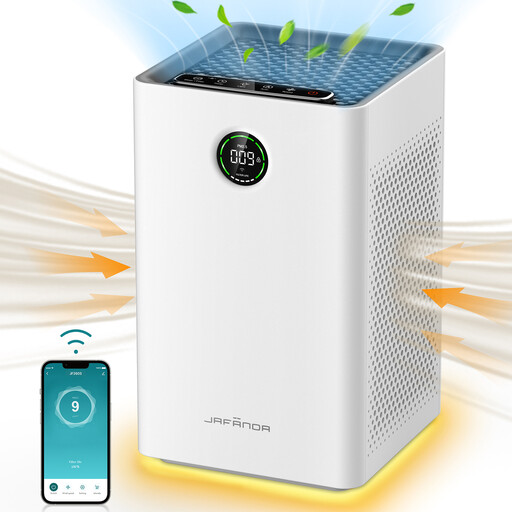
Why This Fits Their Persona: Specifically engineered for tranquility, with a sleep mode that's quieter than a whisper. Ideal for those who are easily awakened by noise at night but still want clean air.
The 23 dB sleep mode is objectively low, ensuring you won't be kept awake by a humming sound. The specifications are clear and verifiable.
Smart control via app and voice assistants (Alexa/Google Assistant) for added convenience. The 260 m?/h CADR is more than sufficient for most bedrooms and living rooms.
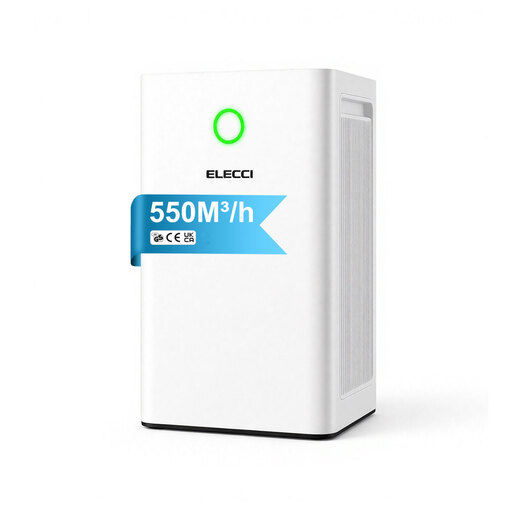
Why This Fits Their Persona: The high CADR value effectively handles large living rooms. Its filters are designed to reduce pet hair, dander, and odours, making it ideal for households with four-legged friends.
With a CADR of 550 m?/h, this model is powerful enough for spaces up to 120 m?, so you won't be stuck with an underperforming unit that can't handle the air circulation.
Very high capacity for rapid purification of large areas. The washable pre-filter helps extend the life of the main filter and reduces maintenance costs.

Why This Fits Their Persona: The smart sensor continuously detects air quality and adjusts its operation automatically. This is ideal for those who want an immediate response to an increase in pollen or dust without having to think about it.
The automatic mode takes the guesswork out of the equation. The device works harder when needed and saves energy when the air is clean, which is both efficient and practical.
The AeraSense technology scans the air 1,000 times per second for pollutants. Its 2-layer HEPA filtration system captures particles down to 0.003 microns.
We have compiled a complete, up-to-date list of products that fully meet these strict selection criteria and safety regulations.
An air purifier only performs optimally when its filter is clean. A full or clogged air purifier filter reduces airflow and can overload the motor. Therefore, always check the price and availability of replacement filters before purchasing. Most manufacturers recommend replacing the HEPA filter every 6 to 12 months, depending on usage and air quality.
Ensure you choose the correct filter for your specific model. Popular replacement filters include:
This depends on the model, usage intensity, and the air quality in your home. Generally, it's recommended to replace a HEPA filter every 6 to 12 months. Many modern air purifiers have an indicator that signals when it's time for a replacement. A washable pre-filter can usually be cleaned monthly.
For optimal performance, place the air purifier on a flat, stable surface with at least 30-50 cm of free space on all sides. Do not place it in a corner or directly against a wall. To improve your sleep quality, the bedroom is the ideal location. If you want to improve the air quality in your living area, a central spot in the living room is a good choice.
A HEPA filter is a disposable filter made of a very dense material that captures microscopic particles like pollen, bacteria, and fine dust. These filters are extremely effective but must be replaced. A washable filter is typically a pre-filter that stops larger particles like dust and hair. You can clean and reuse it, but it doesn't offer the fine-particle protection of a HEPA filter against allergens.
